
How to Avoid Tick Bites While Hiking (Fall 2026 Guide)
Fall is peak deer tick season on US trails. Avoid tick bites while hiking — permethrin clothing, repellents, trail habits, post-hike tick check.
In this guide
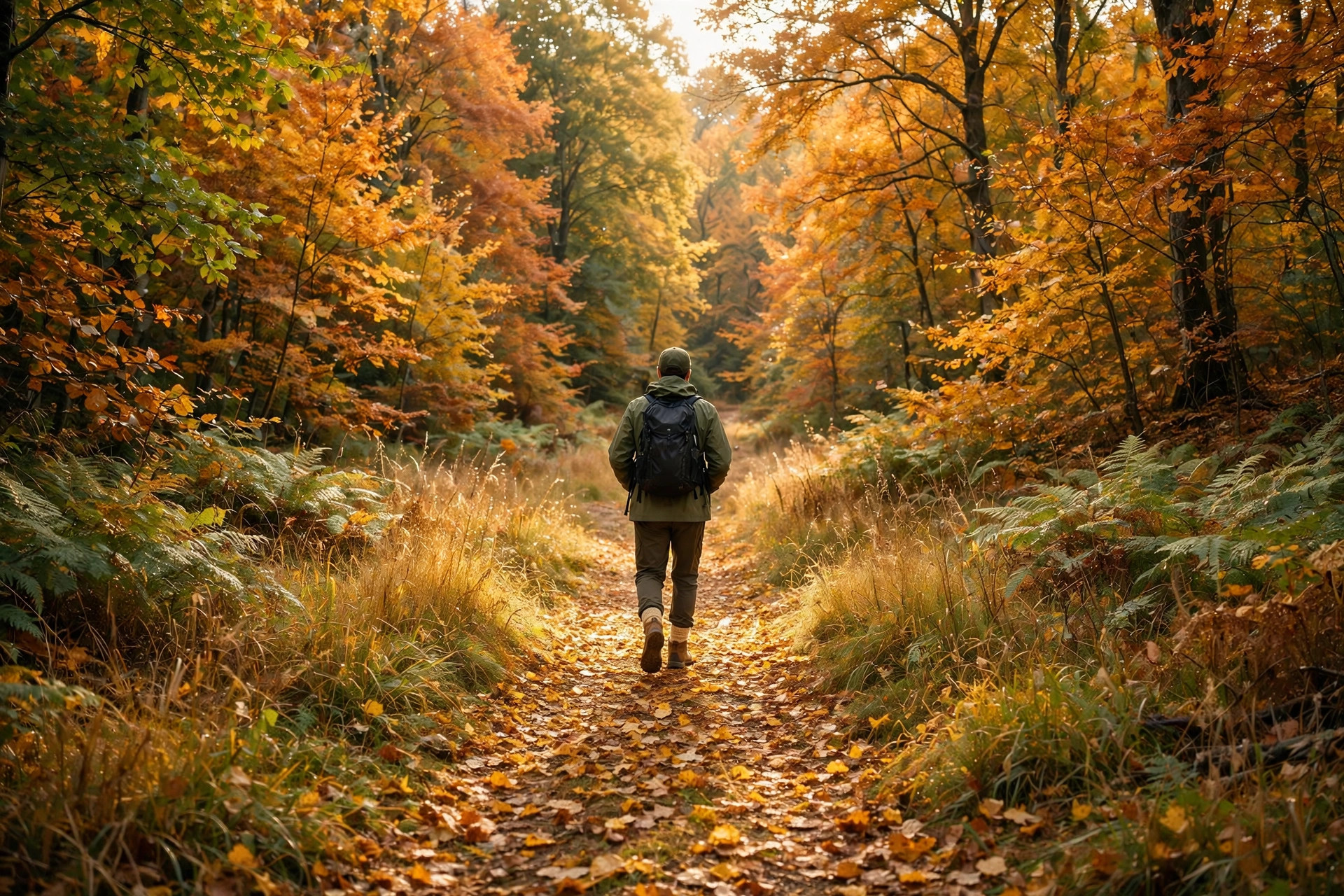
Here’s the seasonal trap most hikers fall into: spring gets all the tick warnings, summer gets the bug spray, and by October everyone relaxes — right when adult deer ticks hit their second peak of the year. Tick researchers call fall the ignored tick season: hikers stay active through October and November, leaf litter thickens, and the adult black-legged (deer) ticks that transmit Lyme disease are questing aggressively for one last host before winter. The precautions don’t change, but the calendar should: don’t put the repellent away in September.
Quick answer: Avoid tick bites while hiking with four layers: (1) permethrin-treated clothing plus long pants tucked into socks, (2) hiking the center of the trail and staying off leaf litter, logs, and tall grass, (3) DEET or picaridin on exposed skin, and (4) a full-body tick check, shower within two hours, and a hot dryer cycle after every hike. No single layer is perfect; stacked together, they cut your risk dramatically.
A note on sources: This guide is research-compiled from public-health guidance (Mayo Clinic, New York State Department of Health, CDC-aligned tick guidance) and widely repeated field practices from experienced hikers. It is not medical advice and not a product test — talk to your doctor about any tick bite that worries you.
Why fall is secretly prime tick season
Most people picture ticks as a spring-and-summer problem, and nymphs — the tiny, poppy-seed stage that causes most Lyme infections — do peak in late spring and early summer. But adult deer ticks get a second wind in fall. They’re active whenever temperatures are above freezing, they quest from low vegetation and leaf litter, and they’re bigger, hungrier, and easier to spot than nymphs — which cuts both ways, because hikers also stop looking.
Two fall-specific factors raise the stakes on the trail:
- Leaf litter is tick habitat. Deer ticks thrive in shady, moist ground cover, and October trails are carpeted in it. Kicking through deep leaves, sitting on leaf-covered logs, or pitching a tent near leaf piles puts you exactly where questing ticks wait.
- Cool weather feels safe but isn’t. Frost kills your motivation, not the ticks. Adult deer ticks stay active into November in much of the Northeast and Upper Midwest, and a warm afternoon after a frosty morning is prime questing weather.
The fall playbook is the same as the summer one — the difference is remembering to use it.
Layer 1: Dress so ticks can’t reach skin
Clothing is your first and cheapest line of defense, and fall hiking clothes (long pants, long sleeves) already do most of the work. Make them do all of it:
- Long pants, tucked into socks or boots. Ticks climb upward from ground level — they don’t drop from trees. Tucking pant legs into socks closes the main highway. It looks dorky. It works.
- Long sleeves and a tucked shirt. Ticks quest from vegetation up to about knee height, but brushing against tall grass and shrubs on overgrown fall trails can put them on your arms and torso. Tuck your shirt in; it removes the gap at your waistband.
- Light-colored clothing. Not for fashion — for spotting. A tick crawling on khaki is visible; on black, it’s invisible. Choose light pants and socks on tick-heavy trails.
- Treat your clothes with permethrin. This is the single highest-value move on the list. Permethrin is an insecticide for clothing and gear (never skin) that kills ticks on contact, and one spray treatment lasts through about six washes. Spray pants, socks, boots, and gaiters outdoors, let everything dry completely (2–4 hours) before wearing, and re-treat on schedule. Pre-treated commercial clothing lasts far longer and skips the DIY step.
- Consider gaiters on overgrown trails. Tall grass and brush along fall trails defeat short socks. Gaiters add a smooth, treated barrier exactly where ticks quest.
One caution that matters: permethrin is toxic to cats while wet, so keep treated gear away from pets during application and drying.
Layer 2: Hike like the trail center is the safe zone
Where you walk and where you rest matters as much as what you wear. Ticks quest from vegetation — they perch on grass blades and leaf tips with their front legs out, waiting for a host to brush past. Behavior is free protection:
- Walk the center of the trail. Cleared, well-traveled trail centers have less of the shade, humidity, and vegetation ticks prefer. Every step into tall grass or brush is a dice roll; staying on-trail is the easiest win in tick prevention.
- Don’t sit on the ground, logs, or stone walls. That scenic lunch log is also prime tick real estate. Carry a sit pad or camp chair, or at least brush off and check any surface first. Fall leaf litter on and around logs is the worst combination.
- Keep leaf piles at arm’s length. Decomposing leaves are humid, dark, and exactly what deer ticks love. Don’t set your pack down in them, don’t sprawl in them for photos, and choose campsites away from deep leaf litter and brushy edges.
- Brush-check after bushwhacking. If you leave the trail — for a viewpoint, a water source, or a bathroom break — do a quick visual check of your legs and shoes before continuing. Ticks often crawl for hours before biting, so catching them early on clothing is still a win.
Layer 3: Repellent on exposed skin
Clothing covers most of you; repellent covers the rest. The public-health consensus is straightforward:
- Use an EPA-registered repellent: 20% or higher DEET, 20% picaridin, or IR3535 on exposed skin, applied per the label. Higher DEET concentrations last longer rather than working “stronger” — 30% DEET covers a full day hike; 10–20% suits shorter outings.
- Apply sunscreen first, repellent second. If you use both, sunscreen goes on first and gets a few minutes to absorb, then repellent on top.
- Reapply as directed. Sweat and time degrade coverage. On a long fall hike, plan one reapplication around midday.
- Know the limits of “natural” options. Oil of lemon eucalyptus (OLE) is the only plant-based repellent with meaningful EPA registration against ticks, and it needs more frequent reapplication. Essential-oil blends without EPA registration are a gamble — fine as a supplement, unwise as your only defense in Lyme country.
Kids get the same treatment with age-appropriate products — and avoid repellent on children’s hands, since those end up in mouths.
Layer 4: The post-hike ritual (the one everyone skips)
This layer catches everything the first three missed, and it’s where most hikers get lazy — especially in fall, when the mental model says “tick season is over.” Build it into your routine like unlacing your boots:
- Tick check, head to toe, every time. Use a mirror or a partner for the spots you can’t see: hairline and behind the ears, armpits, waistline and belly button, groin, backs of the knees, between the toes. Remember that nymphs can be poppy-seed tiny — look for new “freckles” as much as obvious bugs.
- Shower within two hours. Ticks often wander on skin for hours before attaching. A prompt shower with a washcloth removes unattached ticks before they commit — public-health guidance treats this as one of the highest-value habits there is.
- Dryer before washer. Toss hiking clothes straight into the dryer on high heat for 10 minutes — that kills ticks; washing alone often doesn’t, because ticks survive the wash cycle. Then wash as normal.
- Check your gear and your dog. Ticks hitchhike on packs, trekking poles, and pets. Shake out and inspect gear before it comes inside, and run the same tick check on your dog — they’re tick magnets and they share your couch.
- Add tick tools to your kit. Fine-tipped tweezers or a tick key weigh nothing and belong in every hiker’s first-aid kit — check that yours are actually there against the 10 essentials.
If you find one attached: removal done right
Finding an attached tick is unpleasant, not an emergency — but technique matters, because the wrong moves (squeezing the body, twisting, burning) can push more saliva and pathogens into the bite:
- Fine-tipped tweezers, grasp at the skin. Get as close to the skin’s surface as possible, right at the tick’s head or mouthparts.
- Pull straight up with steady, even pressure. No twisting, no jerking. If mouthparts break off and stay in the skin, remove them with tweezers if easy; if not, let the skin heal.
- Clean up. Wash the bite and your hands with soap and water or alcohol. Dispose of a live tick by sealing it in a bag or jar, or flushing it — never crush one with your fingers.
- Save the tick. A sealed, dated tick lets your doctor identify the species if symptoms appear later. It’s a small habit that can matter a lot.
- Watch for 30 days. Note the date and location of the bite. A bull’s-eye rash, fever, fatigue, or joint pain in the following weeks means calling your doctor promptly — early treatment for Lyme is straightforward and highly effective, and it gets harder the longer you wait.
The fall tick checklist
Tape this to your gear closet until November:
- Pants treated with permethrin (retreated on schedule), socks and boots included
- Long pants tucked into socks; shirt tucked in; light colors
- DEET 20%+ or picaridin 20% packed for exposed skin
- Hike the trail center; no sitting on ground, logs, or leaf litter
- Fine-tipped tweezers or tick key in the first-aid kit
- Post-hike: full-body tick check, shower within 2 hours, clothes in hot dryer 10 minutes
- Gear shaken out and dog checked before coming indoors
Fall hiking is some of the best hiking of the year — crisp air, empty trails, ridiculous foliage. Ticks don’t get a vote on whether you go. They just ask that you stop treating October like tick season ended, because for adult deer ticks, it’s barely halftime.
Frequently asked questions
What repellent works best against ticks while hiking?
For skin, EPA-registered repellents with 20%+ DEET or 20% picaridin are the public-health standbys, applied per the label and reapplied as directed. For clothing, nothing beats permethrin: it kills ticks on contact and survives multiple washes. The CDC-aligned approach is both — permethrin on clothes, DEET or picaridin on exposed skin.
Does permethrin-treated clothing really stop ticks?
Treated clothing is one of the most effective tick defenses available. Permethrin doesn’t just repel ticks — it kills them on contact, and a single treatment lasts through about six washes (pre-treated commercial clothing lasts through dozens). Treat pants, socks, boots, and gaiters outdoors, let them dry completely before wearing, and never apply permethrin directly to skin.
How do I check for ticks after a hike?
Do a full-body check as soon as you’re indoors, using a mirror for hard-to-see spots: hairline and behind ears, armpits, waistline, belly button, groin, backs of knees, and between toes. Deer tick nymphs can be the size of a poppy seed. Shower within two hours of coming inside — it washes off unattached ticks — and run hiking clothes through the dryer on high heat for 10 minutes to kill any stragglers before washing.
How long does a tick need to be attached to transmit Lyme disease?
Lyme transmission is unlikely if a deer tick is attached for less than 36–48 hours, but other infections (like anaplasmosis) can transmit faster. The rule is simple: remove any attached tick as soon as you find it, don’t wait to see how long it’s been there. Watch the bite site for 30 days for a rash, and call your doctor about fever, fatigue, or joint pain after any tick bite.
What's the right way to remove a tick?
Use fine-tipped tweezers: grasp the tick as close to the skin’s surface as possible and pull upward with steady, even pressure — no twisting, jerking, squeezing the body, or burning it. Clean the bite and your hands with soap and water or alcohol. Save the tick in a sealed bag or jar in case your doctor wants to identify it later.