Best Time to Hike Zion and Banff (Season-by-Season Guide)
When to hike Zion vs Banff: the best months for each park, what to avoid (desert heat, alpine snow), and how to time Angels Landing, the Narrows, and larch season.
In this guide
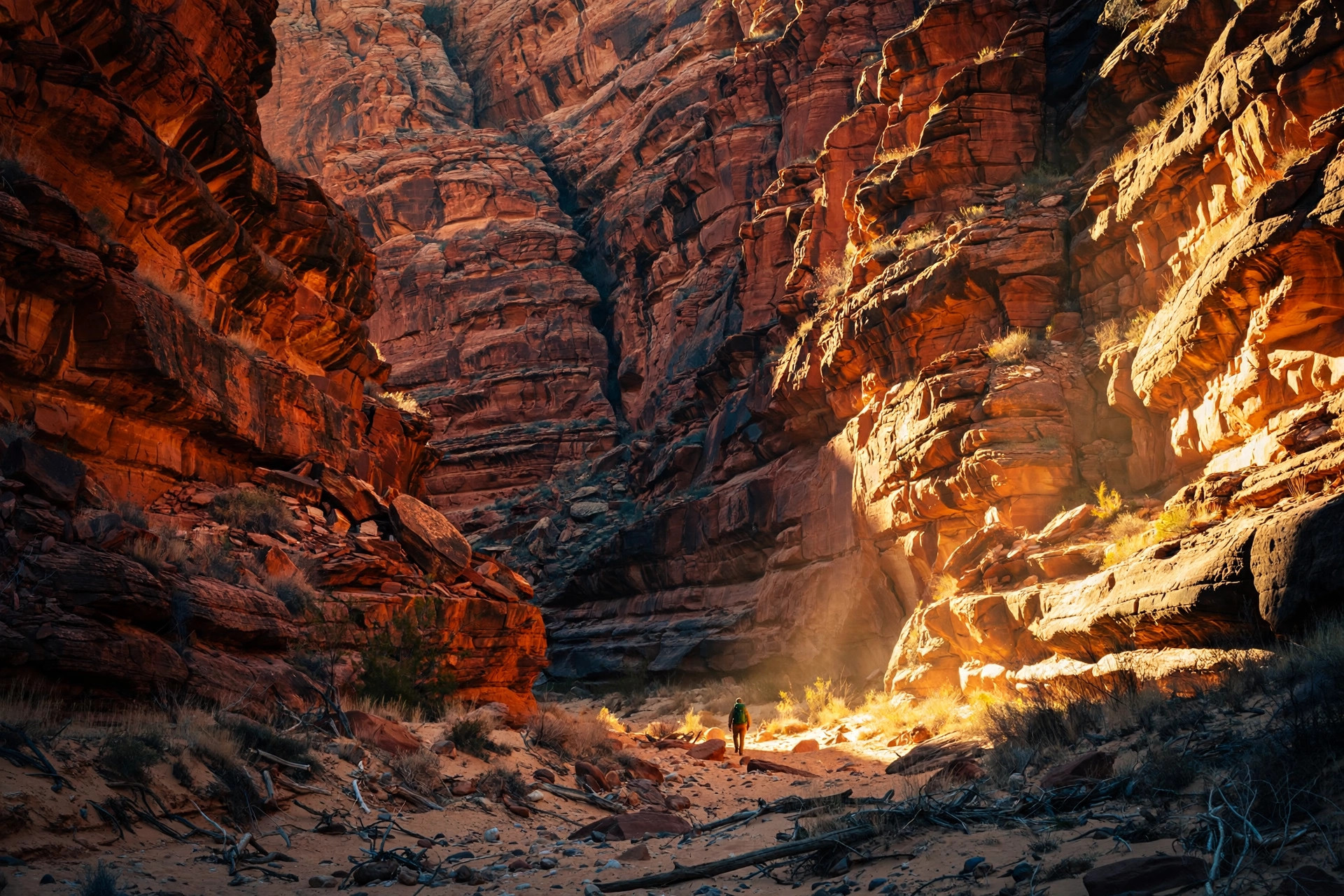
Zion and Banff are the two North American parks beginners ask about most — and they have nearly opposite seasons. Zion is a desert canyon at its best in spring and fall; Banff is a Canadian alpine park with a short summer window. Time them wrong and you’ll melt in Zion or posthole through snow in Banff. Time them right and they’re the best hiking on the continent.
Quick answer: Hike Zion in April–May or September–October (avoid 100°F+ summer heat); hike Banff in July–September (high trails are snowbound into late June). Angels Landing needs a lottery permit; the Narrows is best late spring through summer at low water; Banff’s larch season peaks mid-September.
Zion National Park: the desert calendar
Zion Canyon sits at 4,000 feet in Utah’s desert — which means temperature, not snow, is the main constraint.
Spring (March–May): the prime window. April and May are arguably perfect: 70s–80s°F in the canyon, wildflowers, full waterfalls from snowmelt. March is cooler and quieter but the Narrows is usually closed from snowmelt runoff. This is the sweet spot for most hikers.
Summer (June–August): hot and busy. Canyon temperatures routinely exceed 100°F. Hike at dawn, carry far more water than you think (a gallon per person per day is the park’s guidance for strenuous hikes), and know heat illness symptoms. Afternoon monsoon storms (July–September) bring flash flood danger — never enter slot canyons when storms threaten.
Fall (September–November): the second prime window. September and October bring back the 70s–80s, cottonwoods turn gold in late October/early November, and crowds thin after Labor Day. Arguably the best overall season.
Winter (December–February): quiet and moody. Highs in the 50s, far fewer people, possible ice on exposed trails like Angels Landing’s chains section (traction devices wise). The Narrows is closed. A beautiful season if you’re prepared.
Zion’s big two: timing specifics
Angels Landing: The famous chained scramble now requires a permit — apply in the seasonal lottery months ahead or try the day-before lottery. Go at sunrise: you’ll dodge both crowds and heat, and the light on the canyon is unreal. Not for anyone with a fear of heights — the chains section is genuinely exposed.
The Narrows: Hiking upstream in the Virgin River between 1,000-foot walls. The season is dictated by water flow — typically open late May/June through September when the river drops. The park closes it when flow exceeds ~150 cubic feet per second. Rent canyoneering boots and a walking stick in Springdale; the riverbed is slippery bowling balls. Check current conditions the morning of — never enter if storms threaten upstream.
Banff National Park: the alpine calendar
Banff is the inverse of Zion — a Canadian Rockies park where snow, not heat, sets the schedule. The townsite sits at 4,500 feet; popular trails run 6,000–8,500 feet.
Early season (June): melting out. Valley trails open, but high trails hold snow into late June or even July. Waterfalls peak with snowmelt. Fewer crowds, unpredictable weather — pack for winter and summer in the same day.
Peak season (July–August): the window. This is Banff hiking season proper: high trails clear, wildflowers (late July), warmest weather, but also peak crowds and peak prices. Start popular trails before 7 AM. Afternoon thunderstorms are common — the same summit-by-noon logic as Colorado applies.
Larch season (mid-September): the magic fortnight. Alpine larches turn gold for roughly two weeks around mid-September — Banff’s most photographed season. Trails like Larch Valley and Paradise Valley are spectacular. Book lodging far ahead; this window is no secret.
Fall into winter (October–May): Snow returns by October, most high trails close, and the park shifts to ski season. Shoulder-season hiking exists at valley level but check conditions — avalanche terrain is real and kills.
Banff logistics beginners miss
- Moraine Lake road is shuttle/reservation only — personal vehicles are no longer allowed. Book the Parks Canada shuttle ahead; sunrise bookings sell out.
- Lake Louise is extremely crowded mid-day in summer. Go at dawn or take the shuttle.
- Bear country is serious here — grizzlies included. Read our bear safety guide before you go; carry spray, make noise, hike in groups.
- Weather changes violently. A sunny 70°F morning can become a 40°F hailstorm by afternoon. Pack the full layering system — our 50°F guide was basically written for Banff.
- The Canadian dollar makes Banff relatively affordable for US visitors — but book lodging 6+ months ahead for summer and larch season.
Zion vs Banff: which first?
Choose Zion if: it’s your first big park trip, you’re going in spring or fall, you want dramatic scenery with moderate effort, or you hate being cold. The trail system is compact and beginner-friendly.
Choose Banff if: you’re going in summer, you want alpine scenery (glaciers, turquoise lakes, larches), and you’re prepared for bigger days and wilder weather. It’s the more “expedition” feeling of the two.
Do both? They’re often combined with other Utah parks (Bryce, Arches) or Canadian Rockies parks (Jasper, Yoho) respectively — but Zion and Banff together is a lot of travel. Pick the one whose season matches your dates.
FAQ
What is the best month to hike in Zion National Park? April, May, September, and October are the sweet spots — mild temperatures, manageable crowds, and open trails. March and November are quieter but cooler. Summer (June–August) brings 100°F+ heat in the canyon; winter is peaceful but the Narrows closes and ice can affect exposed trails.
What is the best month to hike in Banff? July through September. Banff’s hiking season is short — high trails are snow-covered into late June, and snow returns by October. Mid-September brings golden larch season, a spectacular two-week window. August has the most reliable weather but also peak crowds.
Can you hike the Narrows in winter? The Narrows typically closes in winter and during spring snowmelt when the Virgin River runs high and cold — often March through May. The best Narrows window is usually late spring through summer at low water. Always check the park’s current flow rates and closures before going.
Do I need a permit to hike Angels Landing? Yes — Angels Landing requires a permit won through the park’s seasonal lottery (apply months ahead) or the day-before lottery. The permit system started in 2022 to manage crowds on the chained section. Apply early; walk-up permits don’t exist for the chains section.
Is Banff too crowded in summer? Popular spots (Lake Louise, Moraine Lake) are very crowded July–August — arrive before 7 AM or use shuttles, and note Moraine Lake road is now shuttle/reservation only with no personal vehicles. Lesser-known trails across the park offer solitude even in peak season.
Related guides
- Bear Safety for Beginner Backpackers — essential for Banff
- What to Wear Hiking in 50-Degree Weather — Banff’s shoulder seasons
- 10 Essentials Hiking Checklist — the safety kit for big park days
Frequently asked questions
What is the best month to hike in Zion National Park?
April, May, September, and October are the sweet spots — mild temperatures, manageable crowds, and open trails. March and November are quieter but cooler. Summer (June–August) brings 100°F+ heat in the canyon; winter is peaceful but the Narrows closes and ice can affect exposed trails.
What is the best month to hike in Banff?
July through September. Banff’s hiking season is short — high trails are snow-covered into late June, and snow returns by October. Mid-September brings golden larch season, a spectacular two-week window. August has the most reliable weather but also peak crowds.
Can you hike the Narrows in winter?
The Narrows typically closes in winter and during spring snowmelt when the Virgin River runs high and cold — often March through May. The best Narrows window is usually late May/June through September, when water levels drop. Always check the park’s current flow rates and closures before going.
Do I need a permit to hike Angels Landing?
Yes — Angels Landing requires a permit won through the park’s seasonal lottery (apply months ahead) or the day-before lottery. The permit system started in 2022 to manage crowds on the chained section. Apply early; walk-up permits don’t exist for the chains section.
Is Banff too crowded in summer?
Popular spots (Lake Louise, Moraine Lake) are very crowded July–August — arrive before 7 AM or use shuttles, and note Moraine Lake road is now shuttle/reservation only with no personal vehicles. Lesser-known trails across the park offer solitude even in peak season.