The 10 Essentials Hiking Checklist (2026, Printable)
The 10 essentials of hiking, explained for the 2020s: what each system is, what to actually carry, and the classic mistakes that get hikers in trouble. Includes a printable checklist.
In this guide
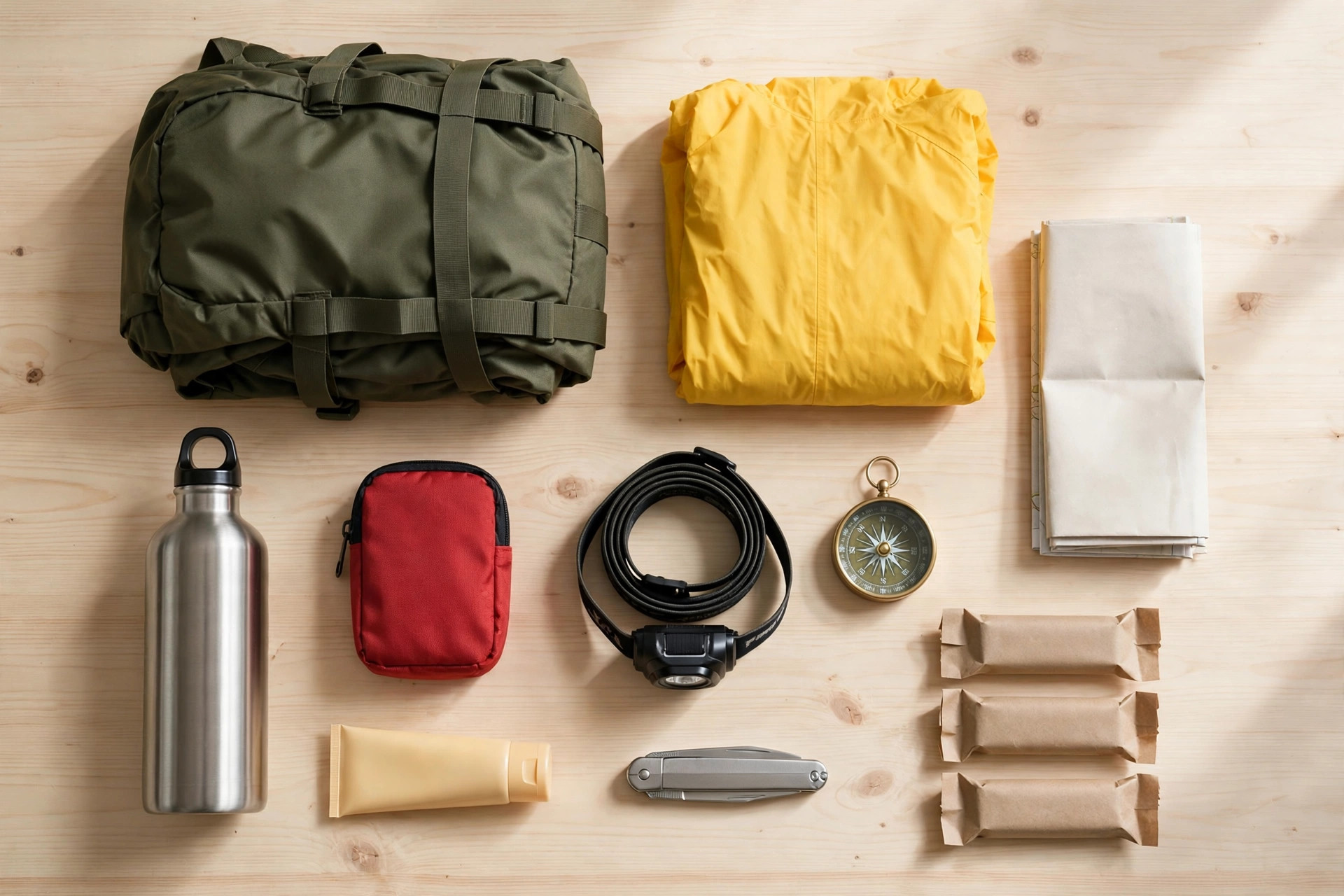
The 10 essentials were created by The Mountaineers — a Seattle outdoors club — in the 1930s, and they’ve survived nearly a century because they’re not a gear list. They’re a systems checklist: ten capabilities that, together, let you survive an unplanned night out, navigate when the trail vanishes, and signal for help. Carry the capability; the specific products are up to you.
Quick answer: The 10 essentials are navigation, sun protection, insulation, illumination, first-aid, fire, repair kit/tools, extra nutrition, extra hydration, and emergency shelter. They weigh 3–5 pounds total, live permanently in your pack, and exist for the day hike that goes wrong — which is when most hiking emergencies actually happen.
1. Navigation: map, compass, and the knowledge to use them
Your phone with offline maps is a great tool — and a terrible primary system. Cold kills batteries, screens shatter, and “I thought I downloaded that section” is a classic last message. Carry:
- A paper map of your area (Tom Harrison, National Geographic Trails Illustrated, or USGS)
- A compass (baseplate style — learn to take a bearing before you need one)
- Phone with offline maps downloaded as backup (Gaia, AllTrails, or similar)
The essential skill isn’t owning a compass — it’s knowing your bailout bearings before you start. “If I get lost, the road is east” has saved more hikers than any gadget.
2. Sun protection: the forgotten essential
Sunglasses, sunscreen, and lip balm — even on cloudy days, even in winter. UV reflects off snow, water, and light rock, and altitude intensifies it roughly 4–5% per 1,000 feet. Snow blindness and second-degree sunburns happen to hikers who “didn’t think it was that sunny.” This and extra insulation are the two most-skipped essentials, and both feature heavily in preventable rescues.
3. Insulation: extra clothes beyond the forecast
Not the jacket you’re wearing — the extra layer for when conditions change or you’re stopped. The standard: an insulating puffy or fleece plus a rain shell, packed regardless of the morning forecast. Weather at the trailhead is not weather at the summit, and an injured hiker waiting for help loses heat fast. Hypothermia begins when you’re wet, windy, and in the 50s — not just in blizzards.
4. Illumination: headlamp, not phone flashlight
A real headlamp with spare batteries (or a rechargeable plus a tiny backup). Phone flashlights drain the battery you need for navigation and emergency calls, and holding a phone leaves you one-handed on rough terrain. A 300+ lumen headlamp weighs a few ounces and turns a benighted hike from an emergency into an inconvenience.
5. First-aid supplies
A kit tailored to hiking, not a 200-piece car kit:
- Blister care: moleskin, Leukotape, alcohol wipes
- Bandages, gauze, medical tape
- Ibuprofen, antihistamine
- Tweezers (ticks and splinters), safety pins
- Any personal medications, plus an extra dose
Know how to use everything in it. A kit you can’t operate is dead weight. A wilderness first-aid course is worth more than any gear upgrade.
6. Fire: the ability to get warm
A mini Bic lighter in a waterproof container plus a few stormproof matches as backup. Add a couple of commercial fire starters or cotton balls in petroleum jelly (in a tiny bag) — they catch a spark when everything around you is damp. Check fire restrictions before you go: in much of the western US, open flames are banned for months at a time, and “essential” doesn’t override the law.
7. Repair kit and tools
A small knife or multi-tool, 6 feet of duct tape (wrap it around a trekking pole — no bulky roll), a few feet of cord, and a spare buckle or safety pins. On trail, the common failures are: blown shoelace, torn pack strap, broken buckle, ripped rain gear. Tape and cord fix 90% of them well enough to hike out.
8. Nutrition: one extra day of food
Beyond your planned meals, carry an extra day’s worth of calorie-dense food — energy bars, nuts, jerky. This isn’t for hunger; it’s for the unplanned bivy, the lost afternoon, the injury that slows you to a crawl. Food is morale and body heat. A hungry, cold hiker makes bad decisions; a fed one thinks clearly.
9. Hydration: extra water and treatment
Carry more water than you think you need, plus a way to make more: a squeeze filter, purification tablets, or a UV purifier. A liter weighs 2.2 pounds, so “extra” usually means capacity + treatment rather than hauling gallons. Dehydration degrades judgment long before it becomes a medical emergency — the hiker who gets lost is often the hiker who stopped drinking.
10. Emergency shelter: the 3-oz life insurance
An ultralight emergency bivy, a space blanket, or even a large contractor trash bag. It won’t be comfortable — it’s not supposed to be. It’s supposed to keep you alive when injury, weather, or darkness pins you down overnight. At 3–8 ounces, there’s no weight argument against it.
The printable checklist
Keep this in your pack’s lid pocket and check before every hike:
- ☐ Navigation: map + compass (+ phone with offline maps)
- ☐ Sun protection: sunglasses + sunscreen + lip balm
- ☐ Insulation: puffy/fleece + rain shell (packed, not worn)
- ☐ Illumination: headlamp + spare batteries
- ☐ First aid: blister kit, bandages, meds, tweezers
- ☐ Fire: lighter + stormproof matches + tinder
- ☐ Repair: knife/multi-tool + duct tape + cord
- ☐ Nutrition: 1 extra day of calorie-dense food
- ☐ Hydration: extra water + filter/tablets
- ☐ Emergency shelter: bivy / space blanket / trash bag
The philosophy: systems, not stuff
The Mountaineers updated the list from specific items to “systems” for a reason: a cotton hoodie is not insulation, and a dead phone is not navigation. Before each hike, ask of each system: if this goes wrong today, can I handle it? If the answer is yes ten times, you’re carrying the 10 essentials — whether your first-aid kit is store-bought or assembled.
Pair this with our 3-day packing list to see where each essential lives in a loaded pack, and our how to pack a backpack guide for the zone system that keeps them accessible.
FAQ
What are the 10 essentials for hiking? Navigation, sun protection, insulation, illumination, first-aid supplies, fire, repair kit and tools, extra nutrition, extra hydration, and emergency shelter. Created by The Mountaineers in the 1930s and updated for modern gear, the list is a systems checklist — carry the capability, not necessarily ten specific products.
Do I need the 10 essentials for a short day hike? Yes — most hiking emergencies happen on ’easy’ day hikes. The 10 essentials weigh a few pounds total and live permanently in your daypack. Getting lost, injured, or benighted on a 3-mile loop is exactly when these systems matter most.
Can my phone replace a map and compass? As a backup, not a primary. Phones die (cold, battery, drops, no signal for the map tiles you forgot to download). Carry a paper map and compass and know the basics of using them; the phone with offline maps is an excellent secondary system.
What’s the most commonly forgotten essential? Sun protection and extra insulation, by a wide margin. Hikers remember the headlamp and first aid but skip sunscreen on cloudy days and leave the puffy behind ‘because it’s warm at the trailhead.’ Both mistakes feature in a huge share of preventable rescues.
How much do the 10 essentials weigh? A dialed-in 10-essentials kit weighs 3–5 pounds including water capacity. The ultralight versions of each system (mini headlamp, tiny first aid, emergency bivy) keep it light — the weight excuse disappears once you see how small the modern versions are.
Related guides
- 3-Day Backpacking Packing List — the full kit these systems slot into
- How to Pack a Backpack — where each essential lives
- How to Prevent Blisters — the foot-care half of first aid
Frequently asked questions
What are the 10 essentials for hiking?
Navigation, sun protection, insulation, illumination, first-aid supplies, fire, repair kit and tools, extra nutrition, extra hydration, and emergency shelter. Created by The Mountaineers in the 1930s and updated for modern gear, the list is a systems checklist — carry the capability, not necessarily ten specific products.
Do I need the 10 essentials for a short day hike?
Yes — most hiking emergencies happen on ’easy’ day hikes. The 10 essentials weigh a few pounds total and live permanently in your daypack. Getting lost, injured, or benighted on a 3-mile loop is exactly when these systems matter most.
Can my phone replace a map and compass?
As a backup, not a primary. Phones die (cold, battery, drops, no signal for the map tiles you forgot to download). Carry a paper map and compass and know the basics of using them; the phone with offline maps is an excellent secondary system.
What's the most commonly forgotten essential?
Sun protection and extra insulation, by a wide margin. Hikers remember the headlamp and first aid but skip sunscreen on cloudy days and leave the puffy behind ‘because it’s warm at the trailhead.’ Both mistakes feature in a huge share of preventable rescues.
How much do the 10 essentials weigh?
A dialed-in 10-essentials kit weighs 3–5 pounds including water capacity. The ultralight versions of each system (mini headlamp, tiny first aid, emergency bivy) keep it light — the weight excuse disappears once you see how small the modern versions are.