How to Prevent Blisters When Hiking (The Complete System)
Blisters end more hikes than bad weather. This is the complete blister prevention system: fit, socks, lacing, taping, and on-trail treatment — for hikers who'd rather walk than limp.
In this guide
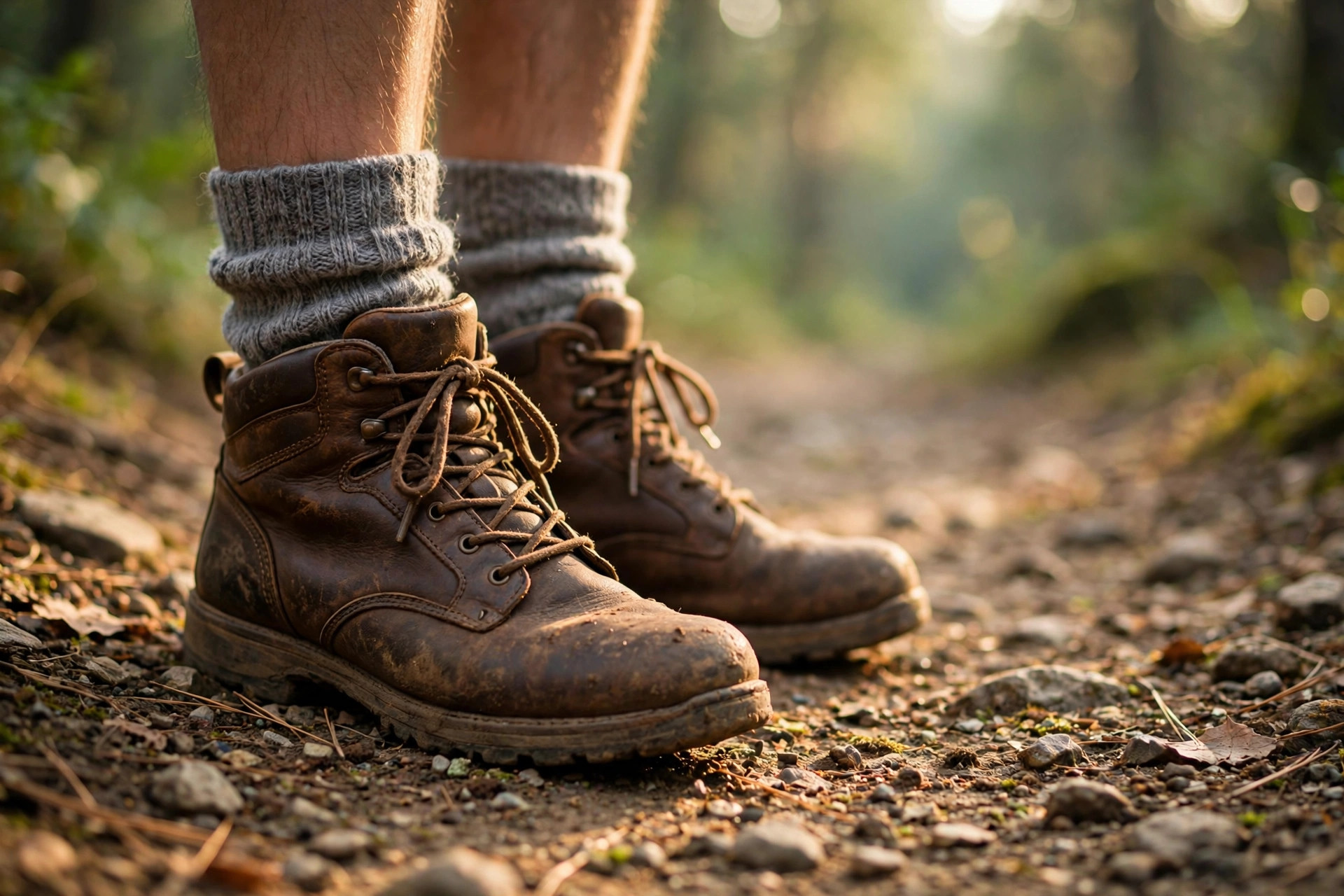
Blisters don’t come from “bad feet.” They come from three ingredients meeting in one spot: friction, moisture, and heat. Remove any one of the three and the blister never forms. Every tip below is just a different way to attack that triangle — which is why the system works better than any single magic product.
Quick answer: Prevent hiking blisters by attacking the friction-moisture-heat triangle: wear properly fitted, broken-in footwear with merino wool or synthetic socks (never cotton), use heel-lock lacing to stop heel lift, tape known hot spots with Leukotape before you hike, and stop to treat hot spots the moment you feel them.
1. Fit: the 80% solution
Most blisters trace back to fit. Shop for hiking footwear in the afternoon, when your feet are slightly swollen — that’s the state they’ll be in at mile 8. Rules that matter:
- Thumb’s width of space between your longest toe and the boot’s end. Toes hitting the front on descents = black toenails and toe blisters.
- Heel lift under a quarter inch. More than that and your heel saws against the boot with every step. Test on a store ramp or stairs.
- Width matters as much as length. If you have wide feet, buy wide sizes — cramming wide feet into mediums creates pressure blisters on the pinky toes. Our wide-feet sock guide covers the sock half of this equation.
- Break them in. 30–50 miles of day hikes before a multi-day trip. Leather boots need it; trail runners need less, but your feet still need to adapt.
2. Socks: your first line of defense
Cotton socks are blister factories — they absorb sweat, stay wet, and turn abrasive. The entire hiking world runs on two materials:
- Merino wool: regulates temperature, resists odor for days, stays comfortable damp. The default for multi-day trips.
- Synthetic (polyester/nylon blends): dries fastest, very durable, cheaper. Great for hot, sweaty day hikes.
Fit of the sock matters too: no wrinkles, no bunching, heel cup actually on your heel. A sock that’s too big folds and creates friction ridges; too small stretches thin and tears.
Liner socks (thin synthetic) under a hiking sock create a slip plane — the layers slide against each other instead of your skin sliding against the sock. Worth trying if you blister between toes or on the balls of your feet.
3. Lacing: the free fix most hikers skip
How you lace changes how your foot sits in the boot more than most people realize:
- Heel lock (runner’s loop): use the extra top eyelet to create a loop on each side, cross the laces through the loops, and pull down — not up. This cinches the ankle and dramatically cuts heel lift. The single highest-ROI blister fix in existence.
- Window lacing: skip an eyelet over a pressure point (top of foot, bunion) to relieve it without loosening the whole boot.
- Toe-box relief: on descents, stop and re-tighten from the ankle up. Feet swell and laces loosen — a 30-second re-lace at lunch prevents afternoon toe blisters.
4. Tape: armor for known hot spots
If you know where you blister — heels, Achilles, pinky toes — don’t wait for the hike to remind you. Tape them before you start:
- Leukotape is the thru-hiker standard: sticks through sweat for days, thin enough to forget. Apply to clean, dry skin and round the corners so edges don’t catch.
- Athletic tape / KT tape work for a day hike but peel faster.
- Moleskin is better for treatment than prevention — it’s thick padding for an existing blister, and its edges can create new friction if used preventatively.
Pro move: wrap a few feet of Leukotape around your trekking pole or a pen so it’s always in your kit without carrying the whole roll.
5. Moisture management on trail
Wet skin blisters at a fraction of the friction dry skin needs. Your system:
- Change socks at lunch. Carry 2–3 pairs and rotate. Clip the damp pair to your pack — they’ll dry as you walk.
- Air your feet at every real break: boots off, socks off, 10 minutes. It feels indulgent; it’s medicine.
- Gaiters in dust, scree, or rain keep debris out of your boots — a single pebble can do in an hour what friction needs a day to accomplish.
- In sustained rain, accept damp and focus on friction control (tape + fit). No sock stays dry in a downpour; the system still works.
6. The hot spot protocol (on-trail treatment)
The moment you feel a hot spot — that warm, stingy “something’s rubbing” feeling — stop. Not at the next viewpoint. Now.
- Take the boot and sock off.
- Dry the foot (bandana, air, whatever).
- Apply Leukotape or athletic tape directly on clean skin over the hot spot, smoothing it flat.
- If the sock is damp, change it.
- Re-lace with attention to that area.
Five minutes here saves a blister that could cost you the trip. Experienced hikers aren’t tougher — they’re just faster at stopping.
7. If a blister forms anyway
Leave small blisters intact. The skin roof is sterile protection. Cover with tape or a blister bandage and keep hiking.
For large, painful blisters likely to burst on their own: sterilize a needle or pin (lighter flame, then cool), puncture at the blister’s edge — not the center — press the fluid out gently, keep the skin flap in place, apply antibiotic ointment, and cover with tape. Never cut away the roof. Watch for infection signs: spreading redness, warmth, pus, red streaks.
The pre-trip checklist
- Footwear broken in (30+ miles)
- Merino or synthetic socks, no cotton — 2–3 pairs
- Heel-lock lacing learned and tested
- Leukotape in kit, hot spots pre-taped if known
- Moleskin + needle in first aid
- Gaiters if the trail is dusty/scree-filled
Pair this system with our sock fit guides — the right sock in the right size is half the battle, and most hikers are wearing the wrong size.
FAQ
What is the fastest way to stop a hot spot from becoming a blister? Stop immediately, dry the foot, and apply Leukotape or athletic tape directly over the hot spot — tape on skin, not over a sock. Change into dry socks if yours are damp. Five minutes of attention at the hot-spot stage prevents a blister that could end your hike.
Do liner socks actually prevent blisters? They can, by creating a sock-on-sock slip plane so friction happens between the layers instead of against your skin. But a well-fitted merino hiking sock alone works for most hikers. Try liners if you get blisters between toes or have tried everything else.
Should I pop a hiking blister? Generally no — intact skin is the best bandage and popping invites infection. If a blister is large, painful, and likely to rupture on its own, sterilize a needle, drain from the edge, keep the skin flap in place, and cover with tape. Never remove the roof of the blister.
Does Vaseline or anti-chafe balm prevent blisters? Lubricants reduce friction short-term but can soften skin over long days, which some hikers find backfires on multi-day trips. Tape (Leukotape) and proper fit outperform lubricants for most people. Powders help in dry heat; they clump in real rain.
Why do I get blisters even in expensive boots? Price doesn’t prevent blisters — fit and moisture management do. The most common causes in good boots: too much heel lift (fix with lacing), cotton socks, boots not broken in, feet swelling on long days, or a size that’s right in the store but wrong after 8 miles of swelling.
Related guides
- Darn Tough vs Smartwool — which sock system blisters less
- Best Hiking Socks for Wide Feet — fit fixes for problem feet
- Best Hiking Socks for Sweaty Feet — moisture management deep-dive
- 3-Day Backpacking Packing List — the full beginner kit
Frequently asked questions
What is the fastest way to stop a hot spot from becoming a blister?
Stop immediately, dry the foot, and apply Leukotape or athletic tape directly over the hot spot — tape on skin, not over a sock. Change into dry socks if yours are damp. Five minutes of attention at the hot-spot stage prevents a blister that could end your hike.
Do liner socks actually prevent blisters?
They can, by creating a sock-on-sock slip plane so friction happens between the layers instead of against your skin. But a well-fitted merino hiking sock alone works for most hikers. Try liners if you get blisters between toes or have tried everything else.
Should I pop a hiking blister?
Generally no — intact skin is the best bandage and popping invites infection. If a blister is large, painful, and likely to rupture on its own, sterilize a needle, drain from the edge, keep the skin flap in place, and cover with tape. Never remove the roof of the blister.
Does Vaseline or anti-chafe balm prevent blisters?
Lubricants reduce friction short-term but can soften skin over long days, which some hikers find backfires on multi-day trips. Tape (Leukotape) and proper fit outperform lubricants for most people. Powders help in dry heat; they clump in real rain.
Why do I get blisters even in expensive boots?
Price doesn’t prevent blisters — fit and moisture management do. The most common causes in good boots: too much heel lift (fix with lacing), cotton socks, boots not broken in, feet swelling on long days, or a size that’s right in the store but wrong after 8 miles of swelling.