Best Hiking Socks for Wide Feet with Blisters (2026)
Wide feet that blister need friction-proof socks. Compare 5 top-rated blister-proof socks for wide feet — Wrightsock, Injinji, Balega, Darn Tough, Smartwool.
In this guide
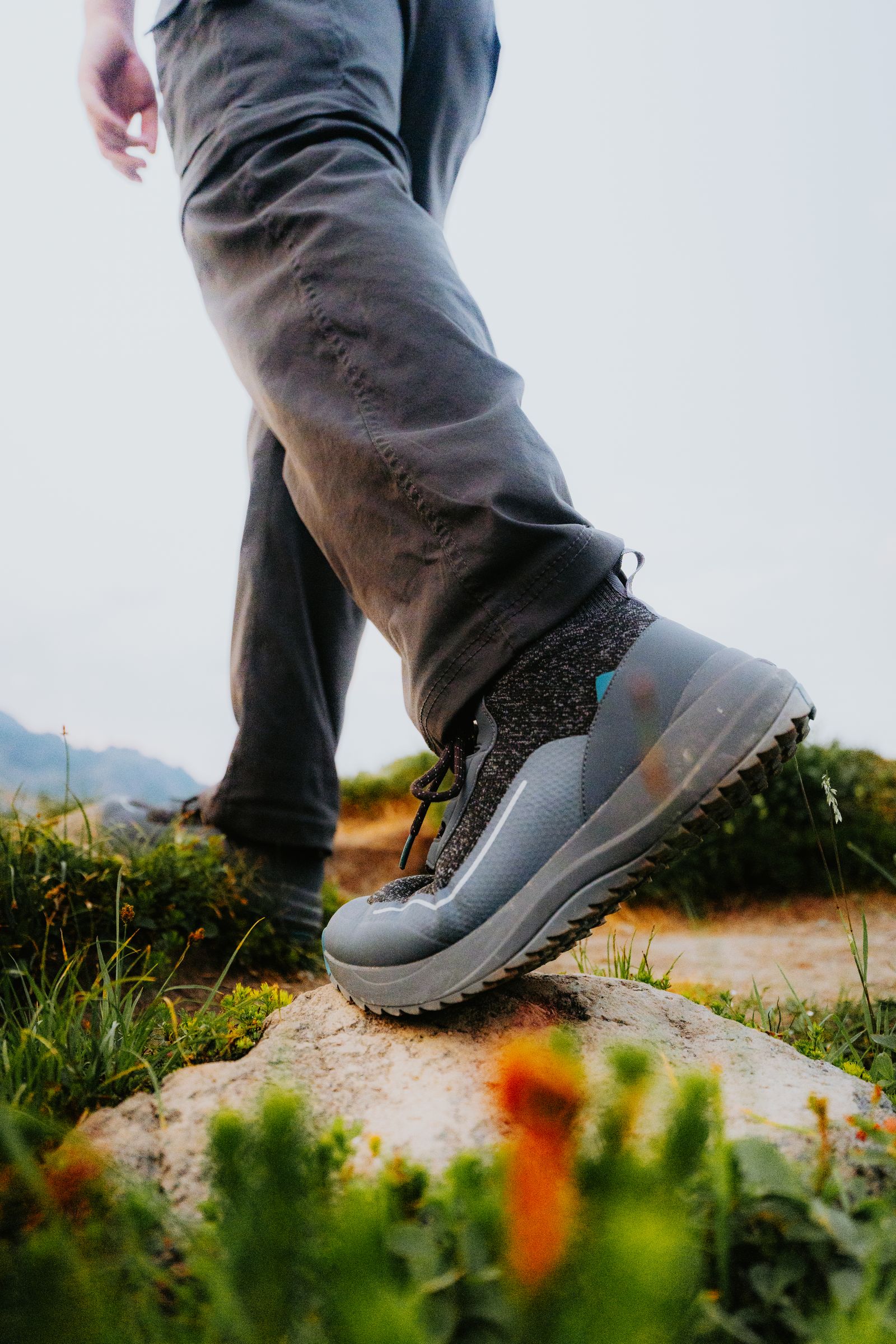
Wide feet blister because standard-width socks pull tight across the forefoot, then slide and bunch as you walk. That movement is friction, and friction plus sweat means blisters by mile eight. You need socks that eliminate shear at the source, sized for your actual foot.
Quick answer: The best blister-proof hiking socks for wide feet are the Wrightsock Coolmesh II, whose patented double layer rubs against itself instead of your skin, and the Injinji Trail Midweight Crew toe socks, which let toes splay naturally and stop toe-on-toe friction. Get the width right first, and blisters rarely follow.
Disclosure: Trail Tested is reader-supported. When you buy through links on this page, we may earn a commission at no extra cost to you. Learn more. All picks are compiled picks — see how we rate gear.
The 5 best blister-proof socks for wide feet
1. Wrightsock Coolmesh II Crew — the double-layer standard
Wrightsock Coolmesh II Crew at Travel Country- Price: $17
- Materials: Inner layer 70% Repreve recycled polyester / 26% nylon / 4% Lycra; outer layer 71% / 24% / 5%
- Weight class: Lightweight double layer — the brand’s #1 selling style worldwide
- Height: Crew
- Sizes: S–XL (M fits men’s 5–8, L fits men’s 8.5–11.5, XL fits men’s 12–14)
- Notable: Patented anti-blister double-layer system (inner and outer layers slide against each other), mesh top panel, Stabilizer Zone arch band, “No Blisters, Guaranteed,” made in the USA
Why it’s a compiled pick: This is the most friction-proof design a wide-footed hiker can buy: the two layers absorb the shear, so your skin barely moves relative to the sock. It’s top-rated across running and hiking reviews and the cheapest real blister insurance on this list.
2. Injinji Trail Midweight Crew — the toe-sock solution
Injinji Trail Midweight Crew at SockGeek- Price: $18
- Materials: 58% nylon, 39% COOLMAX EcoMade, 3% Lycra
- Weight: 1.8 oz per pair (women’s XS/S)
- Height: Crew with double elastic cuff to block trail debris
- Sizes: Men’s S, M, L, XL / Women’s XS/S, M/L
- Notable: Individual toe sleeves eliminate skin-on-skin friction, arch support, protective cushioning under heel and metatarsals, mesh top, worn by ultrarunners like Courtney Dauwalter
Why it’s a compiled pick: Toe blisters are the signature injury of wide feet — toes get squeezed together, rub, and blister. Injinji’s five-toe design wraps each toe in its own friction-free sleeve, and wide feet with naturally splayed toes take to the format immediately. The synthetic Coolmax blend also wicks fast, keeping the dampness that accelerates blisters away. Expect a short adjustment period if you’ve never worn toe socks; the blister protection starts on day one.
3. Balega Blister Resist Crew — the mohair friction fighter
Balega Blister Resist Crew at Sage to Summit- Price: $23 MSRP (sales seen around $16)
- Materials: 40% nylon, 28% Drynamix polyester, 27% mohair, 3% microfiber, 2% elastane
- Weight class: Lightweight, low volume with plush underfoot cushioning
- Height: Crew
- Sizes: S–XL (men’s 4.5–14, women’s 6–15.5)
- Notable: Drynamix mohair footbed reduces friction, hand-linked seamless toe, mesh ventilation panels, wide arch band, reinforced heel and toe
Why it’s a compiled pick: Mohair is the hero here — naturally low-friction, so the Drynamix footbed slides rather than grabs. The low-volume knit fits wide feet without excess bulk, and Balega hand-inspects every pair, which shows in the seamless toe. A strong pick for hot feet that blister at the ball.
4. Darn Tough Tactical Boot Midweight Full Cushion — the heavy-duty option
Darn Tough Tactical T4022 at GoBros- Price: $31 MSRP
- Materials: 66% merino wool, 32% nylon, 2% Lycra spandex
- Weight class: Midweight with full cushion — dense terry loops from toe to cuff
- Height: Boot (rises to the top of an 8-in. boot)
- Sizes: XS–XXL (the range to XL/XXL is a real advantage for wide feet)
- Notable: Elastic arch support, reinforced heel and toe, True Seamless toe, performance fit that locks the heel, lifetime guarantee, made in Vermont
Why it’s a compiled pick: This sock attacks blisters the old-fashioned way: total lockdown. The elastic arch and performance fit keep the sock from moving inside the boot at all — no movement, no friction, no blister. The XXL sizing and naturally roomy tactical cut suit wide feet that need serious cushioning for heavy packs or long days. Buy it when your blisters come from heel slip rather than toe squeeze.
5. Smartwool Hike Light Cushion Crew — the light, roomy everyday pick
Smartwool Hike Light Cushion Crew at Sherper’s- Price: $25
- Materials: 56% merino wool, 11% nylon, 31% recycled nylon, 2% elastane
- Weight class: Light cushion along the entire bottom of the foot
- Height: Crew — 8 in.
- Sizes: S–XL (M fits men’s 6–8.5, L fits men’s 9–11.5, XL fits men’s 12–14.5)
- Notable: 4 Degree elite fit system, Virtually Seamless toe, Indestructawool durability zones, mesh ventilation, made in the USA
Why it’s a compiled pick: Sometimes a blister-prone foot just needs a well-fitting sock that doesn’t move. The stay-put welt and stretchy 4 Degree fit keep it planted on wide feet, the seamless toe removes the main hot spot, and light cushioning keeps boot volume down.
Spec comparison
| Sock | Price | Blister mechanism | Materials | Height | Sizes |
|---|---|---|---|---|---|
| Wrightsock Coolmesh II Crew | $17 | Double layer — layers slide, not skin | Inner 70% poly / 26% nylon / 4% Lycra; outer 71% / 24% / 5% | Crew | S–XL |
| Injinji Trail Midweight Crew | $18 | Toe separation — no toe-on-toe friction | 58% nylon / 39% COOLMAX / 3% Lycra | Crew | S–XL / XS/S–M/L |
| Balega Blister Resist Crew | $23 | Low-friction mohair footbed | 40% nylon / 28% Drynamix poly / 27% mohair / 3% microfiber / 2% elastane | Crew | S–XL |
| Darn Tough Tactical T4022 | $31 | Total lockdown + full cushioning | 66% merino / 32% nylon / 2% Lycra | Boot | XS–XXL |
| Smartwool Hike Light Cushion Crew | $25 | Stay-put fit + seamless toe | 56% merino / 11% nylon / 31% recycled nylon / 2% elastane | Crew (8") | S–XL |
How to choose blister-proof socks for wide feet
Match the sock to your blister location. Toe blisters → toe socks or a seamless toe box. Heel blisters → a sock with a deep heel pocket and arch lock (Darn Tough Tactical, Wrightsock’s Stabilizer Zone). Ball-of-foot blisters → cushioning plus low-friction fibers (Balega’s mohair).
Fit the width first. A narrow sock defeats any blister technology because it bunches and slides. Size up one step in standard socks, or buy a sock whose sizing genuinely covers your width. Your toes should lie flat and separated, not stacked.
Understand the two philosophies. Double-layer systems absorb shear between fabric layers; fitted performance socks prevent shear by eliminating movement. Both work — pick double-layer if your feet swell through the day, fitted if your sock moves in the boot.
Manage moisture. Damp skin blisters far faster than dry skin. Synthetic blends and Coolmax move sweat fastest; merino regulates it well. On long days, a spare dry pair swapped at lunch does more for blister prevention than any single sock technology.
What to avoid: cotton (the classic blister sock), brand-new socks on a big hike day (wash and wear every pair at least once first), and ignoring hot spots — tape or moleskin a hot spot the moment you feel it, don’t “push through.”
Why do wide feet blister more on hikes? A sock that’s too narrow slides and bunches inside the boot, creating moving pressure points. Blisters are shear injuries: layers of skin separating under repeated friction. Stop the shear — with a sock that fits the width and moves as one with the foot — and blisters usually stop too.
Are double-layer socks good for wide feet? Yes. Double-layer socks like the Wrightsock Coolmesh II let the inner and outer layers rub against each other instead of your skin, which cuts friction at the source. They run true to size and the two layers move independently, so width is well tolerated.
Do toe socks really prevent blisters? Toe socks eliminate skin-on-skin friction between toes, which is where toe blisters start. Injinji’s trail toe socks are the standard here, and because each toe sits in its own sleeve, wide feet with splayed toes often fit them well.
Should I use a liner sock under my hiking socks? A thin liner plus an outer sock mimics double-layer technology: the layers slide against each other. It’s effective for blister-prone feet, but adds volume — wide feet in snug boots should try a purpose-built double-layer sock first.
What’s the fastest fix for blisters on the trail? Stop the moment you feel a hot spot: clean and dry the area, apply a blister bandage or moleskin, and switch to dry socks if you carry a spare. Continuing to hike on a hot spot is how you get a trip-ending blister.
Related guides
- Feet & Socks hub — every foot-problem guide in one place
- Best Hiking Socks for Wide Feet — fit-first picks for wide forefeet
- Best Hiking Socks for Sweaty Feet (No Blisters) — moisture management that stops blisters
- Best Hiking Socks for Bunions — padding and toe boxes for bunion pain
Where do your blisters strike — toes, heels, or ball of foot? Note your foot width and blister spot via the contact page; your pattern helps other hikers pick the right fix.
Heads up: some links on this page are affiliate links — if you buy through them we may earn a commission at no extra cost to you. Learn more.
Frequently asked questions
Why do wide feet blister more on hikes?
A sock that’s too narrow slides and bunches inside the boot, creating moving pressure points. Blisters are shear injuries: layers of skin separating under repeated friction. Stop the shear — with a sock that fits the width and moves as one with the foot — and blisters usually stop too.
Are double-layer socks good for wide feet?
Yes. Double-layer socks like the Wrightsock Coolmesh II let the inner and outer layers rub against each other instead of your skin, which cuts friction at the source. They run true to size and the two layers move independently, so width is well tolerated.
Do toe socks really prevent blisters?
Toe socks eliminate skin-on-skin friction between toes, which is where toe blisters start. Injinji’s trail toe socks are the standard here, and because each toe sits in its own sleeve, wide feet with splayed toes often fit them well.
Should I use a liner sock under my hiking socks?
A thin liner plus an outer sock mimics double-layer technology: the layers slide against each other. It’s effective for blister-prone feet, but adds volume — wide feet in snug boots should try a purpose-built double-layer sock first.
What's the fastest fix for blisters on the trail?
Stop the moment you feel a hot spot: clean and dry the area, apply a blister bandage or moleskin, and switch to dry socks if you carry a spare. Continuing to hike on a hot spot is how you get a trip-ending blister.