
Merino vs Silk vs Thermolite Sleeping Bag Liners (2026)
Merino, silk, or Thermolite? We compare sleeping bag liner fabrics on warmth, weight, skin comfort, odor control, and price — so you buy the right one.
In this guide
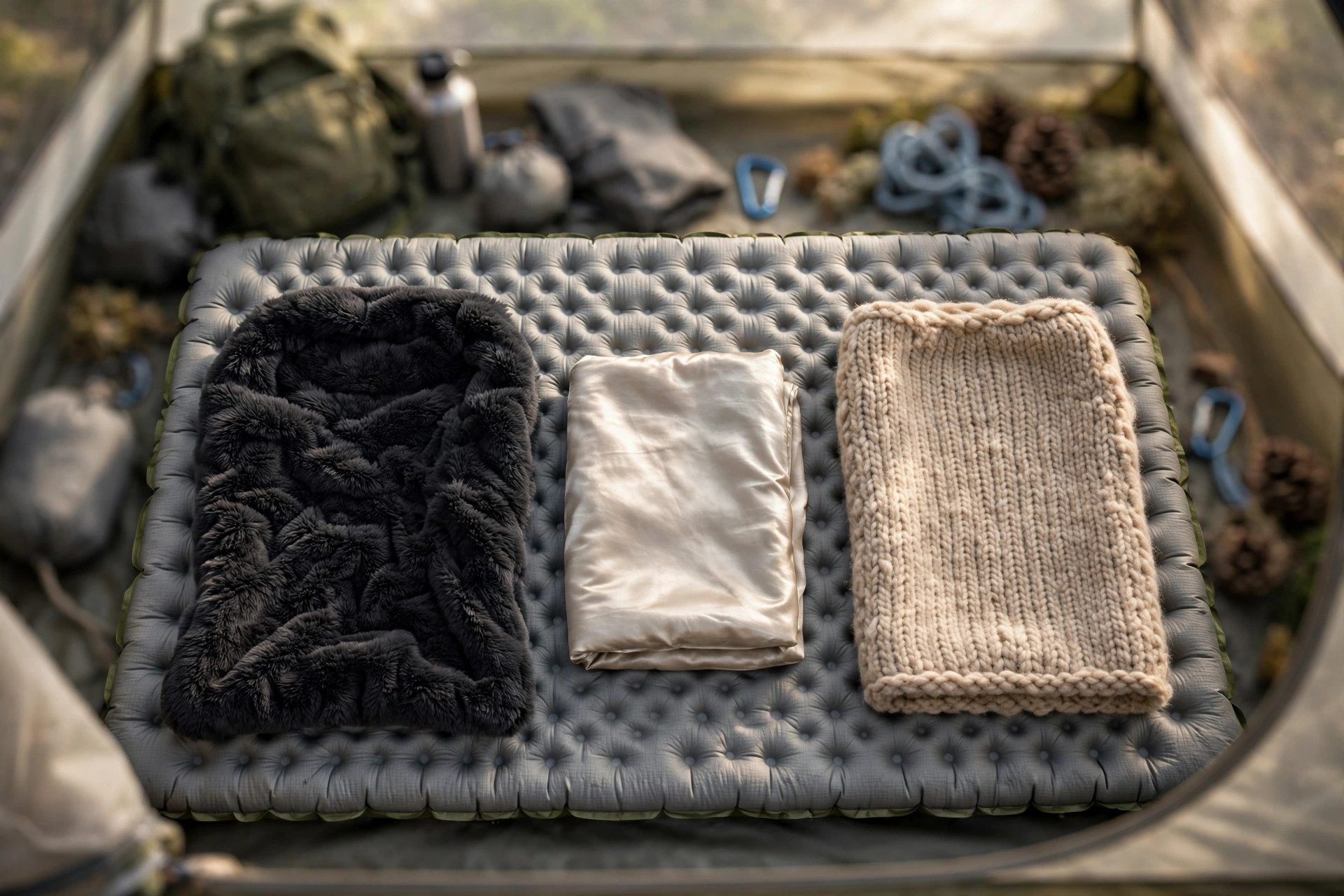
Not every sleeping bag liner does the same job. A Thermolite liner adds genuine warmth, a silk liner adds almost none — but packs down to the size of an apple and feels like hotel sheets — and a merino wool liner lands in between with the best odor control of the three. Picking by fabric, not by brand, is how you get the right one.
Quick answer: the Sea to Summit Thermolite Reactor is the best all-round liner for backpackers who sleep cold — it adds up to 14°F to your bag’s rating for about $80 at 8.7 oz. The Sea to Summit Silk Stretch Liner (4.8 oz, ~$100) is the pick for ounce-counters and summer trips where comfort matters more than warmth. The Cocoon Merino Wool MummyLiner (adds up to ~13°F, ~17.5 oz, ~$110) is for multi-week trips where odor control matters more than weight.
Disclosure: Trail Tested is reader-supported. When you buy through links on this page, we may earn a commission at no extra cost to you. Learn more. All picks are compiled picks: researched from buyer reviews and manufacturer specs, not hands-on testing. See how we pick gear.
- The verdict in 30 seconds
- Thermolite: warmest per ounce and per dollar
- Silk: the ultralight comfort pick
- Merino wool: the long-trip odor champion
- How we compared the fabrics
- When a liner isn’t the right answer
- FAQ
The verdict in 30 seconds
| Fabric | Claimed warmth added | Weight | Street price | Best for |
|---|---|---|---|---|
| Thermolite (synthetic) | Up to ~14°F | 8.7 oz | ~$80 | Cold sleepers, shoulder-season trips |
| Silk | A few degrees | 4.8 oz | ~$100 | Ultralight hikers, summer comfort |
| Merino wool | Up to ~13°F (7°C) | 17.5 oz | ~$110 | Long trips, odor control |
If you sleep cold and want the most warmth per dollar: Thermolite. If every gram is budgeted: silk. If you’re out for weeks and hate the way synthetics smell by day five: merino.
Thermolite: warmest per ounce and per dollar
Sea to Summit Thermolite Reactor at REI- Price: ~$80
- Weight: 8.7 oz (248 g)
- Claimed warmth added: Up to 14°F
- Shape: Mummy with box foot and drawcord hood
- Material: Thermolite hollow-core synthetic fiber
- Care: Machine washable, quick-drying
- Packs into: Its own stuff sack
Who should buy it: Cold sleepers pushing a 3-season bag into the shoulder seasons, and anyone who wants the biggest temperature boost without buying a second sleeping bag. The mummy cut with a box foot mirrors a real bag, so it doesn’t bunch up, and the fleecy face fabric feels far nicer than the crinkly synthetics of a decade ago.
What to know first: It is the bulkiest of the three and genuinely too warm for summer — reviewers consistently note it overheats them above ~60°F nights. The warmth claim is manufacturer-tested, not independently standardized, so treat “14°F” as a best case. And while it wicks moisture well, it develops the familiar synthetic smell on multi-week trips faster than wool or silk.
Why it’s a compiled pick: Across independent liner roundups and hundreds of verified buyer reviews, the Thermolite Reactor is the only liner with a serious, repeatable warmth story. Thru-hikers use it to stretch a 20°F quilt into the teens, and the price undercuts every bag upgrade by an order of magnitude. No other fabric delivers this much warmth per ounce at this price.
Silk: the ultralight comfort pick
Sea to Summit Silk Stretch Liner at BlackOvis- Price: ~$100
- Weight: 4.8 oz (140 g, mummy)
- Claimed warmth added: A few degrees
- Shape: Mummy, 6'10" × 36", with comfort stretch panels
- Material: AA-grade ripstop silk with polyester/lycra stretch gussets
- Care: Machine washable on gentle, air-dry
- Packs into: Its own tiny storage case
Who should buy it: Ultralight hikers who’d rather carry 5 oz than 18, summer backpackers, and anyone using the liner as a hostel travel sheet as much as a bag insert. The stretch panels genuinely move with restless sleepers — the most common praise in buyer reviews — and silk regulates temperature in both directions, cool against the skin on warm nights.
What to know first: Buy this for warmth and you’ll be disappointed; silk’s insulation is minimal and the price-per-degree is the worst of the three. Ripstop silk is stronger than it looks, but it’s still the least abrasion-resistant fabric here — snag it on a zipper and you’ll know. It also costs as much as the warmer Thermolite option, so you’re paying purely for weight and feel.
Why it’s a compiled pick: For its niche — maximum comfort at minimum weight — nothing beats it. It packs smaller than a soda can, doubles as a clean sheet in questionable hostel beds, and extends your sleeping bag’s life by absorbing the sweat and sunscreen that otherwise grind into the bag’s insulation. If your bag is already warm enough, silk is the rational liner.
Merino wool: the long-trip odor champion
Cocoon Merino Wool MummyLiner at Unterwegs- Price: ~$110 (about €100; mainly sold through European outdoor retailers)
- Weight: 17.5 oz (495 g)
- Claimed warmth added: Up to ~13°F (7°C, per Cocoon)
- Shape: Mummy, 220 × 80/60 cm, with drawstring hood and boxed foot
- Material: 100% merino wool, certified mulesing-free
- Care: Hand-wash cold with wool detergent, dry flat — never tumble-dry
- Packs into: Included compression stuff sack
Who should buy it: Hikers on trips of a week or more, hut-to-hut trekkers, and anyone whose synthetic base layers turn biohazardous by day three. Merino’s antimicrobial fibers genuinely resist odor for weeks — this is the fabric’s documented superpower — and it insulates even when damp, unlike cotton. The warmth claim (~13°F) is nearly on par with Thermolite’s.
What to know first: It is heavy — more than double the Thermolite liner and nearly four times the silk one — and it packs the largest. Merino also demands the fussiest care of the three: machine-washing it like a synthetic will felt it into a shrunken shell. And in the US it’s harder to find; Cocoon is an Austrian brand sold mostly through European outdoor shops, so expect international shipping.
Why it’s a compiled pick: No other liner fabric combines near-Thermolite warmth with silk-beating comfort and genuinely weeks-long odor resistance. For thru-hikes and hut tours where laundry is a rumor, merino is the fabric that stays civilized the longest. Just budget the weight and the shipping.
How we compared the fabrics
This is a criteria-based comparison, not hands-on testing. We scored each fabric on six factors, cross-checking manufacturer specs against independent liner roundups and verified buyer reviews:
- Added warmth — using the manufacturer’s claimed temperature boost, discounted by what reviewers report in the field.
- Packed weight and size — the real cost in your pack, where silk dominates and merino pays dearly.
- Skin comfort — how the fabric feels at 2 AM: silk first, merino second, Thermolite’s fleecy face a respectable third.
- Moisture and odor behavior — merino’s documented antimicrobial edge, Thermolite’s quick-dry advantage, silk’s breathability.
- Durability and care — Thermolite is the wash-and-forget winner; silk and merino demand gentle handling.
- Price vs. delivered value — what you actually get per dollar, where Thermolite’s warmth-per-dollar is unmatched.
Warmth claims deserve a caveat: there is no EN/ISO standard for liner temperature ratings the way there is for sleeping bags, so every “adds X degrees” number comes from the manufacturer. We treated them as comparative, not absolute.
When a liner isn’t the right answer
A liner is a range-extender, not a rescue plan. If your bag is more than ~15°F too warm for the nights you’re facing, the honest fix is a warmer bag — see our budget 3-season sleeping bag picks — because a liner slightly compresses the bag’s loft and can’t fix a fundamentally wrong rating. Cold sleepers should also check their pad first: an under-insulated pad bleeds heat all night, and no liner compensates (our sleeping pad guide explains R-values). And if you mostly want a cleaner bag rather than a warmer one, the cheapest honest option is the silk liner — or simply sleeping in clean base layers.
FAQ
Do sleeping bag liners actually add warmth, or do they only keep the bag clean?
Both, but the warmth varies hugely by fabric. Thermolite synthetic adds a claimed 14°F, merino wool about 13°F, and silk just a few degrees. A liner also traps body oils and sweat, so your sleeping bag stays cleaner and lofts better over a long trip. Treat liners as a small temperature-range extender, not a replacement for the right bag.
If I mostly want extra warmth, which liner should I choose — silk, Thermolite, or merino wool?
Thermolite wins on warmth per ounce and per dollar — it is the only one with an insulation claim (up to 14°F) at a mid-range price. Merino wool is close behind on warmth and far better for odor control on long trips. Silk is the wrong fabric if warmth is your main goal; it is a comfort and weight play.
Can a sleeping bag liner turn my 40-degree bag into a 25-degree bag?
Close, but don’t count on it. A Thermolite liner’s 14°F claim would mathematically get you there, yet real-world results vary with fit, your metabolism, and your sleeping pad — an under-insulated pad steals warmth a liner can’t replace. If you are more than about 15°F off your bag’s rating, upgrading the bag itself is the honest fix.
How do I wash a silk or merino wool liner without damaging the fabric?
Machine-wash silk on gentle in cold water with mild soap, then air-dry away from direct sun — heat and agitation damage silk fibers. Merino prefers hand-washing in cold water with wool detergent; never tumble-dry or iron it, and dry flat so it keeps its shape. Both fabrics stay fresh for weeks on trail, so wash far less often than cotton.
Should I buy a mummy-shaped liner or a rectangular one for backpacking?
Mummy. It mirrors your sleeping bag’s shape, so there is no wasted fabric bunching up and stealing insulation or pack space. Mummy liners with a box foot and drawcord hood stay put when you toss at night. Rectangular liners are fine for hostel beds and summer travel sheets, but they are clumsier inside a fitted sleeping bag.
Sleep system reading: Down vs synthetic sleeping bags · Best sleeping pads for side sleepers · Best budget 3-season sleeping bags under $100 · Browse the sleep hub
Heads up: some links on this page are affiliate links — if you buy through them we may earn a commission at no extra cost to you. Learn more.
Frequently asked questions
Do sleeping bag liners actually add warmth, or do they only keep the bag clean?
Both, but the warmth varies hugely by fabric. Thermolite synthetic adds a claimed 14°F, merino wool about 13°F, and silk just a few degrees. A liner also traps body oils and sweat, so your sleeping bag stays cleaner and lofts better over a long trip. Treat liners as a small temperature-range extender, not a replacement for the right bag.
If I mostly want extra warmth, which liner should I choose — silk, Thermolite, or merino wool?
Thermolite wins on warmth per ounce and per dollar — it is the only one with an insulation claim (up to 14°F) at a mid-range price. Merino wool is close behind on warmth and far better for odor control on long trips. Silk is the wrong fabric if warmth is your main goal; it is a comfort and weight play.
Can a sleeping bag liner turn my 40-degree bag into a 25-degree bag?
Close, but don’t count on it. A Thermolite liner’s 14°F claim would mathematically get you there, yet real-world results vary with fit, your metabolism, and your sleeping pad — an under-insulated pad steals warmth a liner can’t replace. If you are more than about 15°F off your bag’s rating, upgrading the bag itself is the honest fix.
How do I wash a silk or merino wool liner without damaging the fabric?
Machine-wash silk on gentle in cold water with mild soap, then air-dry away from direct sun — heat and agitation damage silk fibers. Merino prefers hand-washing in cold water with wool detergent; never tumble-dry or iron it, and dry flat so it keeps its shape. Both fabrics stay fresh for weeks on trail, so wash far less often than cotton.
Should I buy a mummy-shaped liner or a rectangular one for backpacking?
Mummy. It mirrors your sleeping bag’s shape, so there is no wasted fabric bunching up and stealing insulation or pack space. Mummy liners with a box foot and drawcord hood stay put when you toss at night. Rectangular liners are fine for hostel beds and summer travel sheets, but they are clumsier inside a fitted sleeping bag.