
Down vs Synthetic Sleeping Bag: Which Is Worth It? (2026)
Down vs synthetic sleeping bag — the real tradeoffs. Warmth per ounce, wet-weather safety, lifespan, price — and which to buy for your climate.
In this guide
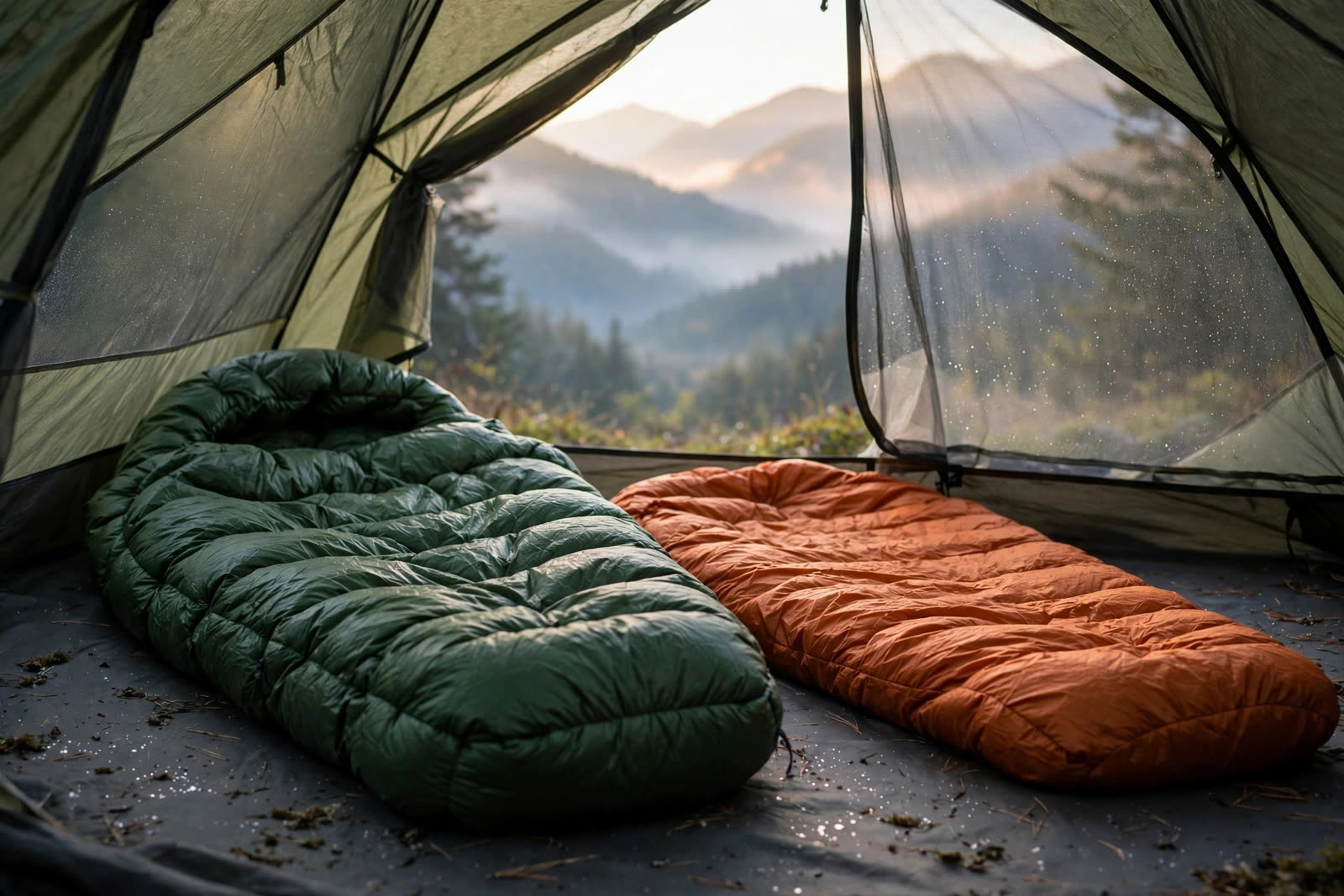
Quick answer: Neither wins outright. Buy down if you backpack in dry conditions and count ounces — it packs half the size and lasts 10+ years. Buy synthetic if you camp where rain is routine, you’re on a budget, or this is your first bag — it insulates when wet, costs half as much, and forgives sloppy care.
Every backpacker eventually faces the down-vs-synthetic question, and the honest answer is that neither wins outright. Down gives you the best warmth for the least weight and packs half the size — but it costs 2–3x more and goes dangerously flat when wet. Synthetic shrugs off dampness, costs far less, and forgives sloppy care — but it’s heavier, bulkier, and wears out sooner. Buy down if you backpack in dry conditions and count ounces; buy synthetic if you camp where rain is routine, you’re on a budget, or this is your first bag.
Disclosure: Trail Tested is reader-supported. When you buy through links on this page, we may earn a commission at no extra cost to you. Learn more. All comparisons are compiled from manufacturer specs and verified buyer reviews — see how we rate gear.
Down vs synthetic at a glance
- The case for down
- The case against down
- The case for synthetic
- The case against synthetic
- Head-to-head comparison table
- Which should you buy?
- How we compare insulation
- FAQ
The case for down
Down — the soft under-plumage of ducks and geese — is still the most efficient insulation per ounce that exists. Its quality is measured in fill power (550 to 900+): higher numbers mean more loft per ounce, i.e., more trapped warm air for less weight. A 20°F down bag with 650-fill typically weighs 2–2.5 lbs and compresses to roughly 6–8 liters — small enough to disappear into the bottom of a 50L pack.
- Warmth-to-weight king: nothing matches down. Shaving a pound off your sleep system is the cheapest weight saving in backpacking.
- Packs tiny: compresses to about half the volume of an equivalent synthetic bag.
- Lasts for years: a quality down bag, stored uncompressed and washed properly, routinely lasts 10+ years — many hikers still use decade-old down bags.
- Drapes better: down conforms to your body with fewer cold spots than stiffer synthetic batts.
Representative down bags (compiled from manufacturer specs and verified reviews): the REI Co-op Magma 15 ($379, 850-fill) is the premium pick for cold 3-season trips; the Kelty Cosmic 20 ($170, 550-fill) is the classic budget-down entry point.
The case against down
- Wet down is a safety problem, not just a comfort problem. Down’s loft collapses when saturated, and loft is the insulation. A soaked down bag on a 40°F night can leave you shivering — this is why experienced hikers in the Pacific Northwest and Appalachians treat down with deep respect or choose synthetic outright.
- Expensive: expect to pay 2–3x the price of a comparable synthetic bag. Budget “down” bags (500–550 fill) narrow the gap but give up much of the weight advantage.
- Fussy care: down needs special detergent, a front-loading washer, and a long low-heat dry with tennis balls to restore loft. Machine-wash it like a normal blanket and you’ll regret it.
- Ethics and allergies: down is an animal product (look for RDS — Responsible Down Standard — certification if that matters to you), and a small number of people are genuinely allergic to it.
Hydrophobic down (DWR-treated, marketed as DownTek, HyperDRY, etc.) is worth understanding: the treatment makes individual plumes resist moisture, so the bag survives tent condensation and an accidental splash without clumping. It buys you time — it does not make down waterproof. Most mid-range and premium down bags now include it at little or no price premium, so there’s rarely a reason to refuse it.
The case for synthetic
Synthetic insulation (brands like PrimaLoft, Thermolite, Marmot’s HL-Eco) is engineered polyester fill designed to mimic down’s loft.
- Insulates when damp: this is the headline. Synthetic batts keep trapping warm air even wet — not as warm as dry, but warm enough to be safe. For rainy climates, beginners, and kayak-campers, this is the deciding factor.
- Far cheaper: a solid 20°F synthetic bag runs ~$80–$180, vs ~$200–$400+ for down. Our budget 3-season roundup is all synthetic for exactly this reason.
- Easy care: machine wash and tumble dry low like normal laundry. Stuff it damp, forget it in the garage for a month — it’ll forgive you.
- Vegan and hypoallergenic: no animal products, no down allergies.
Representative synthetic bags: the Teton Sports Celsius 20°F ($90) is the value workhorse; the Marmot Trestles Elite Eco 20 ($130) is the best-built bag near this price with recycled insulation.
The case against synthetic
- Heavier and bulkier: a 20°F synthetic bag typically weighs 3–4 lbs and packs to 10–14 liters — roughly a pound heavier and twice the volume of down. On a 5-day trip, that bulk eats real pack space.
- Shorter lifespan: synthetic fibers gradually lose loft with every compression cycle. Expect 3–5 seasons of regular use before the bag feels noticeably less warm; down lasts far longer.
- Less drape: stiffer batts can leave small air gaps (cold spots) around shoulders and hips for restless sleepers.
Head-to-head: down vs synthetic
| Down | Synthetic | |
|---|---|---|
| 20°F bag weight | ~2–2.5 lbs | ~3–4 lbs |
| Packed volume (20°F) | ~6–8 liters | ~10–14 liters |
| Warmth when wet | Collapses — dangerous | Retains most warmth |
| Hydrophobic option | Yes (DWR-treated down) | N/A — inherently resistant |
| Typical price (20°F) | ~$200–$400+ | ~$80–$180 |
| Lifespan | 10+ years with care | ~3–5 seasons of heavy use |
| Care | Special detergent, careful drying | Machine wash and dry |
| Fill-power / quality range | 550–900+ fill power | Varies by brand (PrimaLoft, HL-Eco…) |
| Allergies / ethics | Animal product; RDS certified options | Vegan; hypoallergenic |
Which should you buy?
Buy down if: you backpack in mostly dry conditions (Rockies, Sierra, desert Southwest), you count ounces for multi-day or thru-hikes, you want one bag to last a decade, or pack space is tight. Get hydrophobic-treated down and still keep it dry — a pack liner or dry sack is cheap insurance.
Buy synthetic if: you camp where rain is routine (Pacific Northwest, Appalachians, shoulder-season anywhere), this is your first sleeping bag, you’re car camping or doing short overnights where a pound doesn’t matter, you’re on a budget, or you want vegan/hypoallergenic gear.
The honest truth: for most beginners, synthetic is the smarter first purchase — it’s half the price and survives beginner mistakes. The hikers who benefit most from down are the ones logging serious miles, where a pound and several liters of pack space genuinely change the trip. And remember: the bag is only half the system. A 20°F bag on an uninsulated pad in freezing weather will still feel cold — pair either choice with a proper sleeping pad.
How we compare insulation
We don’t invent test trips we didn’t take. Every comparison on Trail Tested is compiled from manufacturer-published specs (fill power, weight, temperature rating, shell fabrics), EN/ISO 23537 temperature-rating standards, and patterns across hundreds of verified buyer reviews — what owners consistently praise, what they consistently complain about, and what fails in the field. Temperature ratings assume you’re wearing base layers and sleeping on an insulated pad; treat any rating as guidance, not a guarantee. Prices are typical US street prices and move with sales.
Related sleep-system guides:
- The 3 Best Budget Sleeping Bags for 3-Season Camping Under $100 (2026)
- Best Sleeping Pads for Side Sleepers (2026)
- Best Backpacking Pillows for Side Sleepers (2026)
FAQ
Is down or synthetic better for a beginner backpacker? Synthetic is the better beginner buy. It costs half as much, survives the mistakes beginners make (damp tents, stuffing it wet, machine washing), and keeps you warm even when it gets damp. Move to down when you’re counting ounces on longer trips.
Does down really lose all its warmth when wet? Nearly. Wet down clumps and loses its loft — and loft is what traps warm air — so a soaked down bag can leave you dangerously cold. Hydrophobic (DWR-treated) down resists light moisture and buys you time, but it is not waterproof. In persistently wet climates, synthetic is the safer insulation.
How much lighter is a down sleeping bag than synthetic? For the same 20°F temperature rating, expect a down bag around 2–2.5 lbs vs 3–4 lbs for synthetic — roughly a pound saved. The packed-size gap is even bigger: down compresses to about half the volume, which is why thru-hikers and ultralight backpackers almost all choose down.
How long does a sleeping bag last — down vs synthetic? A quality down bag cared for properly (stored uncompressed, washed rarely with down-specific detergent) can last 10+ years. Synthetic insulation gradually loses loft with compression cycles; expect 3–5 seasons of heavy use before a synthetic bag feels noticeably less warm.
Is hydrophobic down worth the extra cost? For most backpackers, yes if you’re already buying down. DWR-treated down resists tent condensation and accidental splashes without a meaningful weight or price penalty on most current bags. But don’t treat it as waterproof — it delays wet-out, it doesn’t prevent it.
Heads up: some links on this page are affiliate links — if you buy through them we may earn a commission at no extra cost to you. Learn more.
Frequently asked questions
Is down or synthetic better for a beginner backpacker?
Synthetic is the better beginner buy. It costs half as much, survives the mistakes beginners make (damp tents, stuffing it wet, machine washing), and keeps you warm even when it gets damp. Move to down when you’re counting ounces on longer trips.
Does down really lose all its warmth when wet?
Nearly. Wet down clumps and loses its loft — and loft is what traps warm air — so a soaked down bag can leave you dangerously cold. Hydrophobic (DWR-treated) down resists light moisture and buys you time, but it is not waterproof. In persistently wet climates, synthetic is the safer insulation.
How much lighter is a down sleeping bag than synthetic?
For the same 20°F temperature rating, expect a down bag around 2–2.5 lbs vs 3–4 lbs for synthetic — roughly a pound saved. The packed-size gap is even bigger: down compresses to about half the volume, which is why thru-hikers and ultralight backpackers almost all choose down.
How long does a sleeping bag last — down vs synthetic?
A quality down bag cared for properly (stored uncompressed, washed rarely with down-specific detergent) can last 10+ years. Synthetic insulation gradually loses loft with compression cycles; expect 3–5 seasons of heavy use before a synthetic bag feels noticeably less warm.
Is hydrophobic down worth the extra cost?
For most backpackers, yes if you’re already buying down. DWR-treated down resists tent condensation and accidental splashes without a meaningful weight or price penalty on most current bags. But don’t treat it as waterproof — it delays wet-out, it doesn’t prevent it.