
The 4 Best 1-Person Backpacking Tents Under $200 (2026)
The 4 best 1-person backpacking tents under $200 — Naturehike, Teton, ALPS, Eureka — with real prices, weights, and floor areas compared.
In this guide
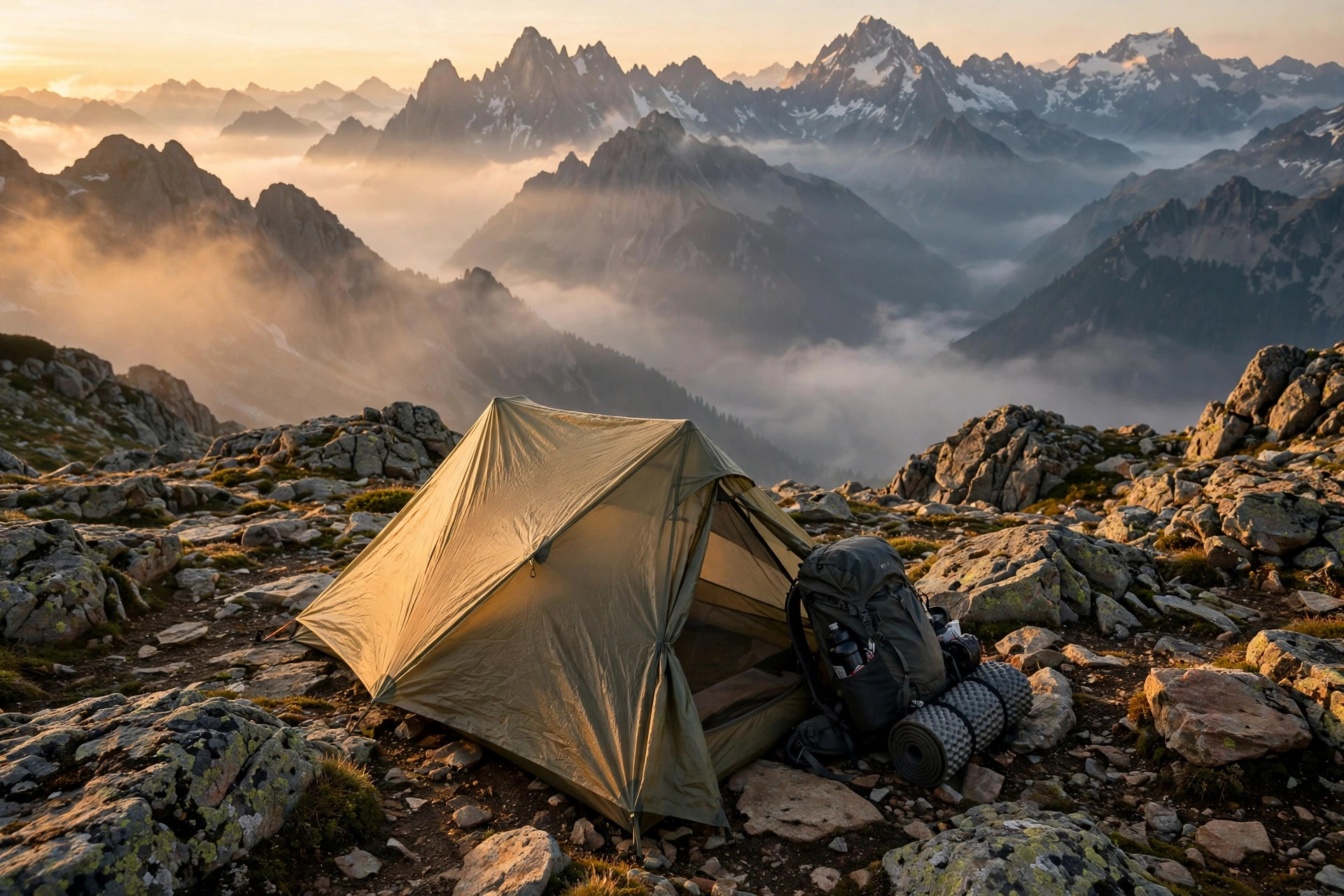
A solo backpacking tent is the hardest category to buy cheap: one wall panel, one pole, one occupant — and nowhere to hide design flaws. We compared the four 1-person tents that hold up under $200, all double-wall, 3-season shelters with real rainflies and sealed seams, verified at current street prices as of October 2026.
Quick answer: The best 1-person backpacking tent under $200 is the Naturehike Cloud-Up 1 ($119 street) — a sub-3.6-lb tent with a PU 4000mm rainfly, a footprint in the box, and the widest reviewer consensus. The Teton Sports Mountain Ultra 1 ($110) is the budget pick with 150D bombproof fabrics and a lifetime warranty, the ALPS Mountaineering Zephyr 1 ($120 street) is the ventilation pick for hot, humid nights, and the Eureka! Solitaire AL ($130) is the lightest option at 3 lb 3.2 oz packed.
Disclosure: Trail Tested is reader-supported. When you buy through links on this page, we may earn a commission at no extra cost to you. Learn more. All picks are compiled picks — researched from verified buyer reviews, retailer listings, and manufacturer specs, not hands-on testing. See how we pick gear.
Contents
- Best Overall: Naturehike Cloud-Up 1
- Best Budget: Teton Sports Mountain Ultra 1
- Best for Hot Weather: ALPS Mountaineering Zephyr 1
- Lightest: Eureka! Solitaire AL
- Spec comparison
- How we picked
- Tested & dismissed
- FAQ
The 4 best 1-person backpacking tents under $200
1. Naturehike Cloud-Up 1 — Best Overall ($119)
Check price- Price: ~$119 street (Amazon, Target, Walmart; often discounted from a ~$291 list price)
- Packed weight: 3.5 lb (20D version)
- Floor area: ~24.9 sq ft usable (82.7 in × 43.3 in inner), plus vestibule
- Peak height: 39.4 in
- Doors / vestibules: 1 / 1
- Fabric: 20D sil-coated nylon rainfly, PU 4000mm waterproof rating; factory-sealed seams
- Notable: Footprint, stakes, guylines, and carry bag included; 7075 aluminum poles; single-pole semi-freestanding design
What we like
- Light for the price at 3.5 lb packed — roughly a pound lighter than most budget 1-person tents
- PU 4000mm rainfly is a genuinely serious waterproof rating at this price (most budget tents top out at 1500–3000mm)
- Hundreds of verified buyer reviews describe surviving multi-hour downpours and wind gusts with no leakage
- Packs to 15.3 × 5.1 × 5.1 in — small enough to ride inside a 40L pack’s main compartment
What we don’t
- Semi-freestanding: it needs stakes for a taut pitch, so rocky sites require creativity
- Single front door and one vestibule means your gear competes with your boots for space
- Condensation management is average; leave the vestibule cracked in humid conditions
Research notes: The Cloud-Up 1 is the closest thing this category has to a consensus pick. Across hundreds of buyer reviews, the recurring theme is disbelief: hikers expect a $119 tent to fail in real weather, and report it doesn’t. The 20D sil-nylon with a 4000mm PU coating reads like a $400 tent’s spec sheet. The trade-off is the delicate fabric — always use the included footprint on abrasive ground.
2. Teton Sports Mountain Ultra 1 — Best Budget ($110)
Check price- Price: $109.99–$119.99 (Overtons, Bass Pro, Cabela’s)
- Packed weight: 4.7 lb
- Floor area: 80 in × 30 in interior + door vestibule
- Peak height: 41 in
- Doors / vestibules: 1 / 1
- Fabric: 66D ripstop rainfly with heat-sealed seams; 150D polyester oxford inner and floor
- Notable: Manufacturer lifetime warranty; T6 aluminum cross-and-ridge pole; extra-high bathtub floor
What we like
- The cheapest tent here, and the toughest — 150D oxford fabrics are far beefier than the 68–75D norms in this price band
- Heat-sealed seams plus the high bathtub floor shrug off ground water that soaks lesser budget tents
- Manufacturer lifetime warranty at a $110 price point is essentially unheard of
- Micro-mesh inner tent keeps bugs out while giving a full stargazing view with the fly off
What we don’t
- 4.7 lb is heavy for a solo tent — nearly 1.5 lb more than the Cloud-Up 1
- Footprint not included (budget another few dollars for Tyvek)
- Narrow 30-inch width — fine for a standard 20-inch pad, tight for 25-inch pads
Research notes: The Mountain Ultra 1 is the tent for hikers who punish gear: scouts, bushwhackers, and anyone camping where the ground eats floors. Buyer reviews consistently describe the fabrics as “bombproof” for the price, and the lifetime warranty gives it a longevity story lighter tents can’t match. If your style is rough weekend terrain over ultralight mileage, the weight penalty buys durability you can feel.
3. ALPS Mountaineering Zephyr 1 — Best for Hot Weather ($120)
Check price- Price: $119.99–$149.99 street ($149.99 MSRP; frequently on sale)
- Packed weight: 4 lb 5 oz (trail weight 3 lb 10 oz)
- Floor area: 23 sq ft + 5.5 sq ft vestibule
- Peak height: 36 in
- Doors / vestibules: 1 / 1
- Fabric: 75D polyester fly with 1500mm coating (UV-resistant); 75D polyester taffeta floor with 3000mm coating; factory-sealed seams
- Notable: Freestanding; fully mesh inner walls; oversized #8 zippers; 7075 aluminum stakes included
What we like
- The most ventilated 1-person tent here — the entire inner body is mesh, which is a revelation on muggy summer nights
- Freestanding two-pole design pitches anywhere and repositions easily; fastest setup of the four
- The fly’s buckle attachment (instead of elastic cord) is a genuinely better, more secure weather connection
- UV-resistant fly coating is a thoughtful durability feature most budget tents skip
What we don’t
- 1500mm fly coating is the thinnest waterproof rating here — fine for moderate rain, not a week of storms
- Footprint not included (available separately)
- All-mesh walls mean you feel every cold draft in shoulder season — this is a summer-first tent
Research notes: ALPS Mountaineering has quietly built a reputation for over-delivering at budget prices. The full-mesh body is the headline: on hot nights in the Southeast, Midwest, or desert Southwest, airflow matters more than fabric specs. Buyers repeatedly praise the details — big zippers, secure fly buckles, real aluminum stakes — that usually vanish at this price. If most of your hiking is May through September, this is the most comfortable $120 you can spend.
4. Eureka! Solitaire AL — Lightest ($130)
Check price- Price: $129.99 MSRP; street prices often lower (seen as low as $65 on clearance)
- Packed weight: 3 lb 3.2 oz (minimum weight 2 lb 10 oz)
- Floor area: 21.5 sq ft (96 in × 32 in)
- Peak height: 28 in
- Doors / vestibules: 1 / 0 (integrated full-coverage fly)
- Fabric: 68D polyester taffeta, 1500mm fly / 1200mm floor; factory-taped seams
- Notable: 8.5mm 7000-series aluminum poles; integrated full-coverage fly rolls back for stargazing; double-wall with bathtub floor
What we like
- 2 lb 10 oz minimum weight is genuine fastpacking territory at a budget price
- The full-coverage fly rolls back completely for open-air stargazing — the best clear-night experience here
- Two-pole tunnel design pitches in seconds once you’ve done it once
- Aluminum (not fiberglass) poles at this weight and price — a real durability upgrade over the older Solitaire
What we don’t
- 28-inch peak height means no sitting up — it’s a sleep-and-weather-out shelter, not a hangout
- No vestibule: muddy boots sleep under the rolled fly edge or outside
- The 96 × 6 × 6 in packed size is long and skinny; check it fits your pack
Research notes: The Solitaire AL is an updated classic — Eureka swapped the old fiberglass poles for 7000-series aluminum, fixing the original’s biggest weakness. Verified buyers (4.2/5 average) describe it as the perfect “fast and light” budget shelter for section hikers and bikepackers. The catch is the 28-inch ceiling: if you’re claustrophobic or plan to ride out storms inside, the Cloud-Up 1’s 39 inches feels like a different species. Know thyself.
Spec comparison
| Tent | Price | Packed weight | Floor area | Peak height | Fly rating | Freestanding? | Footprint included? |
|---|---|---|---|---|---|---|---|
| Naturehike Cloud-Up 1 | ~$119 | 3.5 lb | ~24.9 sq ft | 39.4 in | PU 4000mm | Semi | Yes |
| Teton Sports Mountain Ultra 1 | ~$110 | 4.7 lb | 80 × 30 in | 41 in | Heat-sealed 66D | Yes | No |
| ALPS Mountaineering Zephyr 1 | ~$120 | 4 lb 5 oz | 23 sq ft | 36 in | 1500mm | Yes | No |
| Eureka! Solitaire AL | ~$130 | 3 lb 3.2 oz | 21.5 sq ft | 28 in | 1500mm | No (tunnel) | No |
How we picked
Every tent above clears the same bar: a double-wall, 3-season design with a full-coverage rainfly, sealed or taped seams, and verified availability under $200 at major US retailers as of October 2026. We weighted four criteria that matter most at this price: weather protection per dollar (fly rating, seam sealing, bathtub-floor height), honest packed weight (what you actually carry), durability signals (aluminum poles over fiberglass, fabric denier, warranty), and reviewer consensus — patterns across hundreds of verified buyer reviews, not single outliers, with car-camping-only reviews discounted.
We excluded car-camping domes, single-wall ultralight shelters (condensation gamble), and any tent whose street price regularly floats above $200.
Tested & dismissed
Coleman Sundome-style budget domes (~$70–90) — fiberglass poles, 7+ lb packed weights: car-camping tents, not backpacking shelters. Snugpak Ionosphere (~$150) — bivy-tent hybrid with no vestibule and chronic condensation complaints; the Solitaire AL does the lightweight job better. Generic single-wall solo tents ($60–80 on marketplaces) — no accountability, condensation drip in humid conditions, coatings that fail within a season; the $40 saved becomes a soaked sleeping bag.
FAQ
How much should a 1-person backpacking tent weigh? Under 5 lb packed is the practical ceiling at this price; our picks run 3.2–4.7 lb. Sub-3-lb tents exist but cost $400+.
Are single-wall or double-wall tents better for solo backpacking? Double-wall, for 3-season use: a mesh inner plus separate rainfly manages condensation and gives you a bug-free fair-weather pitch. Every pick above is double-wall.
Do I need a footprint for a 1-person tent? Only the Cloud-Up 1 includes one. For the others, a trimmed sheet of Tyvek or polycryo costs a few dollars and protects the floor just as well.
Can a tall person fit in a 1-person backpacking tent? Check floor length: the Solitaire AL’s 96 in and Zephyr 1’s 86 in fit hikers to about 6'2"; the Mountain Ultra 1’s 80 in gets tight beyond 6 feet.
Should I get a freestanding or semi-freestanding 1-person tent? Freestanding (Zephyr 1, Mountain Ultra 1) pitches on rock, sand, and platforms and repositions easily. Semi-freestanding (Cloud-Up 1) needs stakes but weighs less. Rocky alpine sites favor freestanding.
Going further: traveling with a partner? See our 4 best 2-person backpacking tents under $250. Pair any of these with our best budget 3-season sleeping bag under $100 and a sleeping pad for side sleepers.
Heads up: some links on this page are affiliate links — if you buy through them we may earn a commission at no extra cost to you. Learn more.
Frequently asked questions
How much should a 1-person backpacking tent weigh?
For a budget 1-person tent, under 5 lb packed is the practical ceiling; the picks below run 3.2–4.7 lb. Premium ultralight 1-person tents (Big Agnes Copper Spur HV UL1, MSR Hubba NX) dip under 3 lb but cost $400+. The Eureka Solitaire AL’s 2 lb 10 oz minimum weight shows you can go light on a budget — the 4.7-lb Teton Mountain Ultra 1 trades weight for bombproof 150D fabrics and a lifetime warranty.
Are single-wall or double-wall tents better for solo backpacking?
Double-wall, full stop, for 3-season backpacking. A double-wall tent (mesh inner + separate rainfly) handles condensation and gives you a bug-free pitching option in fair weather. Single-wall tents save weight but drip condensation on your sleeping bag in humid conditions — which is why every pick below is double-wall.
Do I need a footprint for a 1-person tent?
A footprint protects the tent floor from abrasion and adds a moisture barrier. Only the Naturehike Cloud-Up 1 includes one in the box — a genuine value win at ~$119. For the others, a trimmed sheet of Tyvek or polycryo costs a few dollars and does the same job. Always carry something between the floor and the ground if you camp on rocky or abrasive soil.
Can a tall person fit in a 1-person backpacking tent?
It depends on the floor length. The Eureka Solitaire AL (96 in) and ALPS Zephyr 1 (86 in) accommodate hikers up to about 6'2" comfortably; the Teton Mountain Ultra 1 (80 in) fits most hikers under 6’ but is tight beyond that. Peak height also matters for sitting up — the Zephyr 1’s 36 inches beats the Solitaire AL’s 28 inches for in-tent changing.
Should I get a freestanding or semi-freestanding 1-person tent?
Freestanding tents (ALPS Zephyr 1, Teton Mountain Ultra 1) pitch anywhere — rock, sand, tent platforms — and let you reposition the tent after setup. Semi-freestanding designs like the Cloud-Up 1 need a few stakes for a taut pitch but usually weigh less and pack smaller. For rocky alpine campsites, freestanding is the safer choice.