
Best Trekking Poles for Bad Knees (Downhill Relief, 2026)
Bad knees on descents? Compare 5 trekking poles built for knee pain — LEKI, Black Diamond, Cascade Mountain Tech — specs, prices, and downhill technique.
In this guide
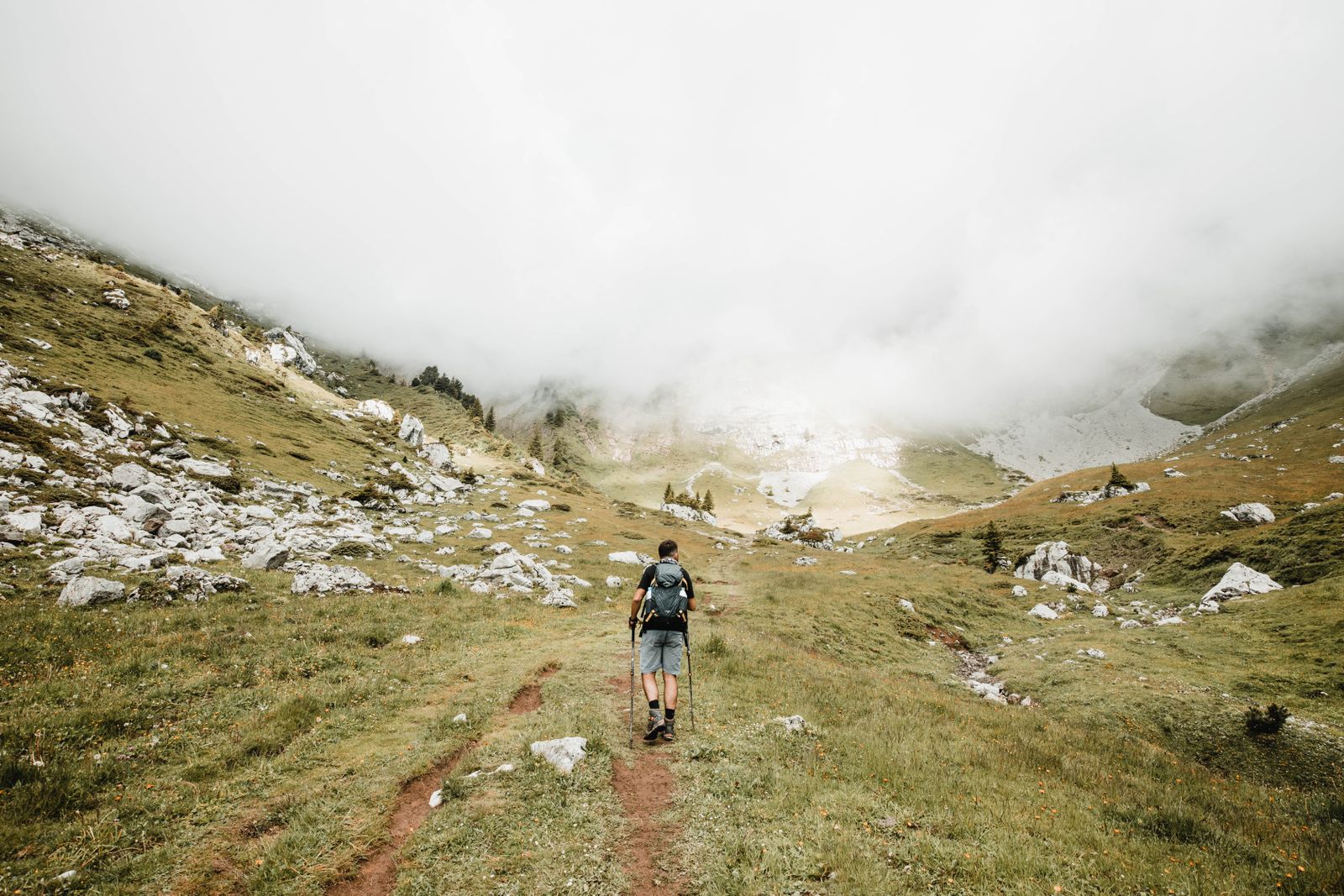
Downhills are where knees go to die. Every step down is a controlled fall, and your knees absorb multiples of your body weight with each one — which is exactly why hikers with cranky knees, arthritis, or old meniscus injuries dread the descent more than the climb. Trekking poles change the physics: they move a share of that braking load into your arms and shoulders, and measured research backs it up — a widely cited study in the Journal of Sports Sciences found poles reduce compressive force on the knees by roughly 25% during downhill walking.
Quick answer: The best trekking poles for bad knees are the LEKI Khumbu Lite, with bombproof Speed Lock+ levers and cork grips that stay put when you’re leaning hard on descents, and the LEKI Khumbu Lite AS, which adds a DSS anti-shock system for hikers who want maximum impact damping. On a budget, the Cascade Mountain Tech Carbon Fiber Quick Lock delivers real knee relief for around $60.
Disclosure: Trail Tested is reader-supported. When you buy through links on this page, we may earn a commission at no extra cost to you. Learn more. All picks are compiled picks — see how we rate gear.
The 5 best trekking poles for bad knees
1. LEKI Khumbu Lite — the best overall for knee pain
LEKI Khumbu Lite at REI- Price: $129.95
- Shaft: HTS 6.5 aluminum — bends rather than snapping under hard downhill loads
- Weight: 246 g (8.67 oz) per pole
- Length: 100–135 cm, adjustable
- Lock: Speed Lock+ external levers — fast to adjust, won’t slip under load
- Grips: Aergon CorTec (cork/rubber) — molds to your hand over time
- Collapsed: 67 cm
Why it’s a compiled pick: For bad knees, the two things that matter most are a lock that never slips when you’re braking your full weight downhill, and a grip that stays comfortable under sustained pressure. The Khumbu Lite delivers both: LEKI’s Speed Lock+ is the most trusted lever lock in the business, and the cork Aergon grip conforms to your hand instead of fighting it. Aluminum is the right call for heavy leaners — it flexes under abuse where carbon can fail suddenly. This is the pole knee-pain hikers keep for a decade.
2. LEKI Khumbu Lite AS — the best anti-shock option
LEKI Khumbu Lite AS at REI- Price: $149.95
- Shaft: HTS 6.5 aluminum
- Weight: 252 g (9 oz) per pole
- Length: 100–135 cm, adjustable
- Lock: Speed Lock+ external levers
- Shock system: DSS (Dynamic Suspension System) — LEKI states it reduces impact forces by up to 40%
- Grips: Aergon CorTec cork/rubber
- Collapsed: 68 cm
Why it’s a compiled pick: If your knees (or wrists) are sensitive to every jolt, this is the maximum-damping option from a major brand. The DSS spring in the lower shaft absorbs the sharp spike of each pole plant before it travels up to your hands — and less vibration through the arms means less compensating tension everywhere else. Honest caveat: some experienced hikers find anti-shock poles feel spongy and prefer rigid poles with good technique. But for hikers who want every bit of cushioning available, this is the compiled pick.
3. Black Diamond Trail Cork — the best cork-grip comfort
Black Diamond Trail Cork at GoHunt- Price: $129.95
- Shaft: 7075 aluminum — the strongest common pole alloy
- Weight: 486 g (1 lb 1 oz) per pair
- Length: 100–140 cm, adjustable — the longest range here, good for tall hikers
- Lock: Dual FlickLock — tool-free, glove-friendly adjustment
- Grips: 100% natural cork with EVA foam extension for choking down on steep pitches
- Collapsed: 62 cm
Why it’s a compiled pick: Bad knees mean long, slow descents with your hands on the grips for hours — and natural cork is the most comfortable grip material for that job. It wicks sweat, doesn’t get slippery, and shapes to your palms over time. The 100–140 cm range is the longest on this list, which matters for taller hikers who need real extension on descents. The FlickLock levers are famously reliable and easy to operate with gloves on.
4. Black Diamond Trail — the best value aluminum pole
Black Diamond Trail at Black Diamond- Price: $119.95
- Shaft: 7075 aluminum (30% pre-consumer recycled content)
- Weight: 480 g per pair
- Length: 100–140 cm, adjustable
- Lock: Dual FlickLock
- Grips: EVA foam with soft-touch top and grip extension
- Collapsed: 64.6 cm
Why it’s a compiled pick: Nearly identical bones to the Trail Cork — same 7075 aluminum shafts, same FlickLocks, same 100–140 cm range — with an EVA foam grip instead of cork, for about $10 less. EVA is softer out of the box (no break-in) and insulates your hands in cold weather, though it doesn’t mold to your grip like cork does over time. If you want proven knee-saving geometry without paying for cork, this is the value play.
5. Cascade Mountain Tech Carbon Fiber Quick Lock — the best budget poles
Cascade Mountain Tech Carbon at Sportsman’s Warehouse- Price: $59.99
- Shaft: Carbon fiber — light, at the cost of less forgiveness under extreme loads
- Weight: ~1 lb 1 oz per pair
- Length: 66–137 cm (26–54 in), adjustable
- Lock: Quick Lock levers
- Grips: Cork with extended EVA lower grip
- Tips: Tungsten carbide, plus rubber tips, mud and snow baskets included
Why it’s a compiled pick: Knee pain shouldn’t require a $130 buy-in to find out whether poles help you. These are the classic “try poles for cheap” recommendation across hiking communities for a reason: carbon shafts at half the price of the big brands, cork grips, quick locks, and a full accessory kit. They’re heavier and bulkier than premium carbon, and carbon demands more respect on rocky descents (it can crack where aluminum bends) — but for testing whether poles save your knees, nothing beats the price.
Spec comparison
| Pole | Price | Shaft | Weight (pair) | Length | Lock | Grip |
|---|---|---|---|---|---|---|
| LEKI Khumbu Lite | $129.95 | HTS 6.5 aluminum | ~492 g | 100–135 cm | Speed Lock+ | Cork/rubber Aergon |
| LEKI Khumbu Lite AS | $149.95 | HTS 6.5 aluminum | ~504 g | 100–135 cm | Speed Lock+ | Cork/rubber Aergon |
| Black Diamond Trail Cork | $129.95 | 7075 aluminum | 486 g | 100–140 cm | FlickLock | Natural cork + EVA |
| Black Diamond Trail | $119.95 | 7075 aluminum | 480 g | 100–140 cm | FlickLock | EVA foam |
| Cascade Mountain Tech Carbon | $59.99 | Carbon fiber | ~484 g | 66–137 cm | Quick Lock | Cork + EVA |
Downhill technique: poles only save knees if you use them right
Lengthen before the descent. The single biggest technique mistake is hiking downhill with poles set for flat ground. Stop at the top, extend each pole 5–10 cm, and check: with the tip planted on the slope below you, your elbow should open past 90 degrees. Short poles force you to hunch, which loads the knees worse than no poles at all.
Plant ahead, brake with your arms. Reach the pole forward and plant it before your foot lands, then let your triceps and shoulders absorb the step-down. Think of the poles as a handrail you’re carrying — the goal is to arrive at the bottom with tired arms and fresh knees, not the reverse.
Use the straps correctly. Thread your hand up through the strap from below so it sits across the back of your wrist, then grip the handle over it. Done right, you can push down through the strap without white-knuckling the grip — which matters on hour-long descents when hand fatigue sets in.
Aluminum for heavy leaners. If you’re going to put serious body weight through your poles on every step down, aluminum is the safer shaft material: it bends and dents under abuse, while carbon fiber can fail suddenly under a sharp lateral load. Carbon’s weight savings are real, but bad-knee hikers lean harder than average — choose accordingly.
Lighten the pack, spare the knees. Every pound on your back multiplies the force your knees absorb on descents. Before buying anything, run your kit through the pack weight calculator — dropping 3–4 lb of pack weight is free knee relief.
Strengthen the engine. Poles offload the knees, but stronger quads and glutes protect them at the source. If you’re training for a big trip, the multi-day hike training plan builds the exact muscles that stabilize knees on descents.
FAQ
Do trekking poles really help bad knees? Yes. A widely cited study in the Journal of Sports Sciences measured knee joint forces during downhill walking and found poles cut compressive load on the knees by roughly a quarter. They also improve balance, which means fewer jarring stumbles.
Should I use one trekking pole or two for knee pain? Two. One pole helps balance, but two share the load symmetrically and let you offload both knees on every step. For knee pain specifically, a pair is the prescription.
How long should trekking poles be for downhill hiking? Lengthen them 5–10 cm beyond your flat-ground setting before a descent. You want to plant the pole downhill without hunching — your elbow should open past 90 degrees when the tip touches the ground below you.
Are anti-shock trekking poles worth it for knees? They dampen vibration and LEKI’s DSS system claims up to 40% less impact force, but the joint-protection evidence is mixed and some hikers dislike the spongy feel. Secure locks and correct downhill technique matter more than springs.
Can trekking poles replace a knee brace? No. Poles reduce load; braces stabilize the joint. They complement each other. If you have a diagnosed condition — arthritis, meniscus tears, IT band syndrome — see a physiotherapist for a plan built around your knees.
Related guides
- How to Train for a Multi-Day Hike — build the quads and glutes that stabilize knees on descents
- First 14er Packing List — 14er descents are brutal on knees; pack (and pole) accordingly
- Pack Weight Calculator — every pound dropped is free knee relief downhill
Do your knees complain loudest on descents, stairs, or the morning after? Tell us your knee story via the contact page — it helps us match readers to the right poles.
Heads up: some links on this page are affiliate links — if you buy through them we may earn a commission at no extra cost to you. Learn more.
Frequently asked questions
Do trekking poles really help bad knees?
Yes. A widely cited study in the Journal of Sports Sciences measured knee joint forces during downhill walking and found poles cut compressive load on the knees by roughly a quarter. They also improve balance, which means fewer jarring stumbles.
Should I use one trekking pole or two for knee pain?
Two. One pole helps balance, but two share the load symmetrically and let you offload both knees on every step. For knee pain specifically, a pair is the prescription.
How long should trekking poles be for downhill hiking?
Lengthen them 5–10 cm beyond your flat-ground setting before a descent. You want to plant the pole downhill without hunching — your elbow should open past 90 degrees when the tip touches the ground below you.
Are anti-shock trekking poles worth it for knees?
They dampen vibration and LEKI’s DSS system claims up to 40% less impact force, but the joint-protection evidence is mixed and some hikers dislike the spongy feel. Secure locks and correct downhill technique matter more than springs.
Can trekking poles replace a knee brace?
No. Poles reduce load; braces stabilize the joint. They complement each other. If you have a diagnosed condition — arthritis, meniscus tears, IT band syndrome — see a physiotherapist for a plan built around your knees.