
Garmin inReach Mini 2 vs SPOT Gen4: Which Wins? (2026)
Garmin inReach Mini 2 vs SPOT Gen4 compared honestly — two-way vs one-way messaging, SOS, battery, subscription costs, and which backcountry communicator to buy.
In this guide
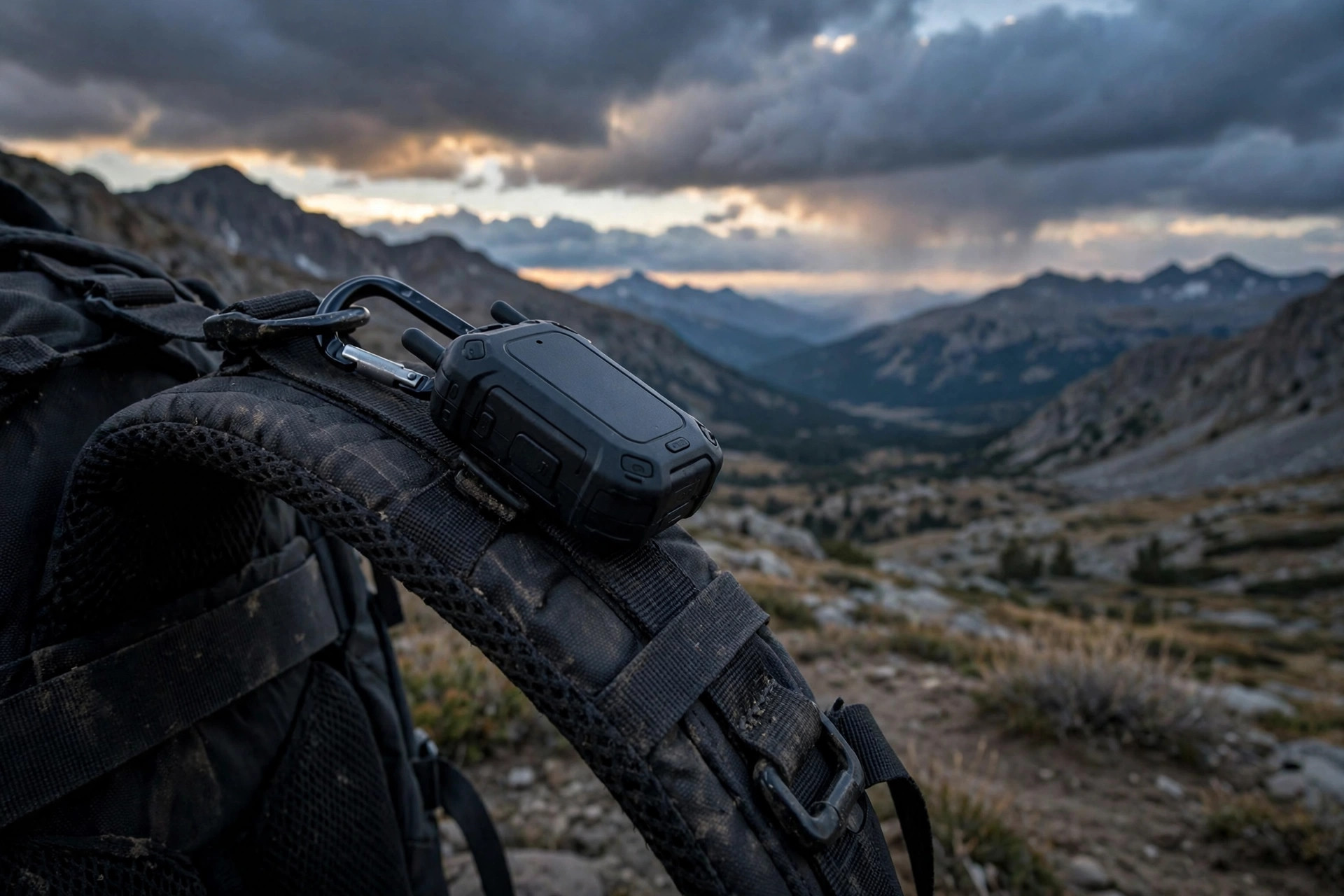
Beyond cell coverage, your lifeline is the little brick on your pack strap. The two most popular options solve the same problem in opposite ways: the Garmin inReach Mini 2 (~$400) is a true two-way satellite texter on the global Iridium network — you can have real conversations from anywhere on Earth. The SPOT Gen4 (~$150) is a one-way check-in and SOS beacon on the Globalstar network — simpler, cheaper, and with tracking battery measured in weeks.
Quick answer: The inReach Mini 2 wins for most hikers — two-way messaging transforms emergencies (rescuers can ask you questions), global coverage works everywhere you can hike, and it’s lighter at 3.5 oz. The SPOT Gen4 wins on budget — $250 less upfront, cheaper plans, and one-way “I’m OK” check-ins plus SOS are genuinely all many hikers need. Buy the Garmin for two-way safety; buy the SPOT if one-way is enough and price matters.
Disclosure: Trail Tested is reader-supported. When you buy through links on this page, we may earn a commission at no extra cost to you. Learn more. This comparison is research-compiled from manufacturer specs and aggregated field reviews — we don’t claim hands-on testing.
Contents
- Spec-by-spec comparison
- Category winners
- Garmin inReach Mini 2
- SPOT Gen4
- Who should buy which
- How we compared
- FAQ
- Related guides
Spec-by-spec comparison
| Garmin inReach Mini 2 | SPOT Gen4 | |
|---|---|---|
| Price (MSRP) | ~$400 (often ~$250 on sale) | ~$150 |
| Weight | 3.5 oz (100 g) | 5 oz (142 g) with lithium batteries |
| Satellite network | Iridium — truly global | Globalstar — Americas, Europe, parts of Asia/Australia |
| Messaging | Two-way: send AND receive texts | One-way: preset check-in, custom message, tracking, SOS only |
| SOS | Dedicated button + two-way coordination with Garmin Response | Dedicated button to GEOS 24/7 rescue coordination |
| Tracking battery | ~14 days at 10-min tracking; ~30 days power-save | Up to 45+ days at 10-min tracking (lithium AAA) |
| Battery type | Internal rechargeable | 4× AAA (lithium included; NiMH compatible) |
| Water rating | IPX7 (1 m for 30 min) | IP68 (dust-tight, submersible) |
| Screen | 0.9″ monochrome, sunlight-readable | LED status lights only |
| Subscription | From ~$15/mo (annual) to ~$65/mo unlimited | From ~$11.95/mo (annual basic) |
| Phone required? | Best with phone app; can send presets standalone | No phone needed — full function from the device |
Category winners
Price — SPOT Gen4. At ~$150 vs ~$400, the Gen4 costs less than the Mini 2’s discount price. If your budget is the deciding factor, this category isn’t close.
Weight — inReach Mini 2. 3.5 oz vs 5 oz is a full ounce and a half — noticeable on a shoulder strap over a week. Ultralight hikers, this matters.
Battery endurance — SPOT Gen4. Up to 45+ days of 10-minute tracking on one set of lithium AAAs vs ~14 days for the Mini 2. For multi-week trips without charging, the Gen4’s AAA design is the endurance king — and spare batteries weigh almost nothing.
Messaging — inReach Mini 2. This is the fundamental divide. The Mini 2 holds real two-way conversations: “Running late, don’t call SAR yet” or “Need the ranger’s number.” The Gen4 can only broadcast — your people can see where you are, but they can’t answer you.
SOS and rescue — inReach Mini 2. Both summon help at the press of a button, but two-way SOS coordination is a different sport: Garmin Response can ask about injuries, weather, and party size, and relay it all to rescuers. With the Gen4, rescuers get your coordinates and nothing else.
Subscription cost — SPOT Gen4. From ~$11.95/month on annual plans vs Garmin’s ~$15 and up. Over two years of hiking seasons, the SPOT’s cheaper plans compound the upfront savings.
Coverage — inReach Mini 2. Iridium’s 66-satellite constellation covers the entire planet, including polar regions and open ocean. Globalstar has real gaps across Africa, the Middle East, and the Pacific. If you ever hike outside the Americas and Europe, the Garmin is the only choice.
Standalone use (no phone) — SPOT Gen4. The Gen4’s physical buttons do everything without a phone — a genuine advantage if your phone dies in the cold. The Mini 2 works standalone for presets and SOS, but real messaging needs the phone app.
Score: Mini 2 takes 4 categories (weight, messaging, SOS, coverage); Gen4 takes 4 (price, battery, subscription, standalone use). The tie-breaker is which categories matter to YOUR hiking.
Garmin inReach Mini 2
Check price- Price: ~$400 MSRP (street price often ~$250)
- Weight: 3.5 oz (100 g)
- Network: Iridium — global coverage
- Messaging: Two-way texts (via phone app or limited on-device typing)
- Battery: Up to ~14 days (10-min tracking); ~30 days power-save
- Plans: From ~$15/mo annual (limited) to ~$65/mo unlimited
What we like:
- True two-way messaging from anywhere on the planet — the gold standard for backcountry communication
- Featherweight 3.5 oz and genuinely pocket-sized
- Two-way SOS with Garmin Response: rescuers can ask you questions and update you
- Frequent sales bring it near $250, narrowing the price gap
What we don’t:
- ~$400 list price stings, and plans cost more than SPOT’s
- Typing without a phone is painfully slow (arrow-key entry on a 0.9″ screen)
- 14-day tracking battery is solid but not Gen4-level
Who it’s for: Solo hikers, international travelers, and anyone whose family worries — two-way messaging turns “where are you?” into a conversation instead of a panic.
SPOT Gen4
Check price- Price: ~$150 MSRP
- Weight: 5 oz (142 g) with lithium batteries
- Network: Globalstar — Americas, Europe, parts of Asia/Australia
- Messaging: One-way — preset check-in, custom message, tracking, SOS
- Battery: Up to 45+ days (10-min tracking); 1,250 messages per set of lithium AAAs
- Plans: From ~$11.95/mo (annual basic)
What we like:
- $150 buys real satellite SOS and “I’m OK” check-ins — the cheapest credible backcountry safety net
- 45+ days of tracking on AAAs: set it and forget it for entire seasons
- Works fully without a phone — buttons do everything
- Cheapest plans in the category
What we don’t:
- One-way messaging is the deal-breaker for some: nobody can answer you, including rescuers
- Globalstar coverage gaps exclude much of Africa, the Middle East, and the Pacific
- Heavier at 5 oz, and the chunky AAA body is less pocket-friendly
Who it’s for: Budget-conscious hikers in North America and Europe who want check-ins and SOS without paying for conversations they’ll never have.
Who should buy which
Buy the Garmin inReach Mini 2 if:
- You hike solo — two-way messaging is a safety tool, not a luxury
- You travel internationally (anywhere outside Globalstar coverage)
- Your family expects real updates, not just dots on a map
- You want rescuers to be able to ask you questions in an emergency
- You found it on sale near $250 (common), which erases half the price argument
Buy the SPOT Gen4 if:
- Your budget is firm at ~$150 and you want satellite safety now
- You hike in North America or Europe, where Globalstar coverage is strong
- “I’m OK” check-ins and SOS are genuinely all you need
- You want a device that works for weeks without charging or a phone
- You’d rather spend the $250 difference on the rest of your kit
The one-line rule: If anyone might ever need to talk BACK to you in the backcountry — buy the Garmin. If the message only ever needs to go one direction — save $250 and buy the SPOT.
How we compared
We evaluated both devices on the eight categories above, using manufacturer specifications (verified October 2026) and aggregated field reviews from long-term users. Weight is measured with power included (batteries for the Gen4, as it ships with them). Battery figures are manufacturer tracking-mode ratings at 10-minute intervals — the standard backcountry use case. Plan prices are annual-plan rates from each provider’s published pricing. We don’t claim hands-on testing; this is a research-compiled comparison, and every strength and weakness above is traceable to a published spec or a pattern in real buyer feedback.
One honesty note: the “messaging” category is worth more than the others combined. If two-way communication matters to you, it outweighs price, weight, and battery — buy accordingly.
FAQ
What’s the real difference between the inReach Mini 2 and the SPOT Gen4? Messaging direction. The inReach Mini 2 sends and RECEIVES text messages over satellite — real two-way conversations with family or rescuers. The SPOT Gen4 only SENDS: preset check-ins, a custom message, tracking breadcrumbs, and SOS. If someone needs to answer you (‘stay put, help is 2 hours out’), only the Garmin can deliver that message.
Do both require a subscription? Yes — both are paperweights without an active plan. SPOT plans start around $11.95/month on annual plans, making it the cheaper subscription. Garmin plans start around $15/month on annual plans and climb to roughly $65 for unlimited messaging. Budget the plan as part of the purchase price, not an afterthought.
Will the SPOT Gen4 work outside the United States? Partially. SPOT runs on the Globalstar network, which covers most of North and South America, Europe, and parts of Asia and Australia — but has real gaps in much of Africa, the Middle East, and the far Pacific. The inReach Mini 2 uses the Iridium network: 66 satellites covering literally the entire planet, poles included. International hikers should default to the Garmin.
My iPhone has satellite SOS — why would I buy a dedicated device? iPhone satellite SOS covers emergencies only, in select regions, requires you to aim the phone at the sky precisely, and depends on your phone’s battery and durability in the backcountry. A dedicated communicator works in your pocket (Mini 2) or on your pack strap (Gen4), lasts days to weeks per charge, and the Mini 2 adds two-way texting with family. Think of the iPhone as a last resort and a communicator as a tool.
Should I buy the newer Garmin inReach Mini 3 instead? The Mini 3 (~$450) adds a color touchscreen and slightly better battery, but the Mini 2 remains the proven veteran — years of field reliability, frequent discounts to ~$250, and identical core capabilities (two-way messaging, SOS, global coverage). Unless you specifically want the touchscreen, the Mini 2 is the smarter buy in 2026.
Related guides
- Navigation hub — every navigation and safety-tech guide in one place
- Best Hiking GPS Watches for Beginners Under $300 — wrist navigation to pair with your communicator
- Trail Tools — free calculators for hikers
Heads up: some links on this page are affiliate links — if you buy through them we may earn a commission at no extra cost to you. Learn more.
Frequently asked questions
What's the real difference between the inReach Mini 2 and the SPOT Gen4?
Messaging direction. The inReach Mini 2 sends and RECEIVES text messages over satellite — real two-way conversations with family or rescuers. The SPOT Gen4 only SENDS: preset check-ins, a custom message, tracking breadcrumbs, and SOS. If someone needs to answer you (‘stay put, help is 2 hours out’), only the Garmin can deliver that message.
Do both require a subscription?
Yes — both are paperweights without an active plan. SPOT plans start around $11.95/month on annual plans, making it the cheaper subscription. Garmin plans start around $15/month on annual plans and climb to roughly $65 for unlimited messaging. Budget the plan as part of the purchase price, not an afterthought.
Will the SPOT Gen4 work outside the United States?
Partially. SPOT runs on the Globalstar network, which covers most of North and South America, Europe, and parts of Asia and Australia — but has real gaps in much of Africa, the Middle East, and the far Pacific. The inReach Mini 2 uses the Iridium network: 66 satellites covering literally the entire planet, poles included. International hikers should default to the Garmin.
My iPhone has satellite SOS — why would I buy a dedicated device?
iPhone satellite SOS covers emergencies only, in select regions, requires you to aim the phone at the sky precisely, and depends on your phone’s battery and durability in the backcountry. A dedicated communicator works in your pocket (Mini 2) or on your pack strap (Gen4), lasts days to weeks per charge, and the Mini 2 adds two-way texting with family. Think of the iPhone as a last resort and a communicator as a tool.
Should I buy the newer Garmin inReach Mini 3 instead?
The Mini 3 (~$450) adds a color touchscreen and slightly better battery, but the Mini 2 remains the proven veteran — years of field reliability, frequent discounts to ~$250, and identical core capabilities (two-way messaging, SOS, global coverage). Unless you specifically want the touchscreen, the Mini 2 is the smarter buy in 2026.