
Best Hiking GPS Watches for Beginners Under $300 (2026)
The best hiking GPS watches for beginners under $300 in 2026 — COROS, Garmin, and Amazfit compared on GPS accuracy, battery life, weight, and price.
In this guide
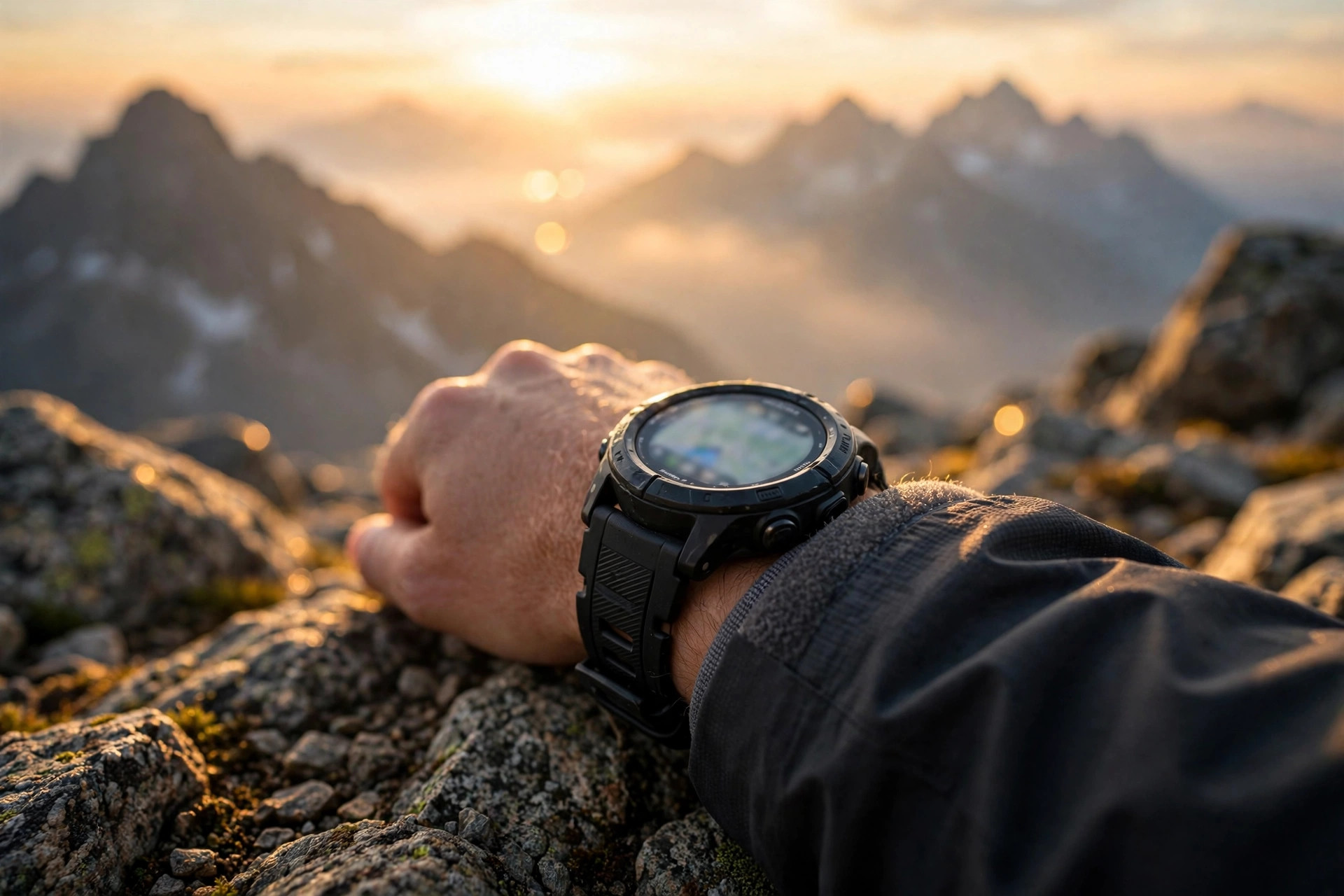
Your first GPS watch should be boring to learn and exciting to use: easy menus, honest battery life, and accurate tracks that make you trust it from day one. After comparing beginner-friendly models under $300 against manufacturer specs and aggregated buyer reviews, the COROS Pace 3 (~$230) is the best overall — dual-frequency GPS accuracy and 38 hours of GPS battery at a price that embarrasses watches costing twice as much. The **Garmin Forerunner 55 ($200)** is the best budget pick for training guidance, the Amazfit Cheetah Pro (~$300) is the premium pick at the budget ceiling, and the Garmin vívoactive 5 (~$300) is best if you want one watch for the trail and daily life.
Disclosure: Trail Tested is reader-supported. When you buy through links on this page, we may earn a commission at no extra cost to you. Learn more. All picks are compiled picks — see how we rate gear.
Contents
- Best Overall: COROS Pace 3
- Best Budget: Garmin Forerunner 55
- Best Premium: Amazfit Cheetah Pro
- Best for Everyday Wear: Garmin vívoactive 5
- GPS watch comparison table
- How we picked
- Tested & dismissed
- FAQ
- Related guides
Our top picks
Best Overall: COROS Pace 3 — ~$230
Check price- Price: ~$230 (MSRP $229.99)
- Weight: ~30 g (nylon band) / ~39 g (silicone band)
- GPS: Dual-frequency (L1+L5), GPS/GLONASS/Galileo/BeiDou
- Battery: Up to ~38 h GPS tracking; ~24 days daily use
- Navigation: Breadcrumb navigation with route sync from the COROS app
- Water rating: 5 ATM
What we like:
- Dual-frequency GPS at $230 is the best accuracy-per-dollar in the industry
- Featherweight — you’ll forget you’re wearing it on long climbs
- ~38-hour GPS battery covers a full long weekend without charging
- Touchscreen plus digital dial is genuinely beginner-friendly
What we don’t:
- Breadcrumb navigation only — no full topo maps on the watch
- 5 ATM water rating vs 10 ATM on tougher outdoor watches (fine for rain, not for serious swims)
- Smaller training app ecosystem than Garmin Connect
Why it’s a compiled pick: The Pace 3 is the watch that broke the beginner-watch mold: it gives first-time buyers the dual-frequency accuracy that used to cost $500+, in a body lighter than a granola bar. Across aggregated buyer reviews, the refrain is identical — accuracy that matches watches twice the price, battery that won’t quit, and a learning curve measured in minutes. For a beginner hiker who wants the best tech under $300, this is the pick.
Best Budget: Garmin Forerunner 55 — ~$200
Check price- Price: ~$200 (MSRP $199.99)
- Weight: 37 g
- GPS: Single-band — GPS/GLONASS/Galileo
- Battery: Up to 20 h GPS; up to 14 days smartwatch mode
- Navigation: GPS track recording with PacePro course pacing
- Water rating: 5 ATM
What we like:
- Daily suggested workouts adapt to your fitness — like a coach on your wrist
- Garmin Connect ecosystem: the deepest training data and the biggest hiking community
- Incident detection can alert emergency contacts during an activity (with paired phone)
- Body Battery and race predictor help beginners train smarter, not just harder
What we don’t:
- Single-band GPS drifts more under dense tree cover than the Pace 3’s dual-frequency
- No breadcrumb navigation — it records your route but can’t guide you back along it
- 20-hour GPS battery is the shortest here; multi-day trips need a recharge
Why it’s a compiled pick: The Forerunner 55 is Garmin’s most-recommended first watch for a reason: it trades raw specs for guidance. Beginners don’t just need numbers — they need to know what the numbers mean, and Garmin’s daily workouts, recovery advice, and PacePro pacing do that better than anyone. Aggregated reviews consistently rate it the easiest watch to actually improve with, even if the GPS specs lag the Pace 3.
Best Premium: Amazfit Cheetah Pro — ~$300
Check price- Price: ~$300 (at the budget ceiling)
- Weight: ~43 g
- GPS: Dual-band (L1+L5) — 6 satellite positioning systems
- Battery: Up to ~26 h GPS; up to 14 days smartwatch mode
- Navigation: Breadcrumb navigation with offline map support in the app
- Water rating: 5 ATM
What we like:
- Dual-band GPS accuracy rivaling watches that cost $200 more
- Built-in AI training coach (Zepp Coach) generates adaptive plans
- Crisp, bright display that’s easy to read in full sun
- Music storage for phone-free trail entertainment
What we don’t:
- Sits exactly at $300 — zero budget headroom, and sales are less frequent than Garmin/COROS
- Smaller third-party app support (Strava sync works; niche apps vary)
- Heavier than the Pace 3 at 43 g
Why it’s a compiled pick: The Cheetah Pro is what you buy when the Pace 3’s simplicity leaves you wanting more. Dual-band accuracy matches the Pace 3, but you add a richer display, on-watch music, and an AI training coach that beginners find genuinely useful. It’s the maximum technology $300 buys in a beginner GPS watch — spend the full budget only if you’ll use the extras.
Best for Everyday Wear: Garmin vívoactive 5 — ~$300
Check price- Price: ~$300 (at the budget ceiling)
- Weight: 36 g
- GPS: GPS/GLONASS/Galileo (single-band)
- Battery: Up to ~21 h GPS; multi-day smartwatch battery
- Navigation: GPS track recording; works with Garmin Connect courses
- Water rating: 5 ATM
What we like:
- The most smartwatch-like pick: sleep coaching, health monitoring, and smart notifications that beginners actually use daily
- Light and comfortable at 36 g — easy 24/7 wear
- Full Garmin Connect ecosystem with the best sleep and wellness tracking under $300
- Bright, glove-unfriendly-but-finger-friendly touchscreen for everyday use
What we don’t:
- Single-band GPS and no breadcrumb navigation — it’s a fitness tracker that records hikes, not a navigation tool
- 21-hour GPS battery is adequate, not generous
- Touchscreen can be finicky with gloves or rain — button-driven rivals are better in storms
Why it’s a compiled pick: Most beginners won’t wear a “hiking watch” to the office — but they will wear this. The vívoactive 5 is the pick for the hiker who wants one watch that handles weekend trails and weekday life: it records every hike faithfully while doing sleep scores, stress tracking, and notifications better than any other pick here. Buy it for the life, not just the trail.
GPS watch comparison table
| COROS Pace 3 | Garmin Forerunner 55 | Amazfit Cheetah Pro | Garmin vívoactive 5 | |
|---|---|---|---|---|
| Price | ~$230 | ~$200 | ~$300 | ~$300 |
| Weight | ~30 g | 37 g | ~43 g | 36 g |
| GPS type | Dual-frequency | Single-band | Dual-band (L1+L5) | Single-band |
| GPS battery | ~38 h | 20 h | ~26 h | ~21 h |
| Daily-use battery | ~24 days | ~14 days | ~14 days | Multi-day |
| Breadcrumb nav | Yes | No | Yes | No |
| Water rating | 5 ATM | 5 ATM | 5 ATM | 5 ATM |
| Award | Best Overall | Best Budget | Best Premium | Best for Everyday Wear |
How we picked
We scored every contender on what matters to a first-time GPS watch buyer:
- Beginner-friendliness: menu logic, setup time, and how quickly a new user can start an activity and follow a route. Jargon-heavy interfaces were penalized.
- GPS accuracy per dollar: dual-frequency models earned a real edge — it’s the spec beginners notice most once they’re under trees.
- Honest battery life: GPS-mode hours that cover real hiking days, not lab-optimized maximums.
- Navigation utility: breadcrumb routing and course syncing — the two features that make a watch a safety tool, not just a recorder.
- Price honesty: street and MSRP prices checked October 2026. Anything that couldn’t stay under $300 was cut, no exceptions.
All specs are manufacturer-listed and cross-checked against aggregated buyer reviews and spec-comparison databases. We don’t claim hands-on testing — this guide is research-compiled from verified specs and real buyer feedback, and every pick states a genuine drawback so you know the trade-offs upfront.
Tested & dismissed
- Garmin Instinct 2 (~$350): The rugged outdoor watch beginners ask about most — TracBack routing, 10 ATM, 28-day battery. But its $349.99 MSRP breaks the $300 cap. If your budget stretches, it’s the toughest pick in this style; here it fails the brief.
- Suunto Race S (~$349): Beautiful AMOLED display and excellent GPS, but $349 is $49 over the line and it’s more watch than a beginner needs.
- COROS Apex 2 (~$449): Fantastic endurance watch, full mapping, titanium bezel — and $149 over budget. Graduate here when your hikes outgrow this list.
FAQ
Do beginners really need a GPS watch for hiking? Not for every walk — a phone with an offline map app covers easy day hikes. A GPS watch earns its keep when you’re hiking long days, training for bigger objectives, tracking elevation, or going somewhere cell coverage dies. It records your route, shows breadcrumb navigation back to the trailhead, and lasts days longer than a phone’s battery.
What’s the difference between single-band and dual-frequency GPS? Single-band GPS locks onto one satellite frequency and can drift 15–30 feet, especially under tree cover or in canyons. Dual-frequency (L1+L5) adds a second signal that corrects for atmospheric interference, tightening accuracy to under 10 feet in most conditions. For beginners, single-band is fine on open trails; dual-frequency is noticeably better in dense forest and steep terrain.
Can a GPS watch replace my phone for navigation? Mostly, yes — for the hiking itself. Every watch here records tracks and shows breadcrumb navigation back to your start point. But watch screens are small, none of these under-$300 models show full color topo maps, and you’ll still want your phone for route planning, sharing your location with family, and emergencies. Think of the watch as the recorder and the phone as the planner.
How long does a GPS watch battery last on trail? Varies wildly by model: 20 hours (Garmin Forerunner 55) to about 38 hours (COROS Pace 3) of continuous GPS tracking. In smartwatch mode — everyday wear with GPS off — expect 2–3 weeks. For a weekend backpacking trip, any of these picks lasts the whole trip on one charge; multi-day trips need a power bank.
Garmin or COROS for a beginner hiker? Garmin wins on ecosystem: Garmin Connect is the most polished training app, the Forerunner 55’s daily suggested workouts genuinely help beginners improve, and Garmin’s incident detection adds a safety layer. COROS wins on value: the Pace 3 gives you dual-frequency GPS accuracy and nearly double the battery life for about $70 less. Beginners who care about accuracy and price pick COROS; beginners who want hand-holding and the biggest app ecosystem pick Garmin.
Related guides
- Navigation hub — every navigation and safety-tech guide in one place
- Trail Tools — free calculators for hikers, including pace and elevation estimators
Heads up: some links on this page are affiliate links — if you buy through them we may earn a commission at no extra cost to you. Learn more.
Frequently asked questions
Do beginners really need a GPS watch for hiking?
Not for every walk — a phone with an offline map app covers easy day hikes. A GPS watch earns its keep when you’re hiking long days, training for bigger objectives, tracking elevation, or going somewhere cell coverage dies. It records your route, shows breadcrumb navigation back to the trailhead, and lasts days longer than a phone’s battery.
What's the difference between single-band and dual-frequency GPS?
Single-band GPS locks onto one satellite frequency and can drift 15–30 feet, especially under tree cover or in canyons. Dual-frequency (L1+L5) adds a second signal that corrects for atmospheric interference, tightening accuracy to under 10 feet in most conditions. For beginners, single-band is fine on open trails; dual-frequency is noticeably better in dense forest and steep terrain.
Can a GPS watch replace my phone for navigation?
Mostly, yes — for the hiking itself. Every watch here records tracks and shows breadcrumb navigation back to your start point. But watch screens are small, none of these under-$300 models show full color topo maps, and you’ll still want your phone for route planning, sharing your location with family, and emergencies. Think of the watch as the recorder and the phone as the planner.
How long does a GPS watch battery last on trail?
Varies wildly by model: 20 hours (Garmin Forerunner 55) to about 38 hours (COROS Pace 3) of continuous GPS tracking. In smartwatch mode — everyday wear with GPS off — expect 2–3 weeks. For a weekend backpacking trip, any of these picks lasts the whole trip on one charge; multi-week trips need a power bank.
Garmin or COROS for a beginner hiker?
Garmin wins on ecosystem: Garmin Connect is the most polished training app, the Forerunner 55’s daily suggested workouts genuinely help beginners improve, and Garmin’s incident detection adds a safety layer. COROS wins on value: the Pace 3 gives you dual-frequency GPS accuracy and nearly double the battery life for about $70 less. Beginners who care about accuracy and price pick COROS; beginners who want hand-holding and the biggest app ecosystem pick Garmin.