
The 4 Best Microspikes for Hiking Beginners (2026)
Icy trails don't have to end your hiking season. The 4 best microspikes for beginners compared — Kahtoola, Hillsound and Yaktrax — spikes, weights, prices.
In this guide
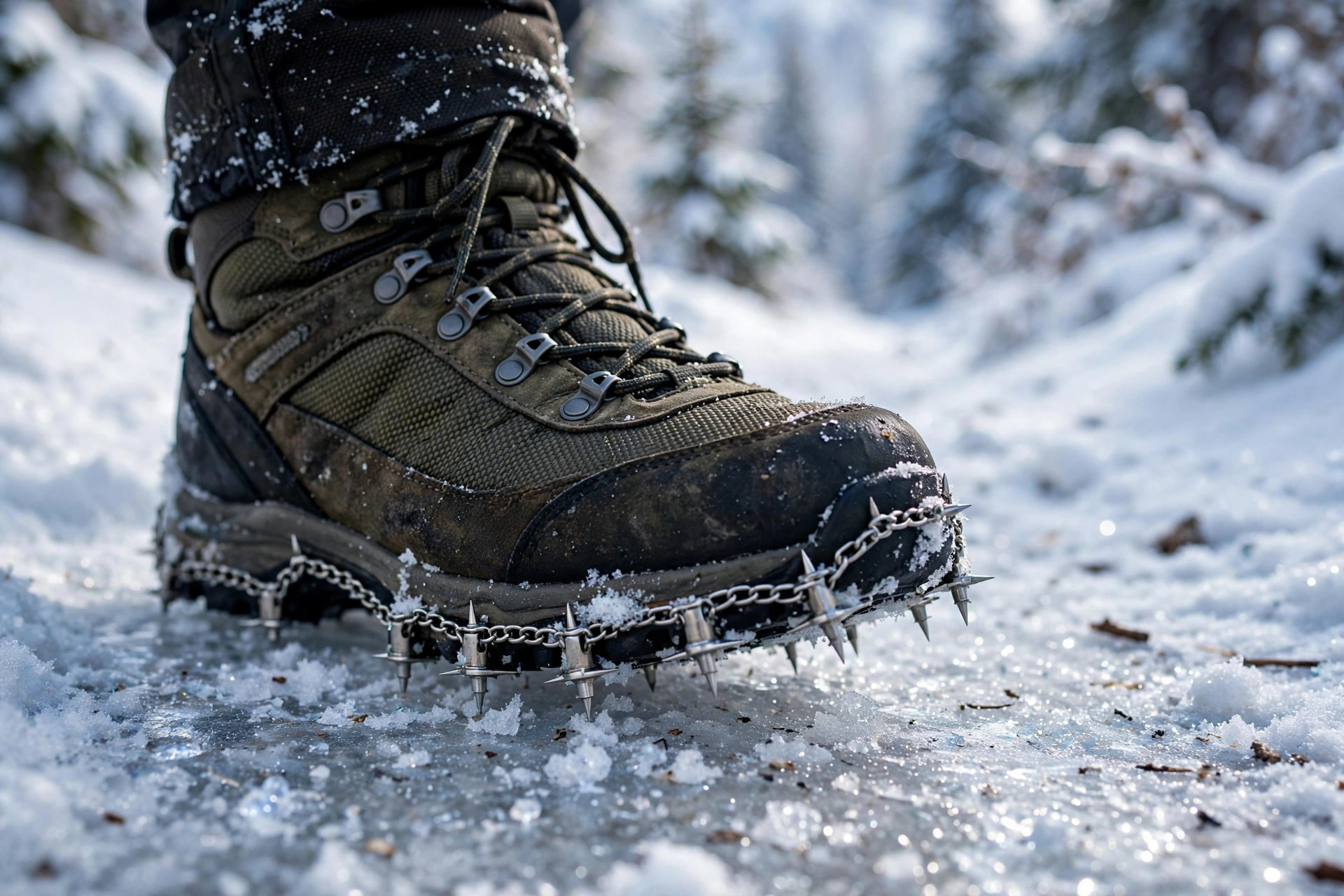
Your first winter hike teaches a hard lesson: the same packed trail you breezed through in October becomes a skating rink by December. A slip on a downhill ice patch is the single most common cause of winter hiking injuries — and the fix is delightfully simple. Microspikes are lightweight traction devices that stretch over your regular hiking boots, giving you a dozen or more steel spikes per foot for the price of a pair of trail socks. No special boots, no technique course, no crampon-compatible shanks. The reference-standard pick for beginners is the Kahtoola MICROspikes (~$80) — 12 steel spikes per foot on a stretch-on harness that fits nearly any footwear, backed by a 2-year warranty.
Quick answer: The best microspikes for hiking beginners are the Kahtoola MICROspikes (~$80) — 12 heat-treated stainless steel spikes that bite into ice without demanding any technique. The Hillsound Trail Crampon Ultra (~$90) is the premium pick for steeper, icier terrain, the Kahtoola EXOspikes (~$75) shine when trails alternate between ice and bare rock, and the Yaktrax Traverse (~$45) is the honest budget pick for milder winters. All four pull on over your hiking boots in under a minute.
Disclosure: Trail Tested is reader-supported. When you buy through links on this page, we may earn a commission at no extra cost to you. Learn more. All picks are compiled picks — see how we rate gear.
The 4 best microspikes for hiking beginners
1. Kahtoola MICROspikes — the best overall
Kahtoola MICROspikes at Kahtoola- Price: ~$80
- Spikes: 12 heat-treated 400 stainless steel spikes per foot (3/8", ~1 cm)
- Weight: ~11.9 oz per pair (medium)
- Harness: Thermoplastic elastomer with reinforced eyelets
- Notable: 2-year manufacturer’s warranty; tote sack included; fits trail shoes to snow boots
Why it’s a compiled pick: The MICROspikes are the reference standard every other microspike is measured against, and they’ve held that position for over a decade because the design is genuinely beginner-proof. The elastomer harness stretches over nearly any footwear without straps or buckles, the 12 spikes bite hardpack and blue ice alike, and reinforced eyelets plus an integrated toe bale mean the harness doesn’t tear at the connection points — the failure mode that kills cheaper pairs. This is the “buy once, hike ice confidently for five seasons” pick, and it’s why it tops nearly every serious roundup.
2. Hillsound Trail Crampon Ultra — the premium pick for steep ice
Hillsound Trail Crampon Ultra at Hilton’s Tent City- Price: ~$90
- Spikes: 18 stainless steel spikes per foot (1/2"–2/3")
- Weight: ~14.25 oz per pair (medium)
- Harness: Elastomer with Velcro security strap across the foot
- Notable: Double-link side chains; puncture-proof carry bag; 2-year limited warranty
Why it’s a compiled pick: When your winter hikes get genuinely steep — icy fire roads, frozen waterfall approaches, wind-scoured ridgelines — 18 spikes outgrip 12. The Trail Crampon Ultra’s longer spikes and Velcro strap make it feel almost crampon-like on descents where shorter spikes skate. It’s heavier and more expensive than the Kahtoola, and it’s overkill for flat neighborhood ice, but beginners tackling serious winter trails get the most aggressive traction short of a mountaineering crampon.
3. Kahtoola EXOspikes — the best for mixed ice-and-rock trails
Kahtoola EXOspikes at L.L.Bean- Price: ~$75
- Spikes: 12 tungsten carbide spikes per foot (0.29")
- Weight: ~7.3 oz per pair (medium) — the lightest pick here
- Harness: Thermoplastic elastomer with raised heel tab
- Notable: TPU traction matrix; 4-year limited warranty; packs to 5.75" × 3" × 2"
Why it’s a compiled pick: Real winter trails are rarely all ice — they alternate between frozen patches, bare rock, mud, and the occasional paved trailhead. Steel spikes dull on rock and feel awful on pavement; the EXOspikes’ tungsten carbide tips (the same material as your trekking pole tips) are built for exactly this abuse. You can walk straight over bare sections without stopping to take them off. At 7.3 oz per pair they’re the featherweight option, which is why winter trail runners swear by them — and why mixed-conditions day hikers should too.
4. Yaktrax Traverse — the budget pick
Yaktrax Traverse at Yaktrax- Price: ~$45
- Spikes: 13 stainless steel spikes per foot (1/4")
- Weight: ~10.2 oz per pair
- Harness: Thin elastomer binding
- Notable: Carrying bag included; stainless steel undercarriage
Why it’s a compiled pick: Half the price of the Kahtoola, and for milder winters — packed snow, icy sidewalks-to-trail transitions, moderate frozen paths — it does the job. The 1/4" spikes are shorter and less aggressive than premium options, so on steep blue ice you’ll notice the difference, but for a beginner’s first winter of hiking it’s honest traction at an entry-level price. Think of it as the gateway pair: if you end up hiking all winter, upgrade to the MICROspikes next season.
Spec comparison
| Traction device | Price | Spikes per foot | Spike length | Weight (pair, med) | Best for |
|---|---|---|---|---|---|
| Kahtoola MICROspikes | ~$80 | 12 | 3/8" | ~11.9 oz | Best overall — do-everything ice traction |
| Hillsound Trail Crampon Ultra | ~$90 | 18 | 1/2"–2/3" | ~14.25 oz | Steep, icy terrain |
| Kahtoola EXOspikes | ~$75 | 12 | 0.29" | ~7.3 oz | Mixed ice and bare rock |
| Yaktrax Traverse | ~$45 | 13 | 1/4" | ~10.2 oz | Budget / mild winters |
How to choose microspikes as a beginner
Match the spikes to your terrain, not your ambitions. Flat and rolling icy trails: any of these work. Steep frozen descents or wind-scoured alpine approaches: you want the Hillsound’s 18 longer spikes. Trails that alternate ice with bare rock: tungsten carbide (EXOspikes) will last dramatically longer.
Size to your winter boots. Measure with your bulkiest cold-weather footwear, not your summer trail runners. Every brand publishes a size chart — Kahtoola’s lists men’s and women’s ranges per size. Between sizes in boots? Go up. A too-small pair will fight you every cold morning.
Spikes are not crampons. Microspikes handle packed snow and trail ice. They are not for steep ice slopes (30°+), glacier travel, or anything where a fall has serious consequences. That’s mountaineering-crampon territory — and a different sport. As a beginner, if a trail needs more than microspikes, pick a different trail.
Check the harness every fall. Spikes rarely fail; elastomer harnesses do. Stretch yours before the season: cracks at the eyelets or spikes wobbling in their plates means replacement time. Store them in their bag between trips — loose spikes in a pack will puncture everything they touch.
Practice putting them on at home. It takes under a minute once you’ve done it twice — but fumbling with cold fingers on a windy ridge is miserable. Pull them on twice in your living room before the first winter hike.
Tested and dismissed
Yaktrax Walk (~$23): The sidewalk king — 1.2mm steel coils, excellent on driveways and dog walks. But coils wear fast on rock and offer noticeably less bite on steep trail ice than spiked designs. Great for the commute; not a hiking pick.
Yaktrax Pro (~$30): Coil-based 360° traction that’s fine for jogging on packed snow, but the 1.4mm coils can’t match real spikes on blue ice, and the harness can migrate on technical descents. Passed over for trail work.
No-name 19-spike Amazon cleats (~$25): Tempting on price, but buyer reviews consistently report spikes seating unevenly and elastomer harnesses cracking within a season. When traction is the thing standing between you and a broken wrist, “probably fine” isn’t the standard.
FAQ
Do beginners really need microspikes for winter hiking? If your local trails freeze, yes. Packed snow turns to ice within days of a thaw-freeze cycle, and slipping on an icy downhill is the most common cause of winter hiking injuries. Microspikes weigh under a pound and pull on in about 30 seconds — they’re the cheapest insurance policy in winter hiking.
Are microspikes enough for ice, or do I need real crampons? For 95% of winter day hiking — packed snow, icy trails, frozen switchbacks — microspikes are the right tool. Full mountaineering crampons are for steep ice slopes (generally 30 degrees and up) and require stiff boots plus practice to use safely. If a trail needs more than microspikes, most beginners should pick a different trail.
How do I get the right size microspikes? Size to your bulkiest winter footwear, not your everyday shoe size — every brand publishes a chart with men’s and women’s ranges per size. Too small and they’ll be torture to pull on over insulated boots; too big and they’ll shift and stress the harness. If you’re between sizes and hiking in boots, go up.
Can I wear microspikes on bare rock or pavement? Short stretches are fine, but steel spikes dull and wear down on rock, asphalt, and concrete, and they feel awkward on bare ground. Models with tungsten carbide spikes (like the Kahtoola EXOspikes) tolerate mixed terrain best. On long bare sections, take them off — it takes about 30 seconds.
How long do microspikes last? Typically 3–5 winter seasons of regular day-hiking use. Rinse off road salt, dry them fully, and store them in their bag — never loose in your pack, where the spikes puncture things. Check the elastomer harness each fall: if it’s cracked or the spikes wobble in their plates, replace before the first freeze.
Related guides
- Footwear hub — every shoe, boot, and traction guide in one place
- Winter Day Hike Essentials Checklist — everything else you need when the temperature drops
- How to Break In Hiking Boots — the 2-week no-blister plan — stiff winter boots need breaking in too
- How to Keep Your Water Filter From Freezing — because ice isn’t just under your feet
Heads up: some links on this page are affiliate links — if you buy through them we may earn a commission at no extra cost to you. Learn more.
Frequently asked questions
Do beginners really need microspikes for winter hiking?
If your local trails freeze, yes. Packed snow turns to ice within days of a thaw-freeze cycle, and slipping on an icy downhill is the most common cause of winter hiking injuries. Microspikes weigh under a pound and pull on in about 30 seconds — they’re the cheapest insurance policy in winter hiking.
Are microspikes enough for ice, or do I need real crampons?
For 95% of winter day hiking — packed snow, icy trails, frozen switchbacks — microspikes are the right tool. Full mountaineering crampons are for steep ice slopes (generally 30 degrees and up) and require stiff boots plus practice to use safely. If a trail needs more than microspikes, most beginners should pick a different trail.
How do I get the right size microspikes?
Size to your bulkiest winter footwear, not your everyday shoe size — every brand publishes a chart with men’s and women’s ranges per size. Too small and they’ll be torture to pull on over insulated boots; too big and they’ll shift and stress the harness. If you’re between sizes and hiking in boots, go up.
Can I wear microspikes on bare rock or pavement?
Short stretches are fine, but steel spikes dull and wear down on rock, asphalt, and concrete, and they feel awkward on bare ground. Models with tungsten carbide spikes (like the Kahtoola EXOspikes) tolerate mixed terrain best. On long bare sections, take them off — it takes about 30 seconds.
How long do microspikes last?
Typically 3–5 winter seasons of regular day-hiking use. Rinse off road salt, dry them fully, and store them in their bag — never loose in your pack, where the spikes puncture things. Check the elastomer harness each fall: if it’s cracked or the spikes wobble in their plates, replace before the first freeze.