
Best Camp Shoes for Backpacking 2026
The 5 best camp shoes for backpacking of 2026 — Xero, Crocs, Bedrock and Teva weighed and priced, from ultralight sandals to budget clogs.
In this guide
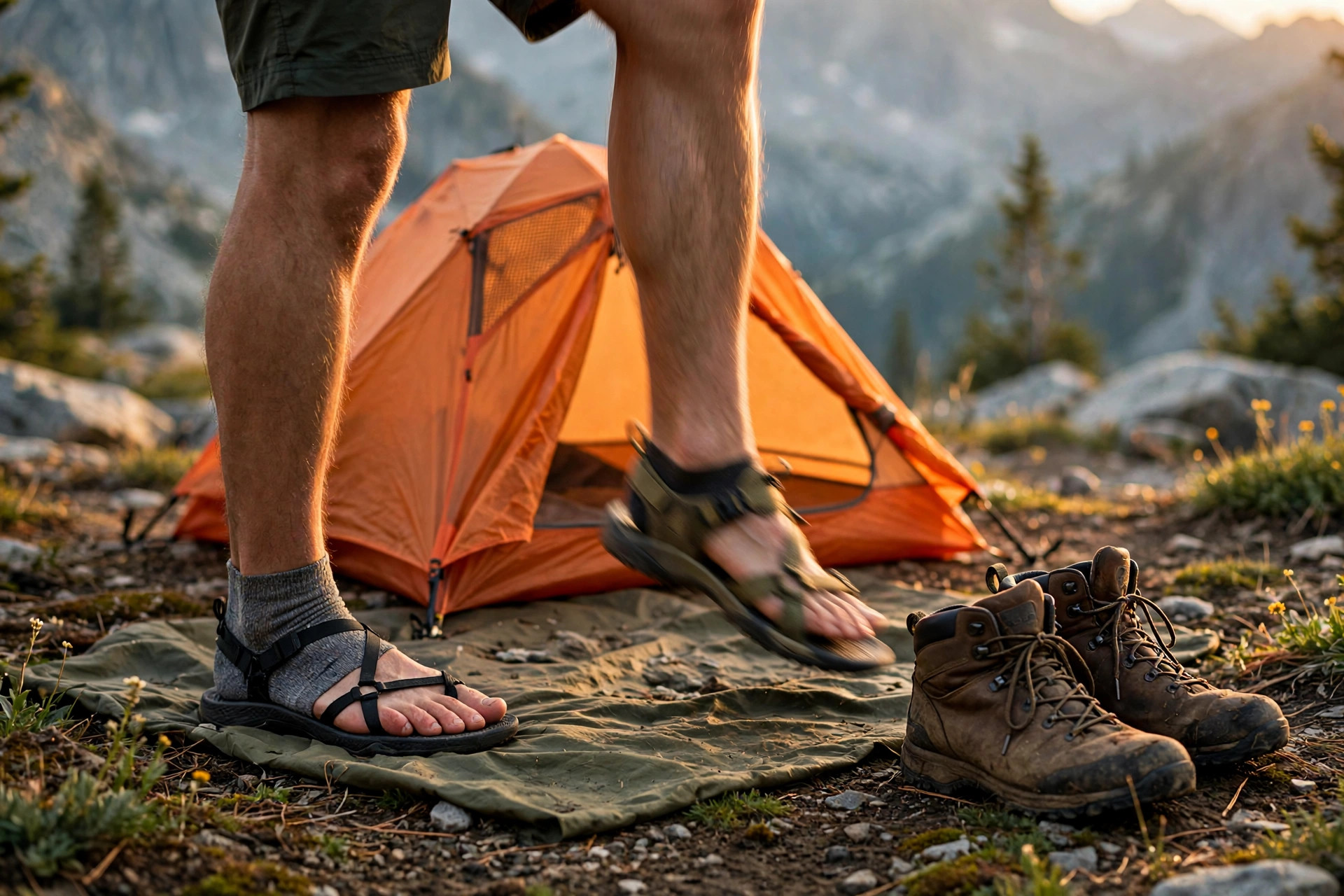
Your boots carry you all day; your camp shoes carry the evening. We compared every trail-worthy camp shoe verifiable in October 2026: the Xero Z-Trail EV wins — 8.4 oz a pair, real trail traction, adjustable straps that stay on in river current, and $79.99. Below: 5 camp shoes ranked, from the thru-hiker’s Crocs default to a premium Vibram-soled sandal.
Disclosure: Trail Tested is reader-supported. When you buy through links on this page, we may earn a commission at no extra cost to you. Learn more. All picks are compiled picks — researched from verified buyer reviews and manufacturer specs, not hands-on testing. See how we pick gear.
Contents
- Best Overall: Xero Z-Trail EV
- Best Budget: Crocs Classic Clog
- Best Premium: Bedrock Cairn Evo
- Lightest: Xero Genesis
- Best Classic Sport Sandal: Teva Original Universal
- Spec comparison
- How we picked
- Tested & dismissed
- FAQ
The 5 best camp shoes for backpacking 2026
1. Xero Z-Trail EV — Best Overall ($79.99)
Check price- Price: $79.99
- Weight: 8.4 oz per pair (men’s 9, per Xero spec)
- Sole: 11 mm FeelLite rubber + TrailFoam comfort layer, dual chevron lugs
- Straps: Quick-dry recycled nylon webbing, adjustable heel and instep straps
- Drop: Zero drop, flexible minimalist sole
- Notable: 70% lighter and less bulky than traditional sport sandals; vegan
What we like
- The best weight-to-protection ratio on the page — 8.4 oz for a sandal with real lugs and a cushioned midsole
- Adjustable heel and instep straps lock the sandal on in river crossings and muddy campsites — flip-flops can’t do this
- Quick-dry webbing means you can ford a stream in the evening and wake up to dry straps
What we don’t
- Zero-drop minimalist soles punish unprepared feet — transition gradually if you’re coming from cushioned shoes
- The adjustable strapping takes a few minutes to dial in the first time
- At $79.99 it’s not the cheapest way to rest your feet at camp
Why it’s a compiled pick: It does both jobs backpackers ask of camp shoes — cushioned enough for rocky campsites, secure enough for river crossings — at a weight most sandals can’t touch. The default recommendation for anyone buying camp shoes once.
2. Crocs Classic Clog — Best Budget ($50)
Check price- Price: $50
- Weight: 10.7 oz per pair (measured, men’s 9)
- Material: Molded Croslite EVA foam, one-piece construction
- Closure: Pivoting heel strap; secure or flip-forward slide mode
- Traction: Slip-resistant, non-marking outsole
- Notable: Buoyant — floats in water; ventilation ports drain fast
What we like
- The thru-hiker’s default: thousands of PCT and AT miles have proven these survive a long trail at $50
- Fully waterproof and buoyant — ford streams, rinse them out, hang them on your pack, done
- Cushioned enough that tired feet genuinely recover; buyers report 1,000+ miles per pair
What we don’t
- Pebbles and trail grit sneak through the ventilation ports — you’ll be dumping them out
- Bulky: they won’t fit inside a stuffed pack, so they ride strapped outside
- EVA soles eventually wear smooth on pavement-heavy town days
Why it’s a compiled pick: No camp shoe delivers more comfort per dollar. If your budget is tight or you just want the proven answer, this is it — and at $50, replacing them mid-trail doesn’t hurt.
3. Bedrock Cairn Evo — Best Premium ($115)
Check price- Price: $115
- Weight: 15.6 oz per pair (7.8 oz per sandal, size 9)
- Sole: 14 mm zero-drop stack, Vibram rubber outsole
- Straps: Patented 3-point Y-strap with heel hook; secure in whitewater
- Footbed: Flat, minimalist EVA; molds to the foot over time
- Notable: Made in the USA; 1% For the Planet member
What we like
- The grippiest camp shoe here — Vibram rubber that actually holds on wet rock and riverbeds
- The heel-hook strap system locks the foot down so securely that rafters and bikepackers trust it in rapids
- Built to last years, not a season — premium materials throughout, from webbing to hardware
What we don’t
- 15.6 oz a pair is the heaviest pick on this page — you feel it on your pack
- $115 is real money for shoes you wear a few hours a day
- The firm minimalist footbed needs a break-in period before long evenings feel good
Why it’s a compiled pick: For hikers who treat camp shoes as real footwear — river fords, rocky campsites, town resupplies — the Cairn Evo is the buy-it-once answer. The grip alone justifies the price on slick granite.
4. Xero Genesis — Lightest (~$50)
Check price- Price: ~$50
- Weight: 9.2 oz per pair (4.6 oz per sandal, men’s 9)
- Sole: 5 mm FeelTrue rubber, dual chevron lugs
- Lacing: Pre-laced huarache style; patent-pending tension adjustment, slide in and out
- Packability: Rolls up or clips to a pack; disappears in a side pocket
- Notable: 5,000-mile sole warranty; vegan
What we like
- Under 10 oz a pair with a real rubber sole and real traction — the ultralight sweet spot
- Rolls up tiny and clips to a pack strap, so it costs almost zero pack volume
- The pre-laced tension system makes them genuinely slip-on fast after a long day
What we don’t
- 5 mm of sole means you feel every sharp rock — minimalist feet only
- The huarache lacing runs between the toes, which some hikers never warm to
- Not the pick for cold evenings — there’s no warmth here at all
Why it’s a compiled pick: When your base weight is the religion, the Genesis is the answer: the lightest camp shoe on this page that still has a durable sole and real grip. Ounce-counters, this is your sandal.
5. Teva Original Universal — Best Classic Sport Sandal ($54.95)
Check price- Price: $54.95
- Weight: ~13 oz per pair (368 g, men’s US 9)
- Straps: Universal Strapping System, 100% REPREVE recycled polyester, hook-and-loop closure
- Footbed: Molded EVA with arch support
- Outsole: Durabrasion rubber for traction
- Notable: Vegan; quick-dry straps with Microban odor resistance
What we like
- The original sport sandal, refined since 1984 — the fit and strap system are dialed
- Quick-dry recycled straps and a grippy rubber outsole handle stream crossings and wet campsites
- Enough arch support and cushioning to double as town shoes on resupply days
What we don’t
- ~13 oz a pair is heavier than every sandal here except the Bedrock
- The hook-and-loop straps collect trail grit and need occasional rinsing to stay grippy
- EVA footbeds pack down over very long trails — expect a season or two, not five
Why it’s a compiled pick: If you want one sandal for camp, river crossings, and the walk into town for resupply, the Original Universal is the versatile classic. Four decades of hikers can’t be wrong.
Spec comparison
| Camp shoe | Price | Weight (pair) | Style | Heel strap | Best for |
|---|---|---|---|---|---|
| Xero Z-Trail EV | $79.99 | 8.4 oz | Trail sandal | Yes | Best overall — camp + crossings |
| Crocs Classic Clog | $50 | 10.7 oz | Clog | Pivoting strap | Budget, tired feet, water |
| Bedrock Cairn Evo | $115 | 15.6 oz | Adventure sandal | Yes (heel hook) | Premium grip, rocky campsites |
| Xero Genesis | ~$50 | 9.2 oz | Minimalist huarache | Lacing | Ultralight base weights |
| Teva Original Universal | $54.95 | ~13 oz | Sport sandal | Yes | Camp-to-town versatility |
How we picked
We filtered for shoes hikers actually carry on multi-day trips — not bedroom slippers — with verifiable specs and US availability as of October 2026. Then we scored on:
- Weight — under 16 oz a pair was the hard cutoff; under 11 oz earned bonus points. Camp shoes ride on your pack all day.
- Foot security — a heel strap or lacing system that keeps the shoe on in mud and river current. Slip-offs in a ford are how ankles get hurt.
- Water tolerance — camp shoes get wet. We favored materials that drain and dry overnight: EVA foam, quick-dry webbing, rubber soles.
- Campsite comfort — cushioning and footbed shape matter after 8 hours in boots; the winners all give tired feet genuine relief.
- Packability — sandals that roll up or lie flat score over bulky clogs that must ride outside the pack.
- Trail consensus — we weighted models with real thru-hiker and backpacking-community track records (PCT, AT, CDT forums) over spec-sheet-only picks.
We did not hands-on test these shoes. Every spec comes from manufacturer listings and retailer pages, and every verdict is compiled from verified buyer reviews and long-distance hiking communities — see the data sources at the bottom.
Tested & dismissed
Chaco Z/1 Classic — a beloved sandal, but at 16+ oz a pair it’s heavier than some people’s trail runners. Camp shoes shouldn’t weigh as much as the boots they’re replacing.
Cheap knockoff EVA clogs (~$12–15) — tempting at a quarter of the price, but the foam compresses and slickens fast. On a weeklong trip the savings evaporate; on a thru-hike they’re dead weight by month two.
Keen Newport H2 and similar water shoes — excellent grip and toe protection, but ~17 oz a pair and overbuilt for lounging at camp. If you’re fording big rivers daily, reconsider; otherwise, it’s weight you won’t use.
FAQ
How much should camp shoes weigh so they don’t wreck my base weight? Aim for under 12 oz (340 g) per pair — camp shoes ride on your pack all day, so every ounce costs you. The picks above run from 8.4 oz (Xero Z-Trail EV) to 15.6 oz (Bedrock Cairn Evo), and the sweet spot for most backpackers is 9–11 oz: light enough to forget, protective enough for rocky campsites.
Are Crocs really good enough as camp shoes for a long thru-hike? Yes — the Classic Clog is the thru-hiker’s default for a reason: at $50 and 10.7 oz per pair, it cushions tired feet, floats in river crossings, and costs little when it wears out. Downsides: pebbles sneak through the ventilation ports, and they ride bulky on the outside of a pack. Buyers report 1,000+ miles per pair on the PCT.
Can I ford rivers in my camp shoes, or do I need dedicated water shoes? For shallow, easy crossings, most camp shoes here double as water shoes — sandals with heel straps (Xero, Bedrock, Teva) stay on your feet in current, and Croslite foam doesn’t waterlog. For deep, fast, or rocky fords, a grippier dedicated water shoe is safer. Never cross barefoot: numb feet plus slick rocks cause injuries.
Do I actually need camp shoes, or can I just loosen my boots at camp? Ultralight hikers sometimes skip them, but most backpackers find camp shoes worth their weight. After 8 hours in boots, dry feet recover faster, hotspots get air, and you can wade a stream or visit the privy without re-lacing. At 8–11 oz, the comfort dividend per gram is one of the best on the packing list.
What’s the lightest camp shoe option that still protects my feet? The Xero Genesis at 9.2 oz per pair is the lightest pick here that still has a real sole — its 5 mm FeelTrue rubber sole and dual chevron lugs protect against sharp rocks far better than EVA foam flip-flops. Minimalists accept thinner soles to save weight; the Genesis is the line where “light” stops meaning “vulnerable”.
Related guides
- Best Hiking Sandals for River Crossings (2026) — when your ford needs more grip than camp shoes offer
- How to Prevent Blisters While Hiking — why dry camp time is part of blister prevention
- Footwear guides — all our hiking footwear coverage, from boots to socks
Heads up: some links on this page are affiliate links — if you buy through them we may earn a commission at no extra cost to you. Learn more.
Frequently asked questions
How much should camp shoes weigh so they don't wreck my base weight?
Aim for under 12 oz (340 g) per pair — camp shoes ride on your pack all day, so every ounce costs you. The picks above run from 8.4 oz (Xero Z-Trail EV) to 15.6 oz (Bedrock Cairn Evo), and the sweet spot for most backpackers is 9–11 oz: light enough to forget, protective enough for rocky campsites.
Are Crocs really good enough as camp shoes for a long thru-hike?
Yes — the Classic Clog is the thru-hiker’s default for a reason: at $50 and 10.7 oz per pair, it cushions tired feet, floats in river crossings, and costs little when it wears out. Downsides: pebbles sneak through the ventilation ports, and they ride bulky on the outside of a pack. Buyers report 1,000+ miles per pair on the PCT.
Can I ford rivers in my camp shoes, or do I need dedicated water shoes?
For shallow, easy crossings, most camp shoes here double as water shoes — sandals with heel straps (Xero, Bedrock, Teva) stay on your feet in current, and Croslite foam doesn’t waterlog. For deep, fast, or rocky fords, a grippier dedicated water shoe is safer. Never cross barefoot: numb feet plus slick rocks cause injuries.
Do I actually need camp shoes, or can I just loosen my boots at camp?
Ultralight hikers sometimes skip them, but most backpackers find camp shoes worth their weight. After 8 hours in boots, dry feet recover faster, hotspots get air, and you can wade a stream or visit the privy without re-lacing. At 8–11 oz, the comfort dividend per gram is one of the best on the packing list.
What's the lightest camp shoe option that still protects my feet?
The Xero Genesis at 9.2 oz per pair is the lightest pick here that still has a real sole — its 5mm FeelTrue rubber sole and dual chevron lugs protect against sharp rocks far better than EVA foam flip-flops. Minimalists accept thinner soles to save weight; the Genesis is the line where ’light’ stops meaning ‘vulnerable’.