
When to Buy Hiking Gear: Best Months for Deals (2026)
Stop paying full price. The 2026 month-by-month hiking gear sale calendar — REI, Backcountry, Moosejaw patterns, what to buy when, and how to stack deals.
In this guide
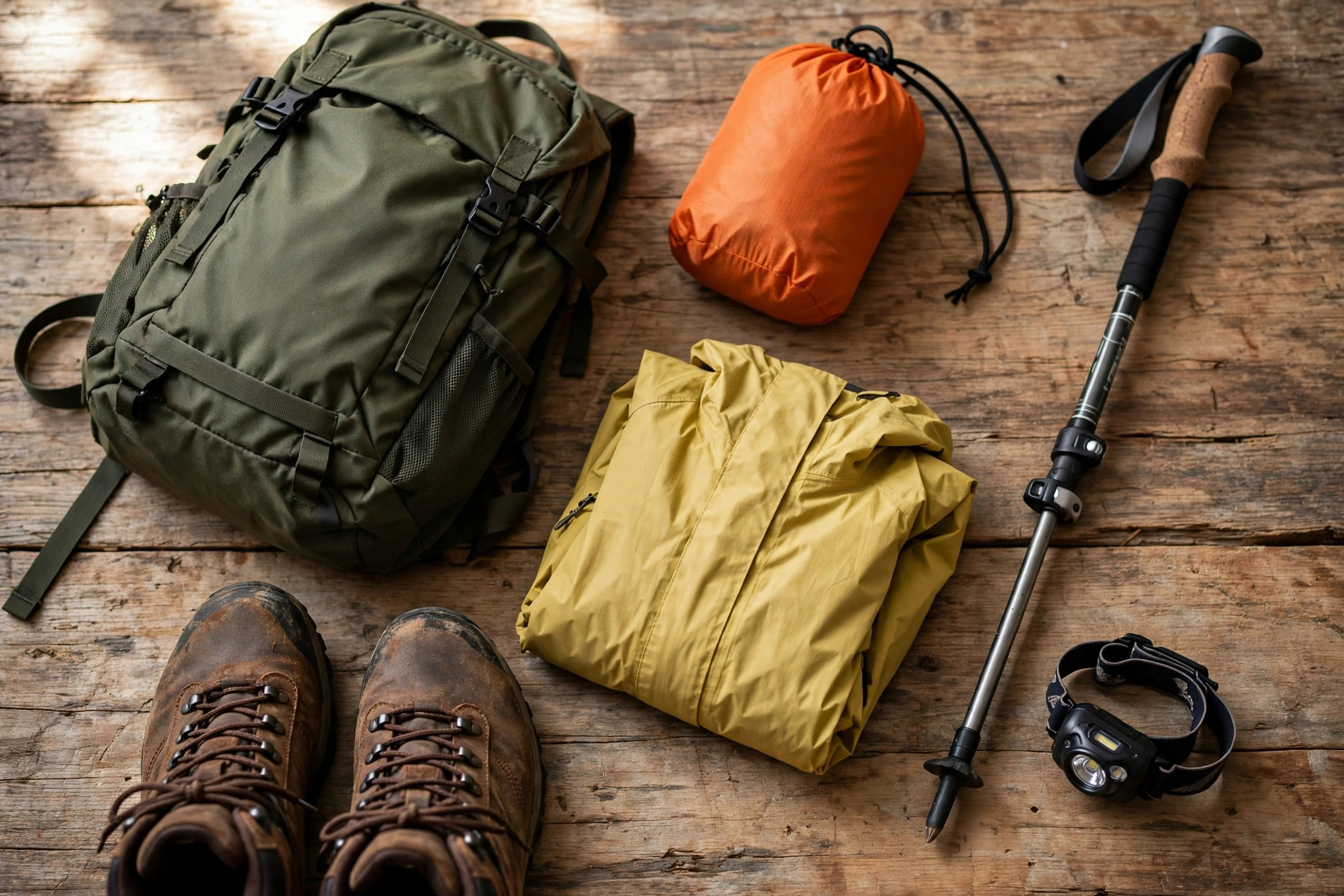
Outdoor gear goes on sale on a predictable calendar — the same windows, every year. The hikers who pay full price are the ones who buy the week before a sale starts. Time your purchases to the windows below and you’ll routinely save 25–50% on the exact same gear.
Quick answer: The best months to buy hiking gear are May (REI Anniversary Sale + Memorial Day sales — the deepest discounts on tents, packs, and sleeping bags), September (Labor Day clearance on summer gear), and November (Black Friday week — best for electronics like GPS watches). January–February brings the deepest winter-gear clearance of the year.
Disclosure: Trail Tested is reader-supported. When you buy through links on this page, we may earn a commission at no extra cost to you. Learn more. See how we track deals at the bottom.
Contents
- The sale calendar, month by month
- What to buy when: the quick table
- Retailer sale patterns
- How to stack deals
- Frequently asked questions
- How we track deals
The sale calendar, month by month
January–February: winter clearance
The deepest discounts of the year on cold-weather gear. Retailers clear insulated jackets, winter sleeping bags, snowshoes, and baselayers to make room for spring inventory — 40–50% off is common. This is the time to buy next winter’s puffy and a 0°F bag.
- Check price Winter clearance at REI
- Presidents’ Day weekend (mid-February) brings a second wave of sitewide sales at most outdoor retailers.
March–April: spring kickoff
New-season gear arrives at full price, but retailers run early-season promotions to capture spring hikers. REI typically runs a member-focused sale in March — a good time to use 20%-off member coupons on one full-price item (backpacks and tents are the classic coupon targets). Last year’s models get their final markdowns now.
May: the biggest month (REI Anniversary Sale + Memorial Day)
This is the #1 buying window for hiking gear. The REI Anniversary Sale — the co-op’s biggest sale of the year, running in late May — discounts tents, sleeping bags, packs, and apparel at 25–40% off. It overlaps with Memorial Day weekend sales at Backcountry, Moosejaw, and nearly every outdoor retailer, so comparison-shop across stores.
- Big-ticket buys: 3-season tents, sleeping bags and quilts, backpacking packs, trekking poles
- Check price REI Anniversary Sale
- Check price Memorial Day deals at Backcountry
June–July: summer sales
July 4th sales bring a solid mid-season discount wave — typically 20–30% off select gear. Amazon’s Prime Day (mid-July) is worth watching for electronics: GPS watches, headlamps, and satellite communicators see some of their best prices of the year. It’s also when last year’s tent and pack models hit clearance pricing.
August–September: Labor Day clearance
The second-biggest buying window. Labor Day weekend (late August/early September) is end-of-summer clearance: retailers dump warm-weather apparel, footwear, and remaining 3-season inventory at 30–50% off. Hiking shoes and trail runners from the spring lineup get their steepest discounts now.
- Best buys: hiking shoes, trail runners, summer apparel, water filters, remaining tent inventory
- Footwear tip: buy next season’s trail runners now, at clearance, in your known size
October: fall transition
Quieter month, but fall apparel (fleece, softshells, rain jackets) sees early-season promotions, and leftover summer gear gets final clearance pricing. Good month for rain jackets before the wet season.
November: Black Friday week
The best week of the year for electronics and gift-friendly gear: GPS watches, satellite communicators, headlamps, and camp gadgets. REI typically runs its “Gear Up Get Out” sale in early-to-mid November — historically one of the best times for big-ticket items — followed by Black Friday/Cyber Monday deals across Backcountry, Moosejaw, and Amazon.
- Best buys: GPS watches, headlamps, satellite communicators, camp chairs, gift cards deals
- For tents and sleeping bags, May still beats November — buy those in spring
December: holiday sales, then the reset
Pre-Christmas sales are decent but rarely the deepest — retailers know you’re buying gifts on a deadline. The real play is post-Christmas clearance (December 26 onward): returned gift inventory and final winter markdowns. Then the calendar resets to January’s winter clearance.
What to buy when: the quick table
| Gear category | Best month(s) | Why |
|---|---|---|
| 3-season tents | May, September | Anniversary Sale depth; Labor Day clearance on remaining stock |
| Sleeping bags & quilts | May, January | Anniversary Sale; winter-bag clearance in Jan |
| Backpacking packs | May, November | Anniversary Sale; member coupons + holiday sales |
| Hiking shoes / trail runners | September | Labor Day clearance on spring models |
| Insulated jackets | January–February | Winter clearance, 40–50% off |
| Rain jackets & fleece | October, May | Fall promos; Anniversary Sale |
| GPS watches & electronics | November, July | Black Friday; Prime Day |
| Headlamps | November | Black Friday bundles and discounts |
| Water filters | May, September | Season-open and season-close sales |
| Trekking poles | May | Anniversary Sale |
| Camp chairs & camp gear | November, May | Holiday sales; Anniversary Sale |
Retailer sale patterns
REI. The most predictable calendar in outdoor retail: the Anniversary Sale (late May, biggest of the year), a Labor Day sale (late August), the “Gear Up Get Out” sale (early–mid November), plus periodic 20%-off member coupons on one full-price item. REI’s used-gear program (Re/Supply) runs year-round and is often cheaper than any sale.
Check priceBackcountry. Runs major sales on the same holiday weekends (Memorial Day, July 4th, Labor Day, Black Friday) with deep discounts on its house brands (Backcountry, Stoic) — often 40–60% off. Its semi-annual “Gearhead” sales are worth watching for apparel.
Check priceMoosejaw. Known for aggressive discounting and a rewards program that effectively stacks extra savings on sale prices. Follows the same holiday calendar; its clearance section routinely beats other retailers on last-season apparel.
Check priceAmazon. Best for electronics (Prime Day in July, Black Friday) and budget-friendly accessories. Be cautious with third-party sellers on premium gear — counterfeits exist in the outdoor category. For big-ticket items, authorized outdoor retailers are safer.
Check priceHow to stack deals
The calendar gets you 25–40% off. Stacking gets you more:
- Buy last season’s colors. The cheapest discount in outdoor retail: identical gear, previous colorway, 30–50% off. Retailers need the shelf space more than you need this year’s shade of blue.
- Use member coupons on excluded brands. Premium brands often enforce minimum advertised pricing (no advertised discounts, ever). A 20%-off member coupon that applies to full-price items is frequently the only legal discount on these brands — save coupons for them.
- Check used gear first. REI’s Re/Supply and other certified used-gear programs sell inspected, graded used equipment at 30–70% off retail. Tents, packs, and hard goods hold up well secondhand.
- Track the price before the sale. Watch a product’s price for 2–4 weeks before a major sale. Some “deals” are just the everyday price with a sale badge; real deals are 25%+ below the price you’ve been tracking.
- Price-match across retailers. Major outdoor retailers will typically match each other’s advertised prices on identical items — ask, especially on big-ticket gear during sale weeks.
- Sign up for retailer newsletters. First-purchase discounts (usually 10–15%) stack with clearance prices at some retailers, and sale early-access emails beat the rush on limited sizes.
- Time big purchases to coupon windows. A 20%-off coupon on a $400 tent saves $80 — more than most sales. Patience here is worth real money.
Frequently asked questions
What is the single best time of year to buy hiking gear?
Late May — the REI Anniversary Sale, the co-op’s biggest sale of the year, overlaps with Memorial Day sales at Backcountry, Moosejaw, and most outdoor retailers. Expect 25–40% off tents, packs, sleeping bags, and apparel. The second-best window is Black Friday week in late November, which is strongest for electronics like GPS watches and headlamps.
Is the REI Anniversary Sale better than Black Friday for hiking gear?
For core backpacking gear — tents, sleeping bags, packs — yes. The Anniversary Sale in late May is REI’s deepest and broadest sale, timed for hiking season. Black Friday is better for electronics (GPS watches, satellite communicators, headlamps) and gift-friendly items. Buy season-specific gear in May; buy tech in November.
Do hiking gear prices really drop at the end of the season?
Yes, reliably. Retailers clear summer inventory around Labor Day (late August/early September) and winter inventory in January–February. Discounts of 30–50% are common on last season’s colors and models — the gear is identical to this year’s except for the colorway, which is the cheapest discount in outdoor retail.
Should I buy last year’s model of hiking gear to save money?
Almost always yes. Outdoor gear evolves slowly — a tent or sleeping bag from last season is functionally identical to this year’s version in most cases. The exception is electronics (GPS watches, headlamps), where a new generation can bring meaningful battery or feature upgrades. For tents, packs, and apparel, last year’s color at 40% off is the best deal in the store.
How can I tell if a hiking gear “deal” is actually a deal?
Track the price first. Use a price-history tool on the product page for 2–4 weeks before a sale, and know that many outdoor brands enforce minimum advertised pricing — so a “sale” that’s 10% off MAP on a premium brand may genuinely be the best price you’ll see. Real deals are 25%+ off on last-season colors during the major sale windows in this guide.
How we track deals
This guide is built on the established US outdoor retail calendar — the major sale events (REI Anniversary Sale, Memorial Day, Labor Day, Black Friday) run on the same schedule every year, and we verify timing against prior-year sale announcements before each season. We track:
- Advertised sale events from major US outdoor retailers (REI, Backcountry, Moosejaw, Dick’s, Amazon) and when they historically start and end
- Category patterns — which gear categories actually get discounted in each window, versus which are just “included” at token discounts
- MAP-excluded brands — premium brands that never go on advertised sale, so you know to use coupons or buy used instead of waiting for a sale that won’t come
- Price reality checks — we flag the difference between genuine 25%+ discounts and everyday prices wearing a sale badge
We refresh this guide seasonally as retailers announce their sale dates. Prices change constantly; the calendar doesn’t.
Related guides: The 4 Best Water Filters for Group Backpacking (2026) · The 4 Best Bear Canisters for Backpacking (2026) · The 4 Best Backpacking Camp Chairs Under 2 Pounds (2026)
Heads up: some links on this page are affiliate links — if you buy through them we may earn a commission at no extra cost to you. Learn more.
Frequently asked questions
What is the single best time of year to buy hiking gear?
Late May — the REI Anniversary Sale, the co-op’s biggest sale of the year, overlaps with Memorial Day sales at Backcountry, Moosejaw, and most outdoor retailers. Expect 25–40% off tents, packs, sleeping bags, and apparel. The second-best window is Black Friday week in late November, which is strongest for electronics like GPS watches and headlamps.
Is the REI Anniversary Sale better than Black Friday for hiking gear?
For core backpacking gear — tents, sleeping bags, packs — yes. The Anniversary Sale in late May is REI’s deepest and broadest sale, timed for hiking season. Black Friday is better for electronics (GPS watches, satellite communicators, headlamps) and gift-friendly items. Buy season-specific gear in May; buy tech in November.
Do hiking gear prices really drop at the end of the season?
Yes, reliably. Retailers clear summer inventory around Labor Day (late August/early September) and winter inventory in January–February. Discounts of 30–50% are common on last season’s colors and models — the gear is identical to this year’s except for the colorway, which is the cheapest discount in outdoor retail.
Should I buy last year's model of hiking gear to save money?
Almost always yes. Outdoor gear evolves slowly — a tent or sleeping bag from last season is functionally identical to this year’s version in most cases. The exception is electronics (GPS watches, headlamps), where a new generation can bring meaningful battery or feature upgrades. For tents, packs, and apparel, last year’s color at 40% off is the best deal in the store.
How can I tell if a hiking gear 'deal' is actually a deal?
Track the price first. Use a price-history tool on the product page for 2–4 weeks before a sale, and know that many outdoor brands enforce minimum advertised pricing — so a ‘sale’ that’s 10% off MAP on a premium brand may genuinely be the best price you’ll see. Real deals are 25%+ off on last-season colors during the major sale windows in this guide.