
Best Underwear for Hiking: Stop Chafing for Good (Merino vs Synthetic, 2026)
The best underwear for hiking isn't cotton — it's merino or performance synthetic. Compare the two, see the top-rated picks for men and women, and end inner-thigh chafing on the trail.
In this guide
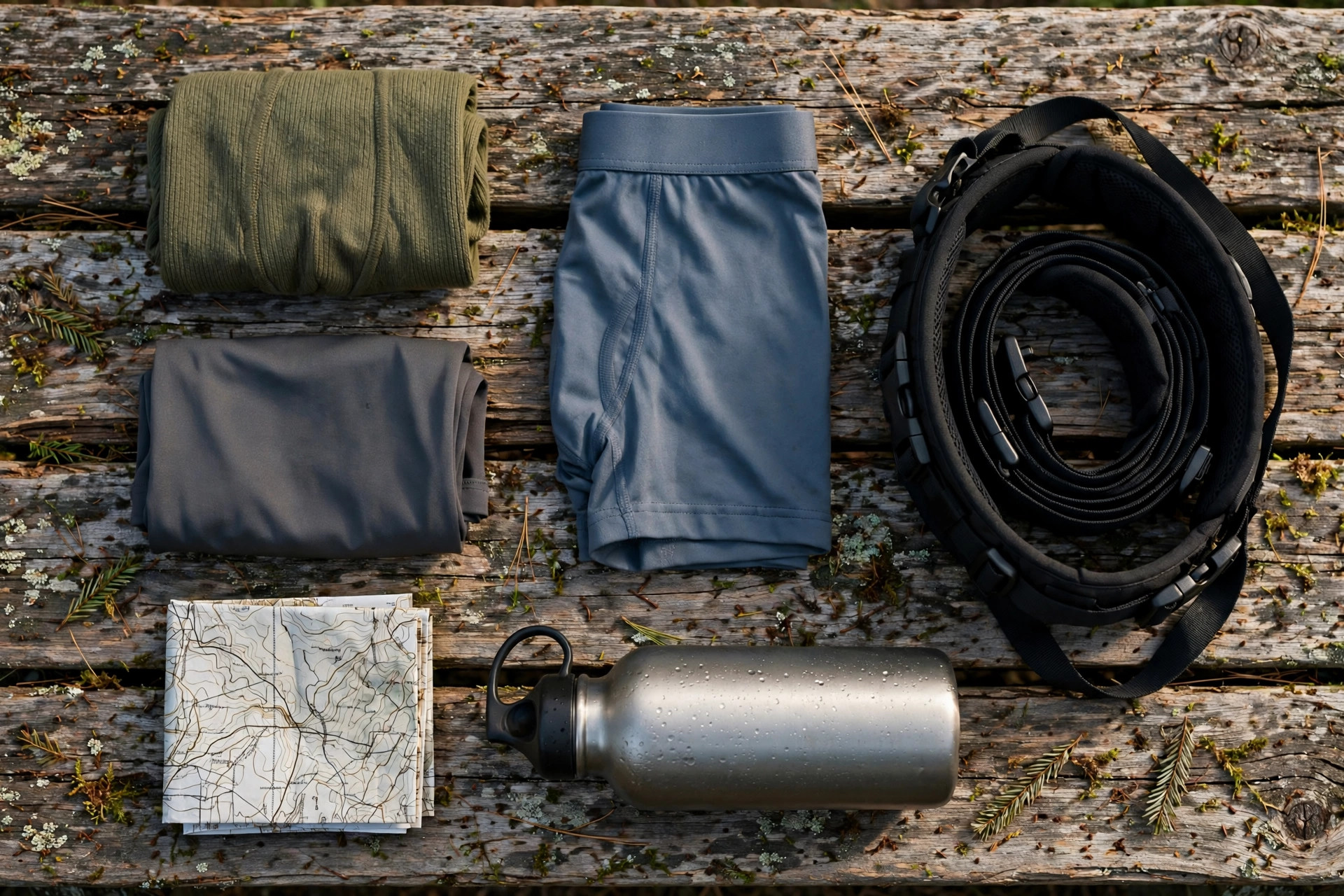
Ask experienced hikers what ended their worst trip and many won’t say the weather or the blisters — they’ll say the chafing. Inner thighs raw by mile eight, a waistband sawing at the hip belt line, seams that felt fine in the store and turned into sandpaper by noon. And almost every one of those stories starts the same way: cotton underwear.
Quick answer: The best underwear for hiking is a moisture-wicking merino wool or performance synthetic pair with flatlock seams — never cotton. Merino (like Smartwool or Icebreaker) wins for multi-day trips thanks to odor control; synthetic (like ExOfficio Give-N-Go) wins on price, durability, and dry time. Men should look for 6-inch boxer briefs; women for a supportive, seamless cut. Two pairs rotate through any trip length.
Why underwear matters more than you think
Everything above the underwear gets the marketing budget — the boots, the pack, the shell jacket. But the layer touching your most friction-prone skin works the hardest job on the trail. Three problems make underwear a make-or-break gear choice:
- The thigh gap problem. Whether from anatomy or just long miles, inner thighs rub. Sweat turns that rub into raw skin within hours. A longer boxer-brief leg or a well-cut brief puts fabric — not skin — at the contact point.
- The hip belt line. Your pack’s hip belt sits exactly at the waistband. A thick elastic band under a loaded hip belt becomes a pressure point; seams there become blisters of the waistline.
- Moisture has nowhere to go. The groin area ventilates poorly compared to arms and legs. Whatever you wear there needs to move sweat fast and stay comfortable damp — which is precisely what cotton refuses to do.
Our hiking shorts guide for men covers the outer layer of this same battle — pair the right shorts with the right underwear and chafing becomes a non-issue.
Merino wool vs synthetic: the honest comparison
This is the only real decision. Everything else is fit and preference.
| Merino wool | Synthetic (poly/nylon) | |
|---|---|---|
| Odor control | Excellent — days of wear | Poor — funky after one day |
| Dry time | Slower (absorbs ~30% its weight) | Fastest |
| Durability | Wears thin; 1–2 seasons of hard use | Very durable; years |
| Price | $25–45 per pair | $15–30 per pair |
| Comfort | Soft, temperature-regulating | Can feel clammy in humidity |
| Best for | Multi-day and thru-hikes | Day hikes, hot weather, tight budgets |
The research-compiled consensus from thru-hiker surveys and outfitter buying guides is consistent: merino for trips, synthetic for days. Merino’s odor resistance is a genuine superpower on a 5-day backpacking trip where laundry is a stream rinse. But it costs more and develops holes faster — the fibers are simply less abrasion-resistant than nylon. Synthetic pairs like the ExOfficio Give-N-Go have been the default recommendation for over a decade because they dry fast, last years, and cost half as much.
One nuance worth knowing: “merino blends” (merino + nylon, typically 80/20 or 50/50) split the difference — most of the odor control, noticeably better durability. Several top-rated hiking pairs use exactly this recipe.
Top-rated hiking underwear: the research-compiled shortlist
These are the pairs that show up again and again in thru-hiker surveys, outfitter staff picks, and long-term review roundups. No single pair won every test anywhere — fit is personal — but you cannot go far wrong starting here.
For men
- ExOfficio Give-N-Go 2.0 Boxer Brief — the long-running default. Quick-dry nylon mesh, 6-inch inseam, anti-odor treatment, and a price (~$26) that makes owning three pairs painless. The most-recommended hiking underwear in the world by sheer volume of thru-hiker mentions.
- Smartwool Merino 150 Boxer Brief — the merino pick. 87% merino with a touch of nylon for durability, flatlock seams, and the odor resistance that makes two pairs enough for a week. Costs more (~$40) and won’t outlast the ExOfficio, but multi-day hikers swear by it.
- Saxx Kinetic HD Boxer Brief — the comfort pick. A ballpark pouch design that keeps everything separated and a 5-inch semi-compression fit that doesn’t ride up. Popular with hikers who chafe despite boxer briefs because it eliminates bunching.
- Duluth Trading Buck Naked Boxer Brief — the budget-dark-horse. Often cited as the best value in performance underwear (~$20 on sale), with a no-pinch waistband that plays well under hip belts.
For women
- ExOfficio Give-N-Go Bikini Brief — the women’s counterpart to the men’s classic: same quick-dry mesh, same anti-odor finish, a cut that stays put under a pack. Frequently the #1 recommendation in women’s hiking forums.
- Patagonia Active Hipster — the comfort pick. Soft, breathable, wide waistband that doesn’t dig, and a mid-rise cut that sits below most hip belts. A favorite for long trail days.
- Icebreaker Merino Siren Brief — the merino pick for women. 83% merino for multi-day odor control with enough stretch to move. Thru-hiking women consistently rate merino highest for trips of 4+ days.
- Balanced Tech or similar seamless briefs — the budget pick. Seamless construction means nothing to chafe at the hip belt line; buy a multi-pack and rotate.
Fit rules that matter more than the brand
The best-reviewed pair in the wrong size will still chafe you. Four rules:
- Cover the thighs. Men: 6-inch inseam boxer briefs, minimum. Women: a cut with enough leg coverage or pair with longer shorts — bare inner-thigh skin is the #1 chafing site for everyone.
- Flatlock seams or seamless. Raised seams under a hip belt or between thighs are friction lines. Every pair on the shortlist above uses flatlock or seamless construction — if yours doesn’t, that’s the upgrade.
- No cotton, no exceptions. This includes the waistband and the gusset. “Cotton-feel” blends are marketing — check the tag.
- Size for the afternoon. Like hiking shoes, buy underwear that fits when you’re warm and slightly swollen, not cold in a fitting room. A waistband that’s snug in the store becomes a tourniquet under a loaded hip belt.
The on-trail system: two pairs, zero drama
For any trip length, the system is the same:
- Wear one, wash one. Rinse the day’s pair at camp with filtered or treated water (never soap directly in a stream), wring it hard, and clip it to the outside of your pack. It’ll be dry by morning in most conditions.
- Merino stretches the rotation. Because merino resists odor for days, a two-pair system genuinely covers a week — this is why thru-hikers accept the higher price.
- Keep anti-chafe balm as backup. Even perfect underwear can’t fix every body on every mile. A stick of Body Glide or similar in the hip belt pocket is the cheapest insurance in your kit — apply at the first hot spot, not the first raw patch.
- Sleep commando. Give the skin a full night of airflow. It sounds like a joke; wilderness medicine folks treat it as legitimate skin care on multi-day trips.
Pair this system with the right outer layer — our what-to-wear at 50 degrees guide covers temperature regulation head to toe — and finish the kit with the 10 essentials checklist so nothing else gets forgotten.
The bottom line
Underwear is the cheapest chafing fix in hiking. For about the price of a trail lunch, a synthetic pair like the ExOfficio Give-N-Go ends the cotton-chafing cycle on day hikes; for multi-day trips, merino pairs from Smartwool or Icebreaker earn their price in odor-free days. Longer legs, flat seams, no cotton, two-pair rotation — that’s the whole system, and it works.
Heads up: some links on this page are affiliate links — if you buy through them we may earn a commission at no extra cost to you. Learn more.
Frequently asked questions
Is merino wool or synthetic better underwear for hiking?
Both beat cotton by a mile. Merino wool wins on odor control — you can wear a pair for several days without it getting funky — but it costs more and wears through faster. Synthetic (polyester/nylon blends) wins on durability, price, and dry time, but gets stinky after one long day. For multi-day trips, many hikers prefer merino; for day hikes and sweaty conditions, synthetic is the value pick.
Why does cotton underwear cause so much chafing on hikes?
Cotton absorbs up to 27 times its weight in water and dries very slowly. On a hike it becomes a wet, heavy layer that clings to your skin and creates friction with every step — exactly the friction-moisture recipe for chafing and saddle sores. Merino and synthetics wick moisture away and stay slippery and light even when damp.
Should men wear boxer briefs or briefs for hiking?
Boxer briefs with a 6-inch inseam are the near-universal recommendation for hiking men: the longer leg covers the inner thighs, which is where most male chafing happens. Regular briefs or trunks leave skin-on-skin thigh contact, which sweats and rubs raw by mile 6. A contoured pouch also reduces bunching.
How many pairs of hiking underwear do I need for a multi-day trip?
Two pairs is the classic system: wear one, wash one. Rinse the worn pair in a stream or with filtered water at camp, wring it out, and clip it to your pack to dry while you hike. Merino pairs stretch this further since they resist odor for days — some thru-hikers rotate just two pairs for weeks.
Can I just wear running shorts with a liner instead of hiking underwear?
Yes — quality 2-in-1 running shorts with a built-in mesh liner work fine for day hikes and warm-weather trips, and plenty of hikers go this route. The limitation is that liners are usually thin and offer no odor control, and on multi-day trips you’ll want the dedicated pair anyway. For cold weather or backpacking, real hiking underwear under shell shorts is the better system.