
Best Hiking Sun Hoodie of 2026
The 5 best hiking sun hoodies of 2026 — Mountain Hardwear, REI, Outdoor Research, Black Diamond, Free Fly — UPF ratings, weights, and prices compared.
In this guide
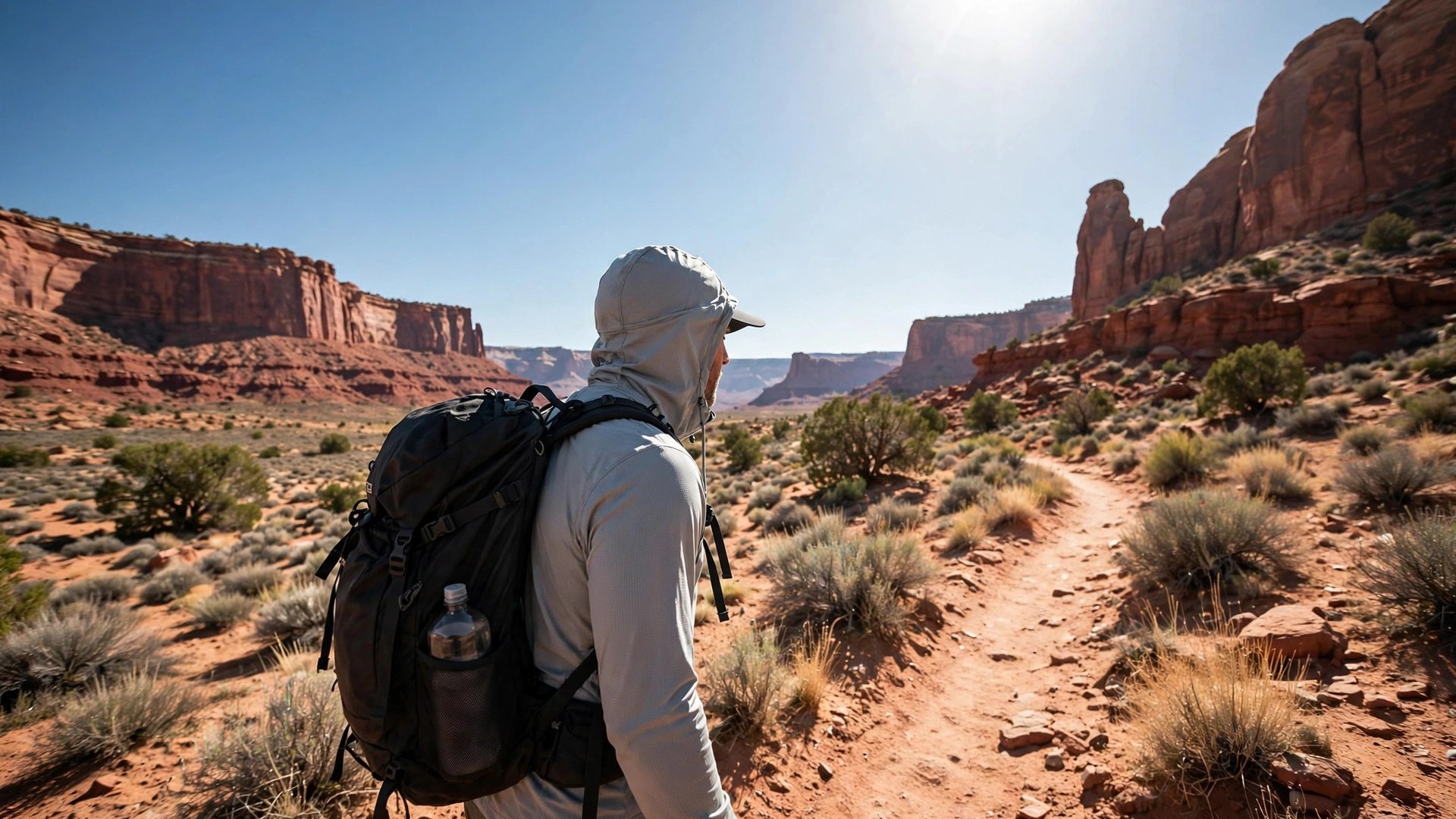
A sun hoodie is the highest-value layer a desert hiker can own: one shirt replaces sunscreen on your arms, neck, and ears for an entire trip. We compared every trail-proven sun hoodie verifiable in October 2026, and the Mountain Hardwear Crater Lake Hoody wins — UPF 50, 4.2 oz, a buttery-soft knit, and $79. Below: five ranked, with the honest UPF, breathability, and durability trade-offs nobody prints on the hang tag.
Disclosure: Trail Tested is reader-supported. When you buy through links on this page, we may earn a commission at no extra cost to you. Learn more. All picks are compiled picks — researched from verified buyer reviews and manufacturer specs, not hands-on testing. See how we pick gear.
Contents
- Best Overall: Mountain Hardwear Crater Lake Hoody
- Best Budget: REI Co-op Sahara Shade Hoodie
- Lightest: Outdoor Research Echo Hoodie
- Best Premium: Black Diamond Alpenglow Pro Hoody
- Best Natural Fiber: Free Fly Bamboo Lightweight Hoodie II
- Spec comparison
- How we picked
- Tested & dismissed
- FAQ
The 5 best hiking sun hoodies of 2026
1. Mountain Hardwear Crater Lake Hoody — Best Overall ($79)
Check price- Price: $79
- Weight: 4.2 oz (120 g)
- UPF rating: 50
- Fabric: Solar-knit jersey, 88% polyester / 12% elastane
- Hood: Three-piece full-coverage hood
- Notable: Low-profile thumbholes; zip pocket on the women’s version
What we like
- The rare UPF 50 + sub-5 oz combination — maximum protection at minimum pack weight
- The silkiest hand-feel of any shirt here; buyers consistently call it the most comfortable sun shirt they own
- Three-piece hood covers ears and neck, the zones hikers burn first
What we don’t
- Less breathable than the gossamer-thin Echo when you’re working hard uphill
- Odor resistance is average — on a multi-day trip it needs a nightly rinse
- The hood fits best with a cap underneath; without one it sits a little loose
Why it’s a compiled pick: It wins the three-way trade-off that defines this category: real UPF 50 protection, true ultralight weight, and a price under $80. No other shirt here gets all three right at once.
2. REI Co-op Sahara Shade Hoodie — Best Budget ($60)
Check price- Price: $60
- Weight: ~6.5 oz
- UPF rating: 50+
- Fabric: 92% polyester / 8% spandex
- Hood: 3-panel hood with internal drawstring and crossover opening
- Notable: One of REI’s best-selling garments of all time; men’s and women’s fits
What we like
- The best hood on the page: cinchable, with a crossover front that seals the neck and upper chest — the exact spot that burns on exposed ridgelines
- UPF 50+ built into the fibers, so the protection never washes out — at $60, full coverage undercuts every premium pick by a wide margin
What we don’t
- Heavier and warmer than the top two — not the shirt for 100°F desert afternoons
- The knit feels cheaper than premium blends, and it needs washing every couple of wears
- The scoop hem on the women’s version rides up under a pack hip belt
Why it’s a compiled pick: The hoodie that converted a generation of hikers to the format: proven UPF 50+ protection, a genuinely engineered hood, and a price that makes it an easy first purchase.
3. Outdoor Research Echo Hoodie — Lightest ($85)
Check price- Price: $85
- Weight: ~4 oz
- UPF rating: 15 (light colors) / 20 (dark colors)
- Fabric: 100% recycled polyester with ActiveFresh odor control
- Hood: 3-panel hood with ponytail port on the women’s version
- Notable: Flat-seam construction, thumbholes, reflective logo; XXS–4XL women’s sizing including plus
What we like
- The lightest shirt here and the most breathable — the PCT crowd’s default for a reason
- Disappears in your pack and dries in minutes; the most size-inclusive option here, with a women’s plus range competitors don’t offer
What we don’t
- UPF 15 in light colors is the lowest protection on the page — use sunscreen underneath for all-day desert or alpine exposure
- The gossamer fabric snags on branches and pack Velcro; treat it as a fair-weather shirt, not a bushwhacking layer
- At $85 it costs more than higher-UPF options — you’re paying for weight and breathability, not protection
Why it’s a compiled pick: If you hike hot and fast and your priority is never overheating, nothing breathes like the Echo. Just buy it in a dark color and understand the UPF trade-off you’re making.
4. Black Diamond Alpenglow Pro Hoody — Best Premium ($149)
Check price- Price: $149
- Weight: 8.2 oz (women’s)
- UPF rating: 50+
- Fabric: Nylon stretch jersey, 92% nylon / 8% elastane, with Empel PFC-free DWR
- Hood: Elasticized over-helmet-compatible hood
- Notable: Quarter-zip venting, underarm mesh panels with HeiQ Pure odor control, zippered chest pocket
What we like
- The only sun hoodie here that also shrugs off light rain — the DWR finish is genuinely useful on mixed mountain days
- Quarter-zip plus underarm mesh gives it the best ventilation control of the five
- Built for climbers: harness-compatible cut, helmet hood, thumbloops, and a pocket that actually fits a phone
What we don’t
- At $149 and 8.2 oz it’s the most expensive and heaviest pick — overkill for a summer day hike
- The over-helmet hood is roomy without a helmet; it can feel sloppy on smaller heads
- Nylon face fabric feels less soft against skin than the polyester knits above
Why it’s a compiled pick: For alpine objectives where the forecast lies — sun at the trailhead, sleet by noon — the Pro’s weather resistance and venting earn the premium. Pure summer hikers can save $70.
5. Free Fly Bamboo Lightweight Hoodie II — Best Natural Fiber ($78)
Check price- Price: $78
- Weight: 5.9 oz
- UPF rating: 20+
- Fabric: 70% bamboo viscose / 30% polyester
- Hood: Relaxed-fit hood
- Notable: Bamboo’s natural odor resistance; the softest fabric on the page
What we like
- If synthetic shirts make your skin itch or stink by day two, bamboo is the answer — naturally odor-resistant and genuinely soft
- A good middleweight: warmer than the Echo, cooler than the Sahara Shade, and the one shirt here you’d wear to lunch without looking like a thru-hiker
What we don’t
- UPF 20+ is modest protection; treat it as a comfort shirt with sun benefits, not a sun shield
- Bamboo viscose dries slower than pure polyester, is less abrasion-resistant, and there are no thumbholes or hood adjustments
Why it’s a compiled pick: For hikers who react to synthetics — skin irritation or instant stink — this is the only natural-fiber option with a real trail reputation. Accept the lower UPF as the trade.
Spec comparison
| Hoodie | Price | Weight | UPF | Fabric | Hood style |
|---|---|---|---|---|---|
| Mountain Hardwear Crater Lake | $79 | 4.2 oz | 50 | 88% poly / 12% elastane | Three-piece full coverage |
| REI Co-op Sahara Shade | $60 | ~6.5 oz | 50+ | 92% poly / 8% spandex | 3-panel, cinchable, crossover |
| Outdoor Research Echo | $85 | ~4 oz | 15 / 20 | 100% recycled poly | 3-panel, ponytail port (W) |
| Black Diamond Alpenglow Pro | $149 | 8.2 oz | 50+ | 92% nylon / 8% elastane, DWR | Over-helmet, elasticized |
| Free Fly Bamboo LW II | $78 | 5.9 oz | 20+ | 70% bamboo / 30% poly | Relaxed fit |
How we picked
We filtered for hoodies with verifiable, manufacturer-published specs and reliable US availability as of October 2026 — no discontinued models, no vaporware. Then we scored on:
- UPF honesty — lab-rated numbers only. Note that color changes the rating (the Echo is UPF 15 in light colors, 20 in dark), so we report the real numbers, not the marketing headline.
- Weight — a sun hoodie earns its place by being worn, so we cut off at 9 oz and gave bonus points under 5 oz.
- Breathability and dry time — in heat, a shirt you overheat in is a shirt you take off, which defeats the purpose. Thin knits scored over thick ones.
- Hood design — ears, neck, and the sides of the face are the burn zones; hoods that cover them — especially cinchable ones — earned strong marks.
- Durability vs. weight — the lightest fabrics snag (we’re looking at you, Echo). We favored shirts that survive a season of pack straps and branches.
- Value and availability — men’s and women’s fits, actually purchasable in the US, with prices that match the protection delivered.
We did not hands-on test these hoodies. Every spec comes from manufacturer and retailer listings, and every verdict is compiled from verified buyer reviews and long-distance hiking communities — sources at the bottom.
Tested & dismissed
Melanzana Micro Grid Hoodie — the thru-hiker cult favorite, but it isn’t really a sun hoodie (it’s microgrid fleece) and you can only buy it in person at the company’s single store in Leadville, Colorado — no web, email, or phone orders. We don’t recommend gear most readers can’t buy.
Patagonia Tropic Comfort Natural UPF Hoody ($99) — the modal fabric feels like cotton and the UPF 40+ rating is solid, but independent reviewers note it runs hot and dries slowly in warm climates — exactly where a sun hoodie should shine. Patagonia has since renamed the line; the current Sunshade Hoody deserves its own review once buyer data accumulates.
Budget Amazon marketplace hoodies (~$15–25) — tempting, but the “UPF 50+” claims come with no published lab certification, and buyer reviews report inconsistent sizing and thin, short-lived fabric. For a garment whose entire job is blocking UV, unverified protection is a dealbreaker.
FAQ
Do sun hoodies actually replace sunscreen on a long thru-hike, or do I still need to reapply every few hours?
On covered skin, yes — a UPF 50+ hoodie blocks about 98% of UV and never sweats off, so your arms, neck, and ears are done for the day. You still need sunscreen on exposed skin: hands, face, and legs. Most thru-hikers carry a small bottle for touch-ups and treat the hoodie as the sunscreen for everything under fabric.
What UPF rating is enough for desert hiking at high altitude, and does fabric color really change the number?
Aim for UPF 50+ in desert and alpine terrain — UV intensity rises roughly 10% per 1,000 meters of elevation, and rock and snow reflect it back at you. And yes, color matters: the Outdoor Research Echo rates UPF 15 in light colors but UPF 20 in dark ones, because darker dyes absorb more UV. Choose darker colors for max protection.
How do I keep a synthetic sun hoodie from smelling bad on a multi-day backpacking trip?
Pick a hoodie with an odor-control treatment — HeiQ Pure (Black Diamond) and ActiveFresh (Outdoor Research) both slow the stink — then rinse it nightly and hang it to dry. Bamboo-blend shirts like the Free Fly resist odor naturally but dry slower. On a thru-hike, rotate two shirts if you can; a rinsed shirt dried overnight beats any chemistry.
Should my sun hoodie fit snug or loose to stay cool on hot, exposed trails?
Slightly loose wins in heat — a bit of air gap between fabric and skin lets sweat evaporate instead of soaking the shirt, which is the whole cooling mechanism. Snug fits trap heat. Just keep it fitted enough that shoulder straps don’t shift it around and the hood stays on. If you’re between sizes, size up for desert hiking.
Can a sun hoodie double as my only baselayer in shoulder seasons, or is it strictly a summer piece?
It doubles beautifully. Sun hoodies are thin, wicking long-sleeves — the exact job description of a baselayer. Wear one under a wind shirt or fleece on a crisp October morning and the hood becomes a free neck gaiter. The only caveat: models without a zip (most of these) vent less, so unzip-free designs run warm on climbs.
Related guides
- Best Hiking Umbrella of 2026 — shade you can put down when the clouds roll in; pairs perfectly with a sun hoodie
- Best Rain Jacket for Hiking Under $100 (2026) — a sun hoodie isn’t a rain shell; here’s the storm-day layer it hands off to
- What to Wear Hiking in 50-Degree Weather (2026) — how a sun hoodie slots into a full shoulder-season layering system
Heads up: some links on this page are affiliate links — if you buy through them we may earn a commission at no extra cost to you. Learn more.
Frequently asked questions
Do sun hoodies actually replace sunscreen on a long thru-hike, or do I still need to reapply every few hours?
On covered skin, yes — a UPF 50+ hoodie blocks about 98% of UV and never sweats off, so your arms, neck, and ears are done for the day. You still need sunscreen on exposed skin: hands, face, and legs. Most thru-hikers carry a small bottle for touch-ups and treat the hoodie as the sunscreen for everything under fabric.
What UPF rating is enough for desert hiking at high altitude, and does fabric color really change the number?
Aim for UPF 50+ in desert and alpine terrain — UV intensity rises roughly 10% per 1,000 meters of elevation, and rock and snow reflect it back at you. And yes, color matters: the Outdoor Research Echo rates UPF 15 in light colors but UPF 20 in dark ones. Choose darker colors for maximum protection.
How do I keep a synthetic sun hoodie from smelling bad on a multi-day backpacking trip?
Pick a hoodie with an odor-control treatment — HeiQ Pure (Black Diamond) and ActiveFresh (Outdoor Research) both slow the stink — then rinse it nightly and hang it to dry. Bamboo-blend shirts like the Free Fly resist odor naturally but dry slower. On a thru-hike, rotate two shirts if you can; a rinsed shirt dried overnight beats any chemistry.
Should my sun hoodie fit snug or loose to stay cool on hot, exposed trails?
Slightly loose wins in heat — a bit of air gap between fabric and skin lets sweat evaporate instead of soaking the shirt, which is the whole cooling mechanism. Snug fits trap heat. Keep it fitted enough that shoulder straps don’t shift it and the hood stays on. If you’re between sizes, size up for desert hiking.
Can a sun hoodie double as my only baselayer in shoulder seasons, or is it strictly a summer piece?
It doubles beautifully. Sun hoodies are thin, wicking long-sleeves — the exact job description of a baselayer. Wear one under a wind shirt or fleece on a crisp October morning and the hood becomes a free neck gaiter. The only caveat: models without a zip (most of these) vent less, so unzip-free designs run warm on climbs.