
Best Budget Down Jackets for Hiking 2026
The 4 best budget down jackets for hiking under $150 — REI, Decathlon, Eddie Bauer, Uniqlo — fill power and weight compared. Stay warm for less.
In this guide
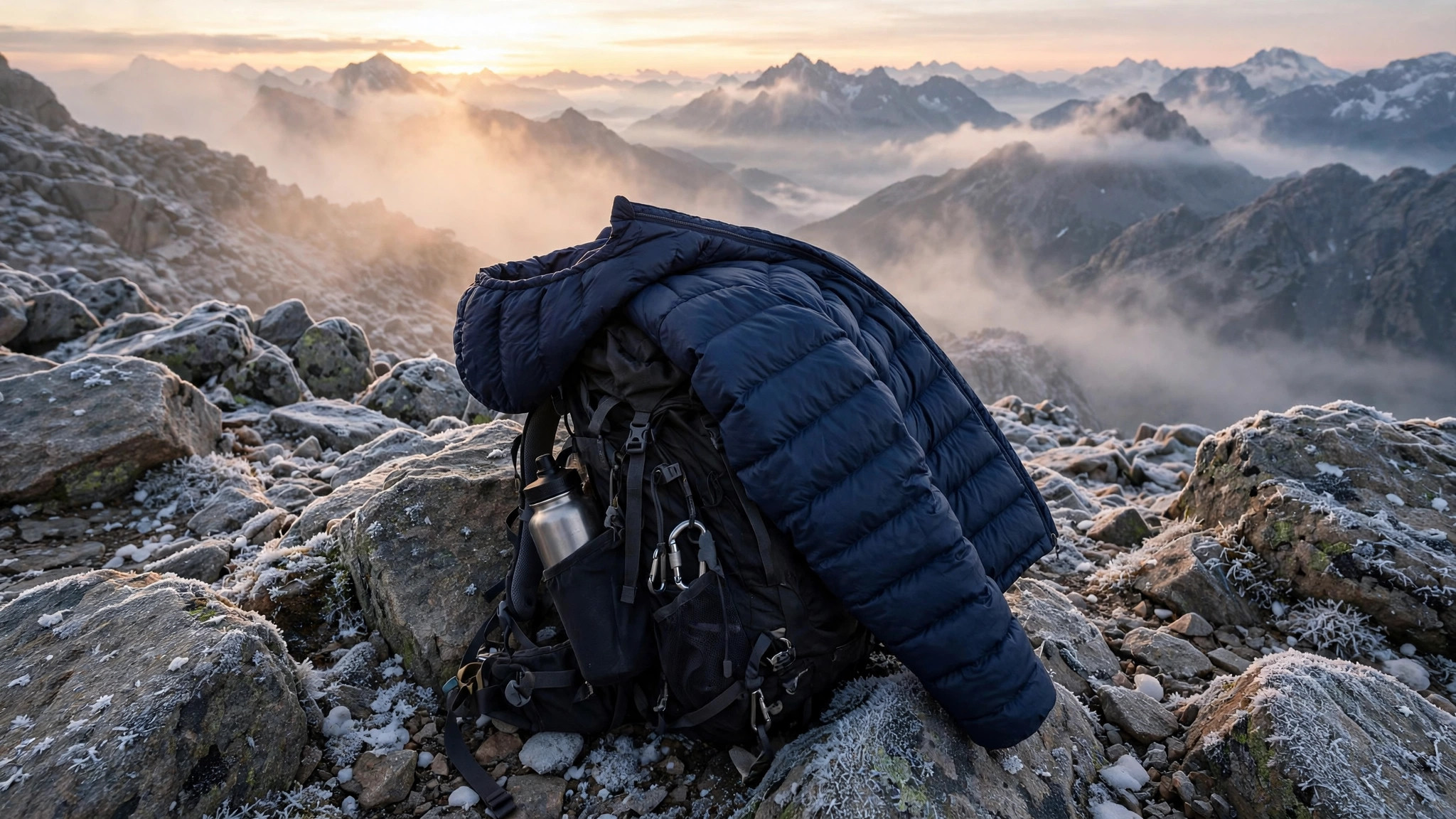
The puffy jacket is the highest warmth-per-dollar item in hiking — a good one turns a shivering camp morning into a pleasant one, and it weighs less than your water bottle. You don’t need to spend $250+ to get real down; you just need to know which budget jackets cut the right corners. Our pick: the REI Co-op 650 Down Jacket ($129) — 650-fill bluesign-approved down, packs into its own pocket, and comes in Regular, Big, and Tall sizing.
Quick answer: The best down jacket for hiking under $150 is the REI Co-op 650 Down Jacket ($129) — 650-fill down, tall sizing, and REI’s warranty. The Decathlon Forclaz MT100 Hooded ($99.99) is the budget pick with remarkable 800-fill down, the Eddie Bauer CirrusLite Down Hooded ($149) is the premium pick at under 10 oz, and the Uniqlo Ultra Light Down (~$70) is the ultralight pick at roughly 7 oz.
Disclosure: Trail Tested is reader-supported. When you buy through links on this page, we may earn a commission at no extra cost to you. Learn more. All picks are compiled picks — researched from verified buyer reviews and manufacturer specs, not hands-on testing. See how we pick gear.
Contents
- Best Overall: REI Co-op 650 Down Jacket
- Best Budget: Decathlon Forclaz MT100 Hooded
- Best Premium: Eddie Bauer CirrusLite Down Hooded
- Best Ultralight: Uniqlo Ultra Light Down
- Spec comparison
- How we picked
- Tested & dismissed
- FAQ
The 4 best down jackets for hiking under $150
1. REI Co-op 650 Down Jacket — Best Overall ($129)
Check price- Price: $129 ($149 for the hooded version)
- Fill: 650-fill-power duck down, bluesign-approved
- Weight: Mid-weight class (heavier than the ultralight picks, lighter than full-loft parkas)
- Shell: Recycled nylon taffeta with PFAS-free DWR
- Notable: Packs into its own pocket; comes in Regular, Big, AND Tall sizing; 490+ reviews averaging 4.4 stars at REI
What we like
- Tall sizing actually exists — rare at this price and a big deal for lanky hikers
- REI’s return policy and warranty back every purchase
- Packs into its own left-hand pocket for easy pack storage
- 650-fill down with a wind-resistant shell handles real 3-season conditions
What we don’t
- The base $129 model has no hood — the hooded version is $149, right at our price ceiling
- It’s a mid-weight jacket, not an ultralight one; ounce-counters will want the Uniqlo
Why it’s a compiled pick: This is the default answer for a reason: the only sub-$150 down jacket from a major outdoor retailer with tall sizing, a real warranty, and hundreds of verified reviews behind it. Not the highest fill power here — just the fewest compromises.
2. Decathlon Forclaz MT100 Hooded — Best Budget ($99.99)
Check price- Price: $99.99 USD
- Fill: 800-fill-power RDS-certified duck down (90/10 down-to-feather)
- Weight: ~10.2 oz (men’s M)
- Shell: 15D polyamide with water-repellent treatment
- Notable: Packs into its own pocket; rated 23°F active / 41°F static; the highest fill power in this roundup
What we like
- 800-fill RDS down under $100 is genuinely unheard of — this spec sheet usually costs twice as much
- Sub-11-oz weight rivals jackets costing $200+
- Hood included at the budget price (the REI charges $20 more for one)
- Packs into its own pocket for travel and backpacking
What we don’t
- Runs small — size up (a consistent finding across review outlets)
- The 15D shell is thin; treat it gently around campfire sparks and rough rock
- Decathlon’s US store footprint is smaller, so trying one on in person is harder
Why it’s a compiled pick: The MT100 breaks the budget-jacket curve: 800-fill down, a hood, 10.2 oz, $99.99. Size up for the slim Euro fit, and don’t bushwhack in the thin shell — but as a camp puffy, it’s the best insulation-per-dollar here by a wide margin.
3. Eddie Bauer CirrusLite Down Hooded — Best Premium ($149)
Check price- Price: $149 (frequently on sale for less)
- Fill: 650-fill-power RDS-certified premium down
- Weight: Just under 10 oz
- Shell: 100% recycled nylon with StormRepel DWR
- Notable: Packs into its own pouch; compresses to roughly softball size; RDS-certified down with audited welfare standards
What we like
- Under 10 oz with a hood — the lightest hooded pick here
- RDS certification means traceable, audited down sourcing, not just a marketing claim
- StormRepel DWR genuinely sheds light moisture
- Eddie Bauer runs deep sales, so $149 is often not what you actually pay
What we don’t
- The thin shell trades long-term durability for weight savings — it’s a trail jacket, not a work jacket
- 650-fill (not 800) means it’s slightly bulkier packed than the MT100
Why it’s a compiled pick: If you want the nicest-feeling jacket under $150 — lightest hooded option, certified ethical down, real DWR — this is it. Frequent Eddie Bauer sales often drop it well under the $149 list price.
4. Uniqlo Ultra Light Down — Best Ultralight (~$70)
Check price- Price: Regularly under $70
- Fill: 750+ fill power down, 90/10 down-to-feather ratio
- Weight: ~7 oz
- Shell: 20D nylon with water-repellent treatment (applied even at the seams)
- Notable: Packs to about the size of a large water bottle; storage pouch included; huge color range
What we like
- 7 oz is absurdly light — you’ll forget it’s in your pack
- 750+ fill power beats every other pick’s insulation quality except the MT100
- Seam-level water-repellent treatment is a detail budget jackets normally skip
- The price makes it a no-brainer backup layer
What we don’t
- No formal warranty — if a seam fails, you’re on your own
- Less total fill than the others, so it’s a mild-weather layer, not a deep-winter one
- The thin shell needs gentle handling
Why it’s a compiled pick: For thru-hikers and ounce-counters, the math is unbeatable: 7 oz, 750+ fill, under $70. Not the warmest here — just the one you’ll actually carry every hike because it disappears into your pack.
Spec comparison
| Jacket | Price | Fill power | Weight | Hood | Packable |
|---|---|---|---|---|---|
| REI Co-op 650 Down Jacket | $129 | 650 | Mid-weight | No ($149 hooded) | Yes, into pocket |
| Decathlon Forclaz MT100 Hooded | $99.99 | 800 (RDS) | ~10.2 oz | Yes | Yes, into pocket |
| Eddie Bauer CirrusLite Down Hooded | $149 | 650 (RDS) | <10 oz | Yes | Yes, into pouch |
| Uniqlo Ultra Light Down | ~$70 | 750+ | ~7 oz | Varies by model | Yes, into pouch |
How we picked
We filtered for real down jackets (not synthetic, not “down-like”) with a verified price under $150 as of October 2026, from brands with accountable warranties or deep review histories. Then we scored on:
- Warmth per dollar — fill power × fill weight relative to price. The MT100’s 800-fill at $99.99 reset our expectations here.
- Packability — every pick must pack into itself or an included pouch; a puffy that doesn’t compress is dead weight.
- Weight — under 12 oz was the target; the winners range from 7 to ~11 oz.
- Weather resistance — DWR-treated shells matter because down fails when wet; we favored treated shells and noted the limitation honestly.
- Buyer consensus — hundreds of verified reviews over marketing copy.
We did not hands-on test these jackets. Every spec above comes from manufacturer listings and every verdict is compiled from verified buyer reviews and professional review outlets — see the data sources at the bottom.
Tested & dismissed
REI Co-op Magma 850 Hoodie — superb jacket (850-fill, very warm for its weight), but at $259 it’s nearly double our cap.
REI Co-op 650 Down Full-Loft Jacket — the puffier sibling of our winner, but at $199 it’s over budget for what is essentially a heavier version of the $129 pick.
Wantdo Packable Down Hoody (~$64) — tempting on price, but it scored the lowest overall (53/100) in professional testing, with notably poor comfort marks. Saving $35 isn’t worth a jacket you won’t wear.
FAQ
Is 650 fill power warm enough for hiking? For 3-season hiking, yes. A 650-fill jacket is the classic camp-and-summit layer: plenty warm for chilly mornings, rest stops, and evenings down to around freezing when layered over a fleece. Higher fill powers (750–850) pack smaller and weigh less, but 650-fill keeps you just as warm — it just uses more down to do it, so the jacket is slightly bulkier.
Down vs synthetic insulation for hiking — which wins? Down wins on warmth-to-weight and packability; synthetic wins when wet. For most hikers, down is the better puffy because it compresses to half the size and lasts years longer — just keep it dry (wear your rain shell over it in precipitation) and never store it compressed. If you hike in constant drizzle, consider synthetic instead.
What does “fill power” actually mean? Fill power measures how many cubic inches one ounce of down lofts up to — higher numbers mean fluffier, more insulating down. 650-fill is the budget sweet spot; 800-fill is premium. But fill power isn’t warmth by itself: total fill weight matters too. A 650-fill jacket with lots of down can be warmer than an 800-fill jacket with very little.
How do I wash a down jacket without ruining it? Machine wash cold on gentle in a front-loader with a down-specific wash (never regular detergent or fabric softener), rinse twice, then tumble dry LOW with clean tennis balls or dryer balls — the balls break up down clumps as they dry. It takes several cycles to dry fully; the jacket must be bone-dry before storage or the down can mildew.
Can I wear a down jacket while actively hiking? Usually no — you’ll overheat within minutes on any real climb. Down jackets are rest layers: they go on at camp, at summits, and during breaks, and come off when you start moving. For active insulation while hiking, wear a fleece or breathable synthetic layer instead.
Related guides
- The 3 Best Rain Jackets for Hiking Under $100 That Actually Breathe (2026) — your puffy’s best friend is a shell that goes over it
- What to Wear Hiking in 50-Degree Weather (2026) — where the down jacket fits in the layering system
- The 3 Best Hiking Shorts for Chafing (2026) — complete the kit below the waist
Heads up: some links on this page are affiliate links — if you buy through them we may earn a commission at no extra cost to you. Learn more.
Frequently asked questions
Is 650 fill power warm enough for hiking?
For 3-season hiking, yes. A 650-fill jacket is the classic camp-and-summit layer: plenty warm for chilly mornings, rest stops, and evenings down to around freezing when layered over a fleece. Higher fill powers (750–850) pack smaller and weigh less, but 650-fill keeps you just as warm — it just uses more down to do it, so the jacket is slightly bulkier.
Down vs synthetic insulation for hiking — which wins?
Down wins on warmth-to-weight and packability; synthetic wins when wet. For most hikers, down is the better puffy because it compresses to half the size and lasts years longer — just keep it dry (wear your rain shell over it in precipitation) and never store it compressed. If you hike in constant drizzle, consider synthetic instead.
What does 'fill power' actually mean?
Fill power measures how many cubic inches one ounce of down lofts up to — higher numbers mean fluffier, more insulating down. 650-fill is the budget sweet spot; 800-fill is premium. But fill power isn’t warmth by itself: total fill weight matters too. A 650-fill jacket with lots of down can be warmer than an 800-fill jacket with very little.
How do I wash a down jacket without ruining it?
Machine wash cold on gentle in a front-loader with a down-specific wash (never regular detergent or fabric softener), rinse twice, then tumble dry LOW with clean tennis balls or dryer balls — the balls break up down clumps as they dry. It takes several cycles to dry fully; the jacket must be bone-dry before storage or the down can mildew.
Can I wear a down jacket while actively hiking?
Usually no — you’ll overheat within minutes on any real climb. Down jackets are rest layers: they go on at camp, at summits, and during breaks, and come off when you start moving. For active insulation while hiking, wear a fleece or breathable synthetic layer instead.