
The 6 Best Backpacking Stoves for Cold Weather (2026)
Below freezing, canister stoves fade. Compare 6 cold-weather backpacking stoves for 2026 — MSR, Jetboil, Soto picks with specs and prices.
In this guide
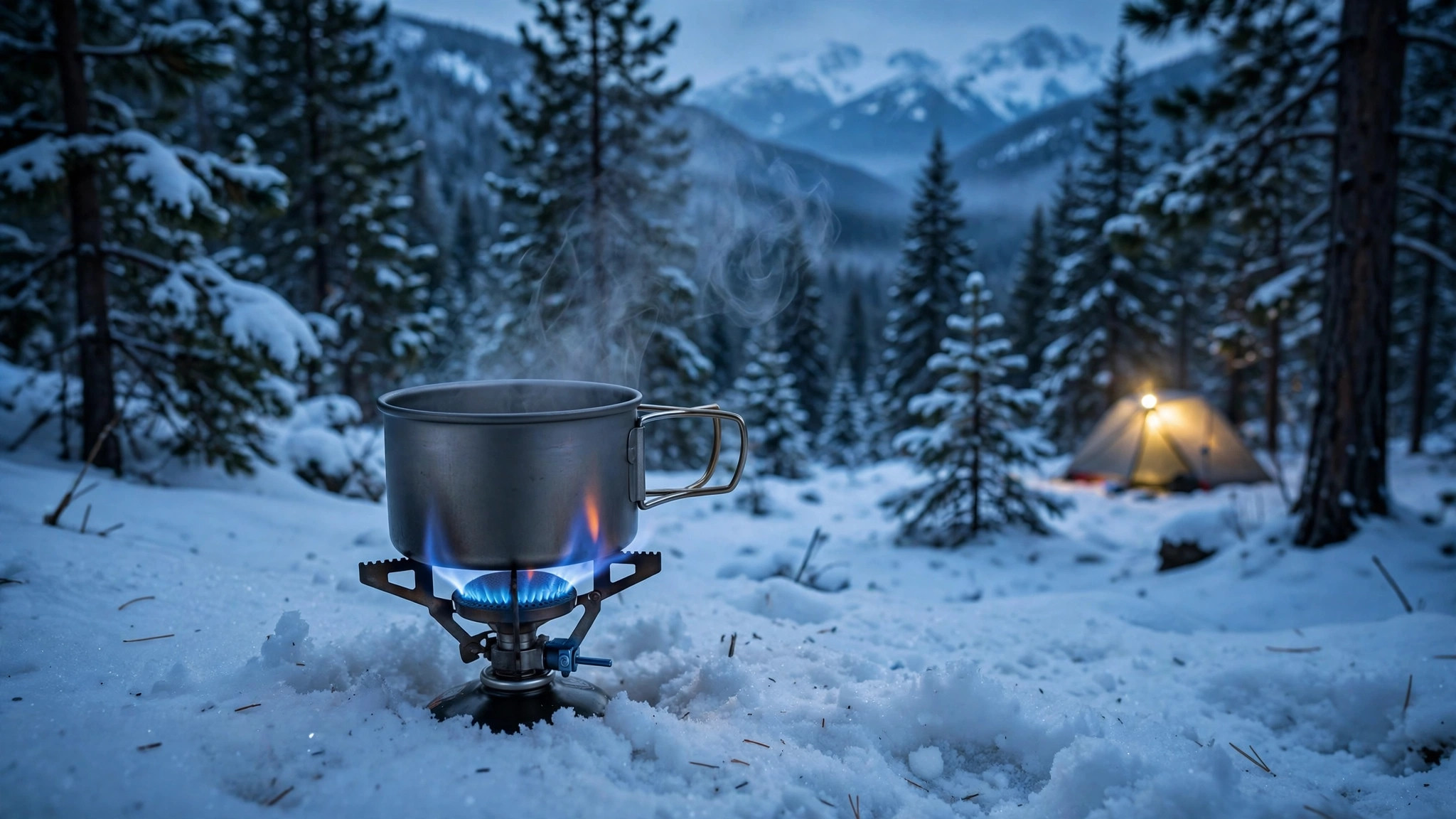
Cold separates real winter stoves from summer stoves. Below freezing, canister pressure collapses, flames shrink, and melting snow for water becomes an ordeal — unless your stove was built for it.
Quick answer: The best backpacking stove for cold weather is the MSR WhisperLite International ($159.95) — a multi-fuel stove that pump-pressurizes its own fuel, ignoring the vapor-pressure problem that cripples canister stoves. The MSR WindPro II ($139.95) is the best canister option: its inverted mode feeds liquid fuel straight to the burner for real sub-freezing performance.
Disclosure: Trail Tested is reader-supported. When you buy through links on this page, we may earn a commission at no extra cost to you. Learn more. All picks are compiled picks — see how we rate gear.
The 6 best cold-weather backpacking stoves at a glance
- Best Overall: MSR WhisperLite International
- Best Inverted-Canister: MSR WindPro II
- Best for Melting Snow: Jetboil Flash
- Best Ultralight: SOTO WindMaster
- Best Budget: MSR PocketRocket 2
- Best for Expeditions: MSR XGK-EX
1. MSR WhisperLite International — Best Overall
MSR WhisperLite International at Cascade Designs- Price: $159.95
- Fuel: White gas, kerosene, unleaded auto fuel
- Min. weight: 11.2 oz (stove + pump)
- Boil time: 3.5 min per liter (white gas)
- Notable: Shaker Jet self-cleaning; fully field-maintainable; fuel bottle NOT included
What we like
- Pump pressurizes the fuel bottle, so output ignores the vapor-pressure problem that kills canister stoves in the cold
- Burns white gas, kerosene, or auto fuel — find something burnable almost anywhere
- Shaker Jet cleans the jet with a shake; real field maintenance
What we don’t
- Priming adds a 2–3 minute ritual versus instant-on canister stoves
- Fuel bottle sold separately (~$20–35) — real buy-in is closer to $185
- Heavier than every canister stove here; limited simmer control
2. MSR WindPro II — Best Inverted-Canister Cold Performance
MSR WindPro II at Ascent Outdoors- Price: $139.95
- Fuel: Isobutane-propane canisters
- Min. weight: 6.6 oz
- Boil time: 3.6 min per liter
- Notable: Inverted liquid-feed canister mode; remote burner takes a real windscreen; fits in a 1L pot
What we like
- Flip the canister on the included stand and it feeds liquid fuel directly to the preheat loop — full output in cold and low-fuel conditions where upright stoves fade
- Remote burner takes a proper windscreen (never do this with a canister-top stove) and sits low and stable for big pots of melting snow
- Run it upright in mild weather, inverted when it gets serious — one stove covers shoulder season through winter
What we don’t
- No piezo igniter — always bring a lighter or matches
- Bulkier and heavier than top-mount canister stoves
3. Jetboil Flash — Best for Melting Snow
Jetboil Flash at Live Feral- Price: ~$130
- Fuel: Jetpower isobutane canisters
- System weight: 13.1 oz (371 g)
- Boil time: ~2 min per 0.5 liter
- Notable: 1L FluxRing heat-exchanger cup + cozy; color-change heat indicator; everything nests inside the cup
What we like
- The fastest water boiler here — and in winter, speed is fuel economy
- FluxRing heat exchanger squeezes 20–30% more efficiency out of each canister and shrugs off wind
- Push-button ignition, no priming, no learning curve
What we don’t
- Locked into the Jetboil pot system — great for boiling, poor for real cooking
- No fuel regulator: a deeply cold canister still fades, so keep it warm (jacket, sleeping bag)
- 13.1 oz system weight is heavier than a bare stove + light pot combo
4. SOTO WindMaster — Best Ultralight Cold-Weather Pick
SOTO WindMaster at GoHunt- Price: $69.95
- Fuel: Isobutane-propane canisters
- Weight: 3.1 oz with 4Flex pot support (2.3 oz with TriFlex)
- Output: 11,000 BTU
- Notable: Micro Regulator pressure regulation; enclosed piezo igniter; concave wind-shedding burner head
What we like
- The Micro Regulator holds output steady as the canister cools and empties — the best cold manners of any upright canister stove here
- 3.1 oz, with an optional 2.3 oz TriFlex setup for solo trips
- Concave burner head acts as a built-in windscreen; the enclosed igniter fires with numb fingers
What we don’t
- Still a canister-top stove: below roughly 20°F (-7°C) you’re leaning on canister-warming tricks regardless
- Tall, narrow profile is less stable with large pots than the remote-burner WindPro II
5. MSR PocketRocket 2 — Best Budget
MSR PocketRocket 2 at Northwest Outlet- Price: $49.95
- Fuel: Isobutane-propane canisters
- Min. weight: 2.6 oz
- Boil time: 3.5 min per liter
- Notable: WindClip windshield; folding pot supports; hard-shell carry case included
What we like
- Under $50 from a major brand, with a decade-plus track record
- 2.6 oz disappears into your pack; 3.5-minute liter boils with good simmer control
- WindClip windshield and focused burner hold up in breezy shoulder-season weather
What we don’t
- No regulator: output dives as the canister cools or empties — a frosty-morning stove, not a sub-freezing one, unless you actively warm the canister
- Tiny controls will fumble in gloves
6. MSR XGK-EX — Best for Expeditions
MSR XGK-EX at Cascade Designs- Price: $219.95
- Fuel: White gas, kerosene, diesel, jet fuel — more fuels than any stove here
- Min. weight: 13.2 oz
- Boil time: 2.8 min per liter (kerosene)
- Notable: 35+ year expedition pedigree; Shaker Jet; fuel bottle NOT included
What we like
- Burns virtually any liquid fuel on earth, including dirty diesel — when resupply is a village kerosene jug, this stove still eats
- The expedition standard: decades of high-altitude and arctic owner reports with near-zero failure drama
- Fastest liquid-fuel boil here (2.8 min/L on kerosene); simple, bombproof, fully field-maintainable
What we don’t
- Loud — the XGK’s roar is legendary, and not campfire ambiance
- Zero simmer ability: it’s a snow-melting blowtorch, full stop
- Heaviest and priciest here; total overkill for weekend winter trips
Comparison table
| Stove | Price | Fuel | Min. weight | Boil time (1L) | Best for |
|---|---|---|---|---|---|
| MSR WhisperLite International | $159.95 | White gas / kerosene / auto fuel | 11.2 oz | 3.5 min | Overall cold-weather backpacking |
| MSR WindPro II | $139.95 | Isobutane canister (inverted option) | 6.6 oz | 3.6 min | Canister users going sub-freezing |
| Jetboil Flash | ~$130 | Isobutane canister | 13.1 oz (system) | ~4 min* | Fast snow-melting |
| SOTO WindMaster | $69.95 | Isobutane canister | 3.1 oz | ~4 min** | Ultralight winter trips |
| MSR PocketRocket 2 | $49.95 | Isobutane canister | 2.6 oz | 3.5 min | Budget 3-season + frosty mornings |
| MSR XGK-EX | $219.95 | White gas / kerosene / diesel / jet fuel | 13.2 oz | 2.8 min (kerosene) | Expeditions and extreme cold |
*Flash boils 0.5L in ~2 minutes; 1L takes two cycles. **WindMaster: ~2.5 min per 2 cups.
How to choose a stove for cold weather
Know why canister stoves fade. Canister fuel must vaporize inside the canister to build pressure. Near freezing, less fuel vaporizes and the flame shrinks — on a full canister. White gas stays liquid to around -40°C, so a pump-pressurized liquid-fuel stove doesn’t have this problem and works to -20°F (-29°C) and below.
Pick one of three cold-proof designs. (1) Liquid-fuel pump stoves (WhisperLite International, XGK-EX): pressure comes from the pump bottle — the most reliable option for true winter. (2) Inverted-canister stoves (WindPro II): feed liquid fuel to a preheat loop, keeping canister convenience. (3) Pressure-regulated canister stoves (WindMaster): hold output steady as pressure drops — excellent to roughly 23°F (-5°C) with a warmed canister.
Learn the canister tricks. Sleep with the canister in your sleeping bag, warm it inside your jacket before dinner, burn isobutane/propane blends (not straight butane), and start trips with a full canister — output fades as it empties. Never warm a canister over a flame.
Budget fuel like it’s winter. Melting snow is the great fuel multiplier, and cold plus wind cut efficiency further — plan on 2–4× your summer fuel. Heat-exchanger systems like the Jetboil Flash use 20–30% less fuel per boil.
Tested & dismissed
- BRS-3000T (~$17, 26 g): the ultralight darling of summer thru-hikes — and a cautionary tale in winter. No regulator, an exposed burner, and output that collapses in wind and cold. A fine July stove; the wrong tool for January.
- BioLite CampStove 2+ ($199.95): burns twigs, so fuel “works” in any temperature — in theory. In practice it needs dry wood (scarce under snow) and weighs far more than every pick here. Neat gadget, poor winter stove.
FAQ
Why does my canister stove stop working in cold weather? Near freezing, canister fuel stops vaporizing properly, so pressure — and your flame — collapses even on a full canister. Fixes: a pump-pressurized liquid-fuel stove, an inverted-canister stove, or a pressure-regulated stove with a warmed canister.
How cold is too cold for a canister stove? Below 32°F (0°C) a standard upright canister stove gets unreliable. With the tricks — a warmed, full canister and a pressure-regulated stove — you can reach roughly 23°F (-5°C). Colder than that: go inverted-canister or liquid-fuel.
Are liquid fuel stoves hard to use? Five minutes of practice: pressurize the bottle with the pump, prime (burn a little fuel to heat the preheat loop), then open the valve for a clean blue flame. Setup takes 2–3 minutes versus 30 seconds for canister stoves.
Can I take a backpacking stove on a plane? The stove itself can fly in checked luggage — never the fuel. Empty liquid-fuel bottles completely and air them out. Canister stoves are fine; isobutane canisters can’t fly at all, so buy fuel at your destination.
How much fuel do I need for winter backpacking? Plan 2–4× your summer budget. A 4 oz canister handles 2–3 days of simple boil-only meals in mild cold; a week of winter camping with snow-melting wants an 8 oz canister plus a spare, or 20–30 oz of white gas.
Related guides
- Sawyer Squeeze vs Katadyn BeFree: Which Water Filter Wins for Backpacking? — filters freeze too; pick the one that survives winter
- How to Keep Your Water Filter From Freezing — the rest of your winter camp kitchen skills
- Camp kitchen hub — every stove, filter, and cook-system guide in one place
Heads up: some links on this page are affiliate links — if you buy through them we may earn a commission at no extra cost to you. Learn more.
Frequently asked questions
Why does my canister stove stop working in cold weather?
It’s chemistry, not your fault. Canister fuel must vaporize inside the canister to build pressure, and near freezing, less fuel vaporizes — so the flame shrinks even on a full canister. The fixes: a liquid-fuel stove (pump-pressurized, immune to vapor pressure), an inverted-canister stove that feeds liquid fuel to a preheat loop, or a pressure-regulated stove with a warmed canister.
How cold is too cold for a canister stove?
A standard upright canister stove struggles below 32°F (0°C). With the tricks — sleeping with the canister, warming it in your jacket, a pressure-regulated stove, and a full canister — you can push reliable performance to roughly 23°F (-5°C). Below that, switch to inverted-canister (MSR WindPro II) or liquid-fuel (MSR WhisperLite International) designs.
Are liquid fuel stoves hard to use?
They take about five minutes to learn. You pressurize the fuel bottle with the pump, let a little fuel burn to heat the preheat loop (priming), then open the valve for a clean blue flame. Setup takes 2–3 minutes versus 30 seconds for a canister stove — in return you get unmatched cold reliability, cheaper fuel, and full field maintainability.
Can I take a backpacking stove on a plane?
The stove itself can fly in checked luggage, but never the fuel. Empty liquid-fuel bottles completely and let them air out. Canister stoves are fine; the isobutane canisters cannot fly at all — plan to buy fuel at your destination.
How much fuel do I need for winter backpacking?
Plan on 2–4× your summer budget. Melting snow is the big multiplier, and cold plus wind cut efficiency further. A 4 oz canister handles 2–3 days of simple boil-only meals in mild cold; a week of winter camping with snow-melting wants an 8 oz canister plus a spare, or 20–30 oz of white gas. Integrated systems like the Jetboil Flash use 20–30% less fuel per boil.